

Kenya’s Fertilizer Subsidies Under Review — Who Really Benefits?
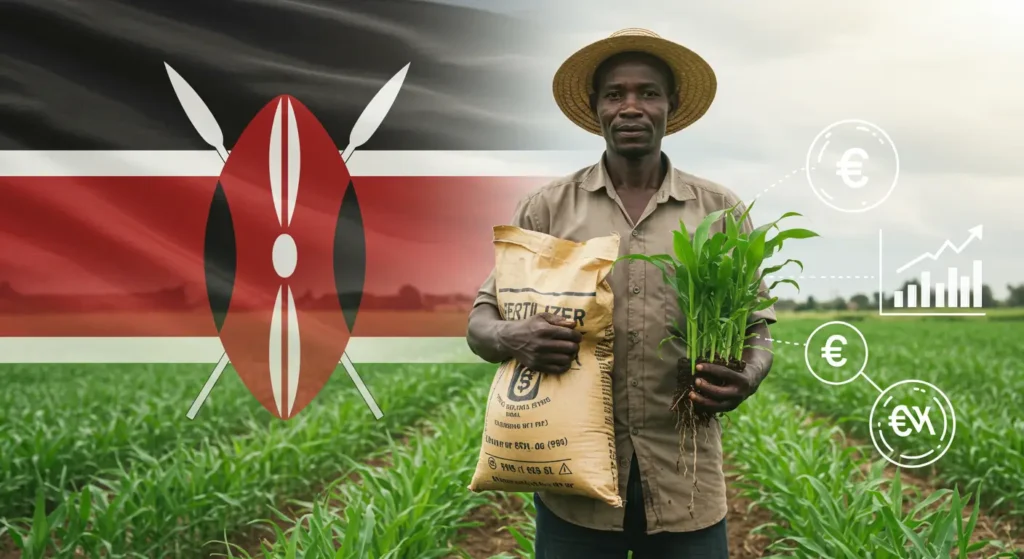
Fertilizer prices in Kenya have been at record highs for the past two years, pushing farmers to the edge. Government subsidies have stepped in to help, but new research from the International Food Policy Research Institute (IFPRI) suggests that these programs may not always reach the smallholder farmers they are meant to support.
Across the country, county-by-county data reveals a clear gap: larger, better-connected farmers often receive inputs on time, while many smallholders — especially women and youth — face long delays or miss out entirely. For rural communities that rely on timely planting, this can mean smaller harvests and lost income.
The research also highlights an unintended side effect: subsidies can push private agro-dealers out of business. When cheap, government-distributed fertilizer floods the market, local suppliers struggle to compete, leaving farmers with fewer year-round options.
Kenya’s fertilizer supply chain is already under strain from global price hikes and a weaker shilling. Many farmers report having to buy fertilizer at peak prices during planting season or cut back on the land they cultivate, reducing national food output.
Experts are urging the government to modernize the system. Digital voucher programs, which allow farmers to redeem inputs at registered agro-shops, have already shown promise in pilot projects. Farmers not only get fertilizer faster but also benefit from advice and after-sales service.
Targeted subsidies also need to go hand-in-hand with farmer training. Fertilizer use alone won’t guarantee higher yields — proper application, soil testing, and pest control are equally critical to unlocking productivity.
By shifting to a data-driven, targeted distribution model, Kenya can ensure subsidies go where they are needed most, while protecting the private sector’s role in agricultural supply chains. This balanced approach could boost food security and protect rural livelihoods.
With climate change, high input costs, and rising food demand, Kenya’s rethink on subsidies isn’t just about economics — it’s about the future of farming and feeding the nation.