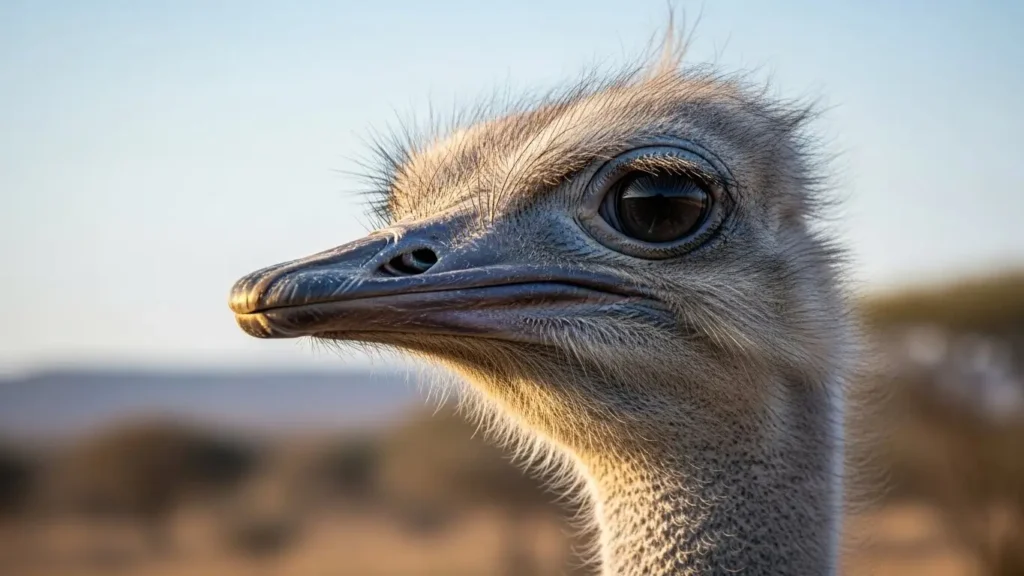


On the sun-scorched plains of northern Kenya, a towering figure strides with quiet confidence. The Somali ostrich is no ordinary bird. Its long legs, slender neck and striking blue-grey skin set it apart, dominating the arid landscape with a presence that is impossible to ignore. For travelers willing to venture beyond the usual safari trails, seeing this majestic bird in its natural habitat is a moment that captures the raw beauty and resilience of Africa’s drylands.
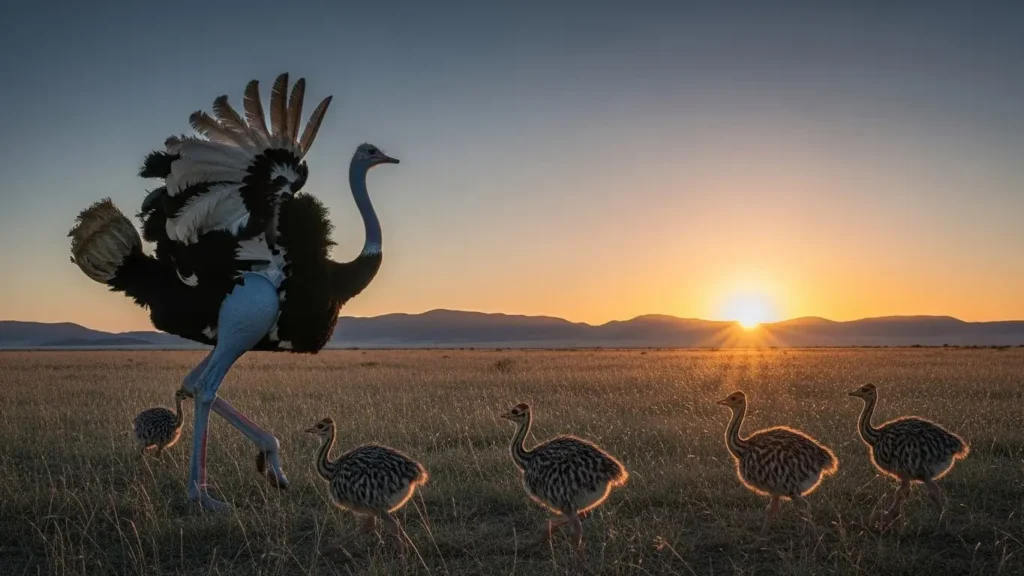
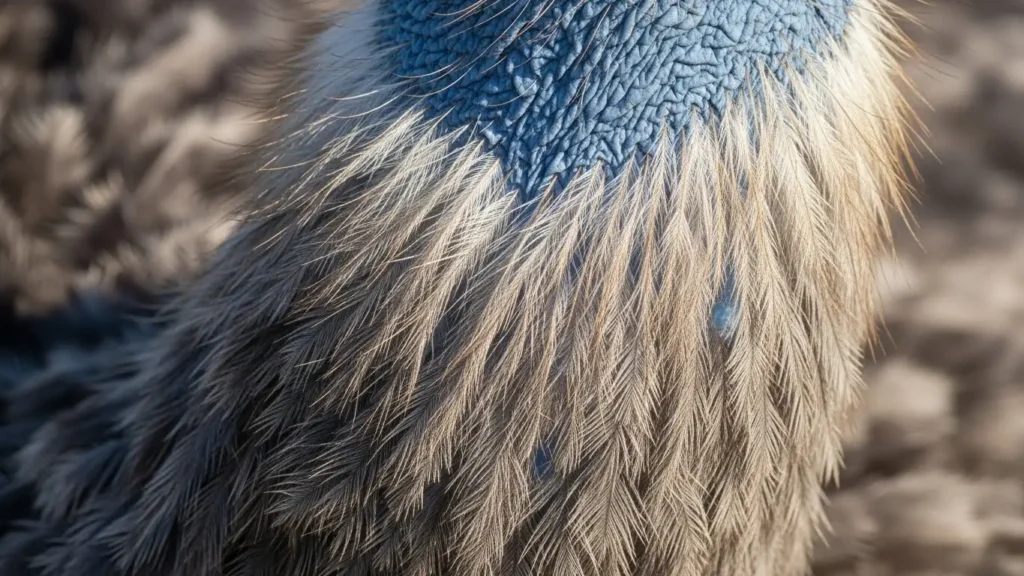
Adult males can reach nearly three meters in height and weigh over 150 kilograms. Their legs, built for sprinting rather than flying, propel them at speeds of up to 70 kilometers per hour, a remarkable adaptation in a land where predators roam and water is scarce. Males display deep blue-grey necks and legs, dark body feathers, and white-tipped wings during courtship, while females wear muted browns and greys that blend seamlessly into the scrubland, allowing them to tend nests with subtlety and grace.
While northern Kenya is perhaps the most famous sanctuary for these birds, the Somali ostrich also roams across the Horn of Africa, including Somalia, northeastern Ethiopia and Djibouti. It thrives in semi-arid savannahs, scrublands and open woodlands, landscapes dominated by grasses and shrubs that provide both sustenance and safety from predators. This is a bird of wide horizons, perfectly adapted to open spaces where every movement must be deliberate and every glance alert.
Life in these harsh lands demands remarkable adaptation. The Somali ostrich can derive water from the plants it consumes, withstand extreme heat through specialized thermoregulation and rely on its extraordinary eyesight to spot danger from miles away. These traits allow it to survive where other species might falter, making it one of the most resilient inhabitants of Africa’s drylands.
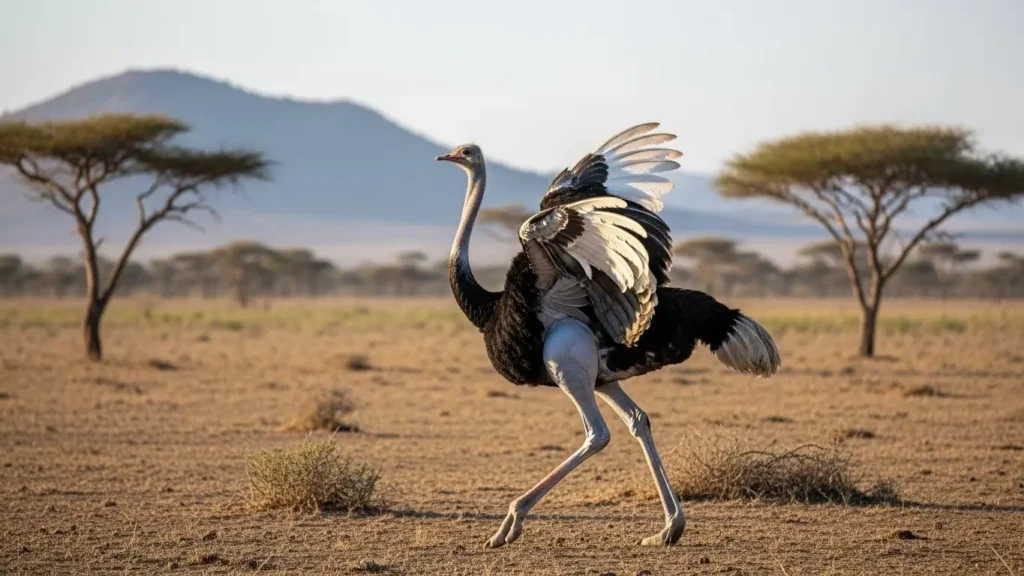
The Somali ostrich’s reproductive life is as fascinating as its survival skills. During the breeding season, males perform elaborate dances to attract females, spreading their wings and raising their necks high in a dramatic display. Several females may lay eggs in a single shallow nest, with clutches ranging from fifteen to sixty eggs, each weighing roughly 1.5 kilograms. Incubation lasts around six weeks, with males guarding at night and females during the day. The chicks are precocial, able to run within hours, yet remain under parental protection for months, learning the skills needed to thrive in their challenging environment.
Beyond their striking appearance, Somali ostriches play a critical role in their ecosystem. As they forage on grasses, seeds, shrubs and occasional insects, they disperse seeds and help maintain plant diversity, supporting the balance and regeneration of dryland habitats. Watching their movements and social interactions is like witnessing the rhythm and heartbeat of northern Africa’s semi-arid landscapes.
Despite their resilience, Somali ostriches face mounting challenges. Expanding human settlements and agriculture threaten their habitats, while hunting for meat, eggs, and feathers continues to put pressure on populations. Climate change intensifies drought and water scarcity, further complicating survival. While conservancies in northern Kenya provide some refuge, instability and limited protection in Somalia and Ethiopia have driven many birds into increasingly remote areas, making sightings a rare and treasured experience.
For travelers, photographers, and nature enthusiasts, encountering a Somali ostrich is unforgettable. From the male’s dramatic courtship dances at dawn to the sight of chicks sprinting across cracked earth, each moment tells a story of survival, adaptability, and quiet majesty. The Somali ostrich is more than a bird; it is a living symbol of Africa’s drylands, a reminder of the delicate balance between humans and nature, and an inspiration to protect the extraordinary wildlife that calls this land home.