

The Invisible Beginning of Africa’s Onion Economy
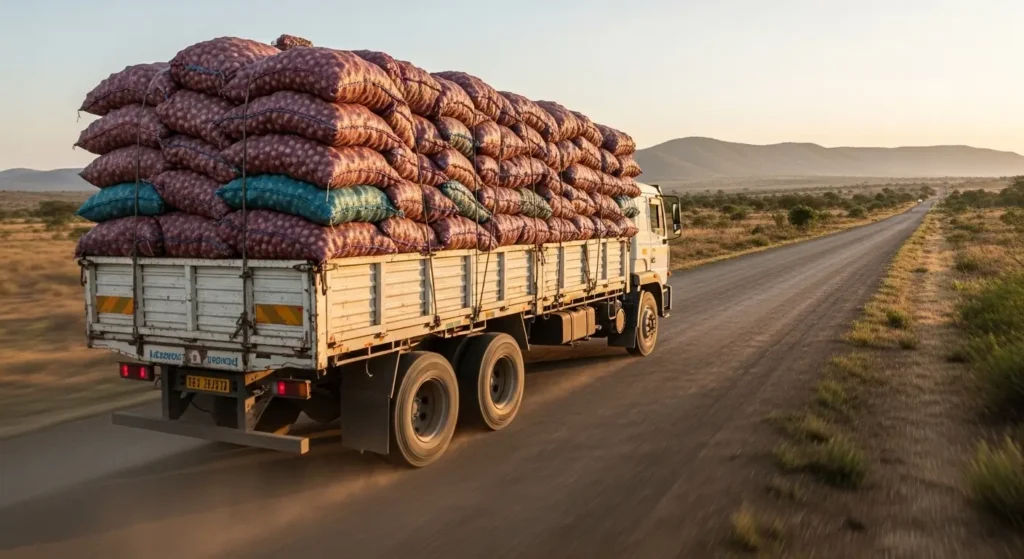
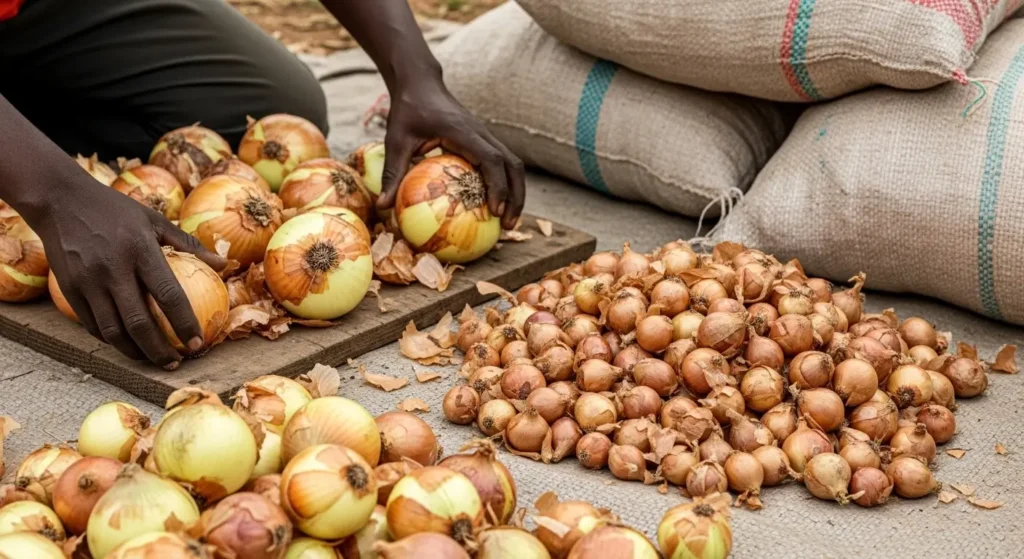
Across Africa’s agricultural systems, the story of onions is often told from the wrong end. It is usually framed at harvest, in market stalls or along transport routes where sacks of produce move across dusty roads and crowded borders. Yet in my reporting across food systems and rural economies, I have consistently found that the true structure of the onion value chain is formed long before any visible production begins.
The foundation is laid in decisions that appear technical but are deeply structural: which seeds are planted, which fertilizers are accessible, how water is supplied and how land is prepared. These early-stage choices quietly determine productivity, profitability and ultimately who captures value in the system.
By the time onions are harvested in Kenya or traded through regional corridors in Nigeria or produced at scale in Ethiopia and Egypt, the competitive outcome has often already been shaped. What follows in the market is not the beginning of value creation, but the result of decisions made much earlier.
This is why the onion economy in Africa cannot be fully understood through production alone. It must be understood through control.
Seed Systems and the Question of Genetic Control
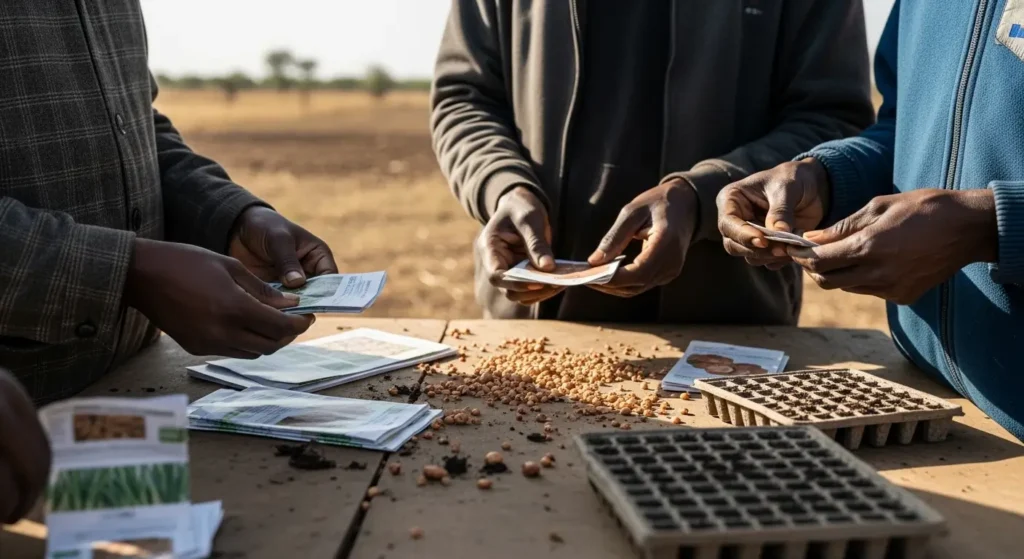
Seed systems sit at the center of agricultural power. In onion-producing regions such as Kajiado, Narok and Nyeri in Kenya, the Rift Valley in Ethiopia and agricultural zones in Kano and Kaduna in Nigeria, farmers face a consistent and consequential decision between hybrid and local seed varieties.
Hybrid seeds are often promoted for their high yields, uniform bulb size, and faster maturity cycles. They have played a significant role in improving productivity in many regions. However, they also introduce a structural dependency. Farmers must purchase them repeatedly, season after season, from commercial suppliers whose pricing and availability are shaped by global and regional input markets.
Local seed varieties, by contrast, are more affordable and accessible, but they often lack the uniformity required for competitive commercial markets. This places farmers in a difficult position where the choice of seed is not simply agricultural, but economic and strategic.
In my field observations, this decision consistently determines whether farmers can access higher-value markets or remain within lower-margin local trade systems. It is here that the first layer of inequality in the onion value chain is established not at harvest, but at the genetic level of production.
The deeper implication is clear. Whoever influences seed systems also influences the structure of production itself.
Fertilizer Access and the Rising Cost of Productivity
Beyond seeds, fertilizer and agrochemical systems form another critical layer of control in the onion value chain. Across African farming regions, input costs have become one of the most significant determinants of agricultural viability.
In countries such as Kenya and Nigeria, farmers often face fluctuating fertilizer prices, inconsistent supply chains, and limited access in rural distribution networks. This creates a system where maintaining productivity requires increasing financial investment, often beyond the reach of smallholder farmers.
In many cases, farmers rely on informal credit arrangements, cooperatives, or input dealers who provide supplies on deferred payment systems. While this enables continued production, it also deepens financial vulnerability within the farming cycle.
What emerges is a structural imbalance where increased production does not necessarily translate into increased profitability. Farmers produce more, but retain less. This disconnect between output and income is one of the defining contradictions of Africa’s agricultural systems.
Irrigation Systems and the Geography of Control
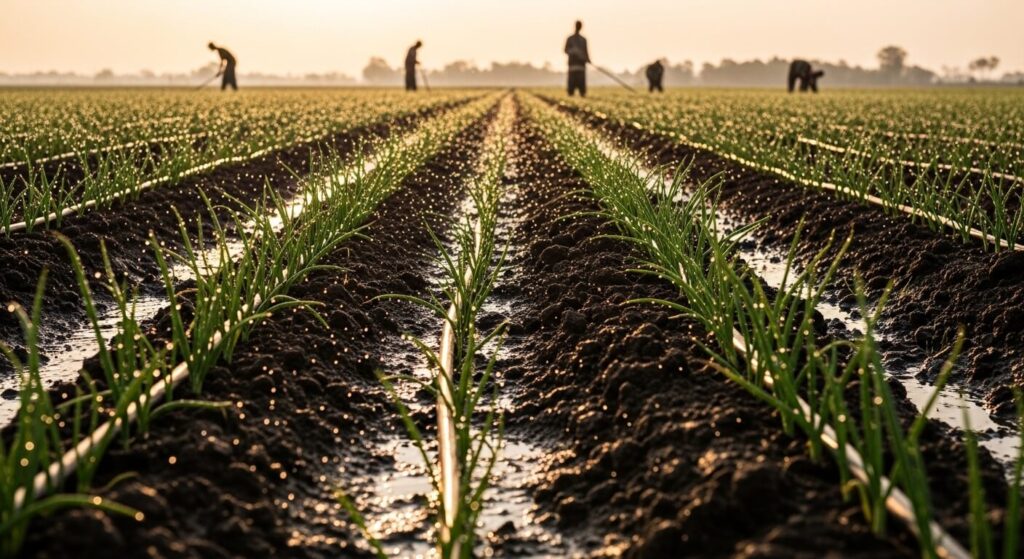
Water access introduces a geographical dimension to inequality in onion production. In irrigated systems such as parts of Ethiopia’s Rift Valley and selected agricultural zones in Kenya, farmers are able to regulate production cycles, control planting schedules and align harvest timing with market conditions.
This ability to control timing is not a minor advantage. In agricultural markets, timing determines price. Farmers with irrigation systems can choose when to bring produce to market, allowing them to avoid peak supply periods and capture better prices.
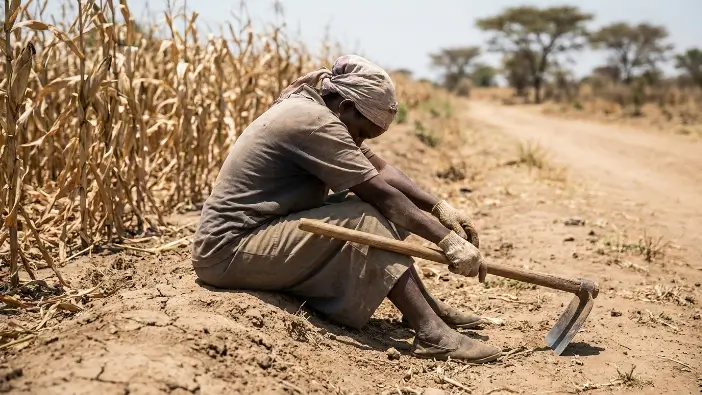
In contrast, rain-fed systems remain dependent on seasonal rainfall patterns, which are increasingly unpredictable due to climate variability. These farmers must adapt to external conditions rather than strategically manage production cycles.
This creates a silent but powerful divide in the onion value chain. Two farmers growing the same crop in different systems are not participating in the same economy. One operates with control, the other with constraint.
Land Preparation and the Early Structure of Inequality
Land preparation is often treated as a routine agricultural step, yet it is one of the earliest determinants of productivity. Mechanized land preparation improves soil structure, ensures more uniform planting depth and enhances water retention. These factors collectively contribute to higher yields and more efficient production cycles.
However, access to mechanization across African rural farming systems remains uneven. In many onion producing regions, land preparation is still carried out manually or with limited mechanized support. This increases labor demands and reduces production efficiency.
The result is a foundational inequality that exists before seeds are even planted. Farmers with access to mechanization begin the season with structural advantages that compound throughout the production cycle. Those without such access begin at a disadvantage that is difficult to overcome within a single season.
Input Systems and the Expansion of Agricultural Dependency
Across Africa, agricultural input systems are becoming increasingly formalized. Private seed companies, fertilizer distributors and agrochemical suppliers are expanding their reach into rural markets. These systems bring improved technologies and increased productivity potential, but they also reshape the structure of dependency within farming communities.
Farmers are increasingly embedded within commercial input ecosystems where access to seeds, fertilizers, and chemicals is mediated by external suppliers. This shifts agriculture from a primarily production-based activity to one that is deeply connected to input markets.
In my reporting across agricultural regions, I have observed that this shift raises important questions about long-term agricultural sovereignty. While input systems improve efficiency, they also concentrate control in the hands of those who supply critical resources.
Climate-Smart Inputs and Emerging Inequalities
Climate change is reshaping agricultural systems across Africa and onion production is no exception. Climate-smart inputs such as drought-tolerant seeds, precision fertilizers and improved irrigation technologies are increasingly being introduced as solutions to environmental stress.
However, access to these technologies remains uneven. Farmers with greater financial capacity and institutional support are able to adopt them more quickly, while smallholder farmers often lag behind due to cost and accessibility barriers.
This creates a new layer of inequality within the onion value chain. Adaptation to climate change is no longer only a matter of resilience; it is becoming a factor in market competitiveness. Those who can adapt faster gain production advantages, while others risk being left behind.
The Structural Reality of the Onion Value Chain
When these systems are examined together, a consistent pattern emerges. The onion value chain in Africa is not primarily determined at the point of harvest or market exchange. It is determined much earlier, in the systems that govern inputs and pre-production conditions.
Seed genetics, fertilizer access, irrigation systems and land preparation collectively define who participates in production on competitive terms. These elements shape not only agricultural output but also economic positioning within the value chain.
This is why the question of control is central to understanding Africa’s onion economy. Control is not exercised at the market stall it is embedded in the systems that make production possible in the first place.
Conclusion: Control Before Production, Value Before Harvest
The onion is often treated as a simple agricultural commodity, but its value chain reveals a far more complex system of power and structure. Across Africa’s farming landscapes, the most important decisions are made before production begins, not after harvest.
In my work across agricultural systems, I have consistently found that those who control inputs ultimately influence outcomes across the entire value chain. Until these systems become more equitable, accessible and locally empowered, Africa will continue to produce at scale while remaining constrained in how much value it can fully capture.
The future of the onion economy will not be decided in the market. It will be decided in the systems that exist before the first seed is planted.
About the Author
Jackline Mauta is a Kenyan journalist and narrative strategist specializing in agriculture, food systems, and value chains across Africa. Through her work at Nexus PR Africa, she focuses on translating complex agricultural systems into structured, insight-driven narratives that inform policy, investment and food system transformation.