

Where a Crop Becomes a Contradiction
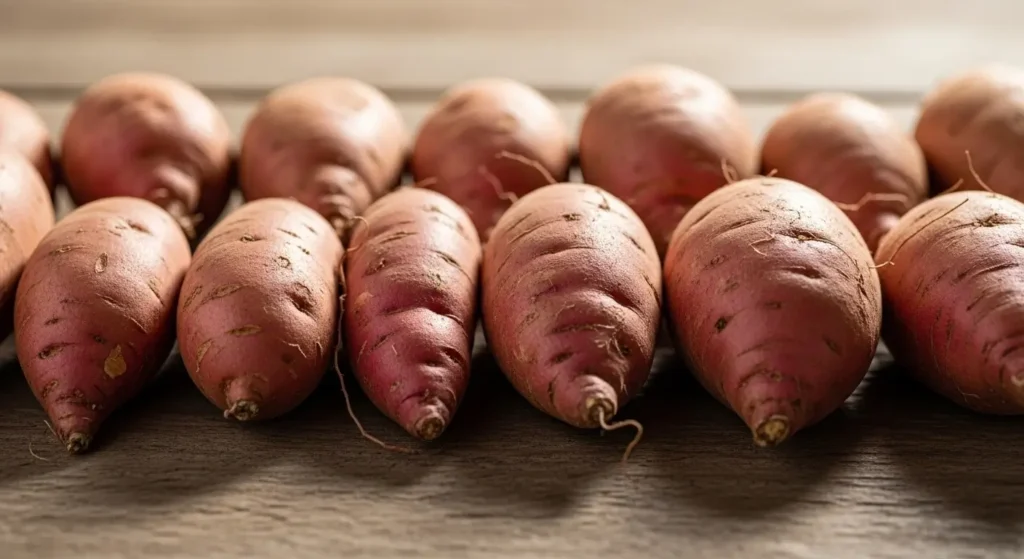
In a small market on the edge of a growing town, a woman arranges sweet potatoes on a wooden table. The tubers are uneven some long and tapered, others thick and curved. She sorts them without labels, without grades, without a formal system. A customer approaches, inspects, negotiates, buys.
The exchange is simple. The system behind it is not.
Across Africa, sweet potato has been elevated into something more than a crop. It is a solution. A response to malnutrition. A symbol of resilience. In policy rooms and development strategies from Kenya to Uganda and Mozambique, it is promoted as a pathway to better health particularly through orange fleshed varieties rich in vitamin A.
The narrative is consistent, repeated and well supported. Sweet potato is good for people. It should be grown more. It should be eaten more.
But beyond that narrative lies a quieter truth one that emerges not in reports, but in markets, in fields, and in the decisions farmers make when the season turns.
Sweet potato is promoted for health but not priced for profit.
The Making of a Nutrition Crop
The rise of sweet potato as a nutrition crop did not happen by accident. It was built through research, advocacy, and policy alignment. Agricultural extension systems distributed vines. Development programs trained farmers. Messaging campaigns emphasized its nutritional benefits, especially its role in addressing vitamin A deficiency.
The orange fleshed sweet potato became more than a variety. It became an intervention.
In rural communities, it was introduced into diets, into school feeding programs, into household gardens. It fit easily into existing systems requiring less water than many crops, tolerating variable soils, and offering reliable yields even under stress.
It was, in many ways, the ideal crop for a continent navigating climate uncertainty and nutritional gaps.
And yet, as production expanded a parallel system did not keep pace.
The market.
When Promotion Outpaces Price
There is a moment in every agricultural system when production meets the market. It is here that value is determined not by effort, not by intention, but by demand.
For sweet potato, this moment often reveals a disconnect.
Farmers grow more. Markets do not always pay more.
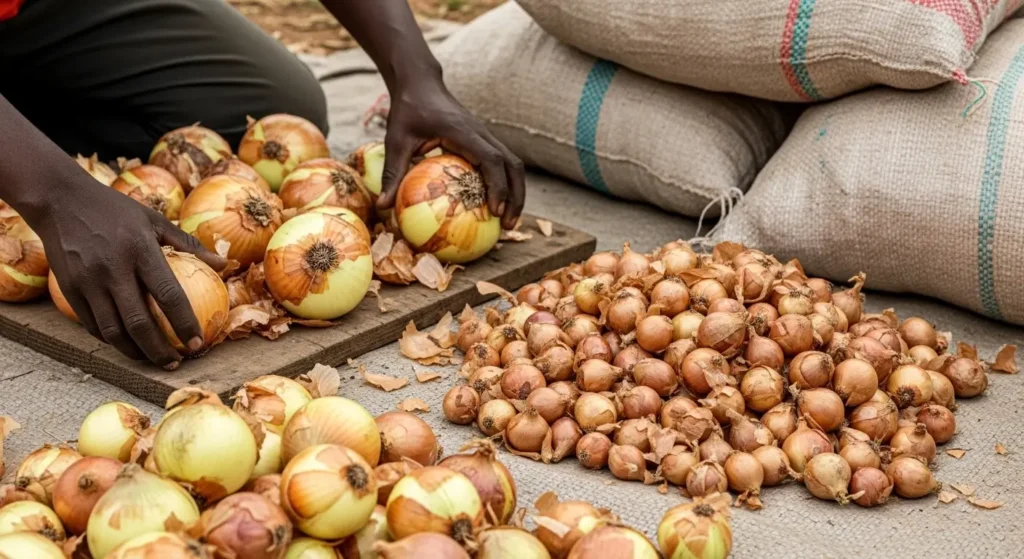
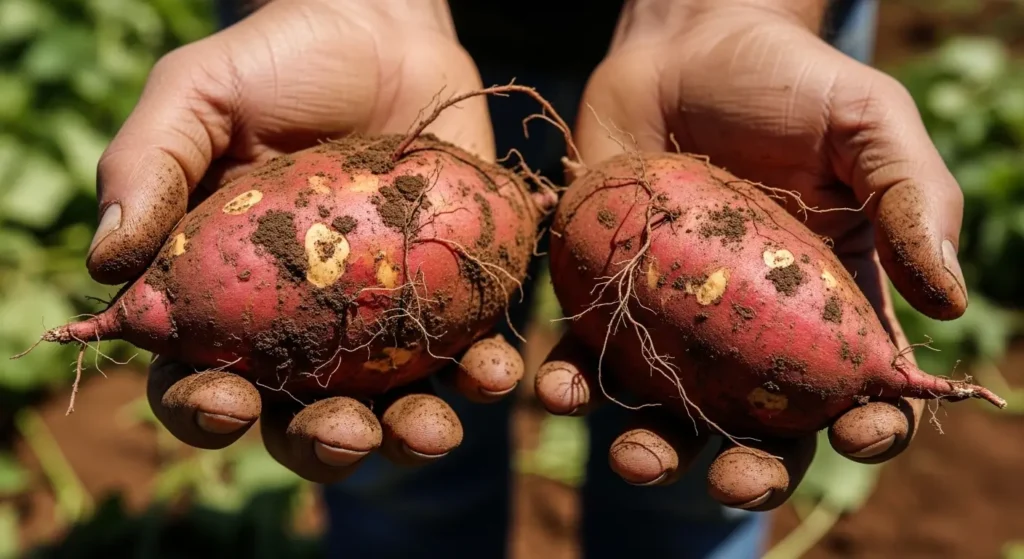
In local markets across Tanzania, Nigeria and parts of East Africa, sweet potatoes are sold in bulk, often with minimal differentiation. A pile is a pile. A sack is a sack. The variation in quality size, texture, color rarely translates into significant price differences.
This compresses value.
Unlike crops where grading systems are well established and enforced, sweet potato markets tend to operate on volume and immediacy. The faster it sells, the better. The longer it stays, the more it loses value.
In such a system, increasing production does not necessarily increase income.
A crop can be widely grown and still remain economically limited.
The Absence of a Value Language
Part of the challenge lies in how sweet potato is positioned within the food system. It is framed as essential, but not premium. Necessary, but not aspirational.
This affects how it is traded, how it is priced and how it is perceived.
In contrast to crops that benefit from branding, packaging and structured markets, sweet potato often moves without a defined value language. It is sold raw, loosely sorted and quickly consumed.
There are no strong signals to differentiate one farmer’s produce from another’s. No consistent standards that reward higher quality. No widespread systems that link better practices to better prices.
The result is a market that functions but does not elevate.
Processing: The Opportunity That Remains Distant
If the fresh market limits value, processing offers a pathway beyond it. In other parts of the world, sweet potato has been transformed into a range of products flour for baking, chips for snacking, purees for baby food, ingredients for industrial use.
These transformations do more than extend shelf life. They create new markets, stabilize prices and shift the crop from subsistence to commerce.
Across much of Africa, this layer remains thin.
Processing exists, but often at small scale. It is fragmented, undercapitalized and disconnected from larger supply systems. The infrastructure required to scale consistent supply, reliable energy, structured distribution is still developing.
Without it, sweet potato remains tied to fresh consumption.
It is eaten widely, but rarely transformed.
The Farmer’s Calculation
For farmers, the decision to grow sweet potato is both practical and strategic.
It is reliable. It can be harvested in stages. It supports household consumption. It fits into diversified farming systems.
But when it comes to income, the calculation becomes more complex.
How much land should be allocated to a crop that feeds the family but yields limited profit? How should labour be distributed between crops that sustain and crops that earn?
These are not theoretical questions. They are daily decisions, shaped by market access, price expectations and seasonal realities.
In regions across East and West Africa, farmers often balance sweet potato with other crops using it as a foundation, but not as the primary source of income.
It anchors the system, but does not drive it.
Gender and the Economics of Value
In many contexts, sweet potato is closely associated with women’s agricultural work. Women plant, manage, harvest and trade it in local markets. It moves through networks that are informal, adaptive, and deeply embedded in community life.
This makes the crop both accessible and limiting.
Accessible because it requires lower entry barriers. Limiting because the markets it feeds into often offer lower returns.
The result is a pattern seen across multiple value chains: crops associated with subsistence and nutrition are frequently undervalued in commercial terms. And the people most involved in them often women operate within these constrained systems.
This is not simply a gender issue. It is a structural one.
The Illusion of Stability
From a distance, sweet potato appears stable. It grows reliably. It is consumed consistently. It fits into food systems without disruption.
But stability in production does not always translate into stability in income.
Prices fluctuate with supply. Demand shifts with seasons. Without storage or processing systems to absorb surplus, the market becomes reactive.
Farmers harvest into uncertainty.
The crop survives. The system adapts. But the value remains uneven.
Two Realities, One Crop
For policymakers and development actors, sweet potato represents progress. It improves nutrition. It supports resilience. It integrates into climate strategies.
For farmers and traders, it represents a different reality. It is work. It is risk. It is a crop that must move quickly through markets that do not always reward it.
These two perspectives coexist, but they are not always aligned.
Understanding the sweet potato economy requires holding both.
Importance Without Market Power
The sweet potato value chain reveals a fundamental tension within African agriculture.
A crop can be critical to food systems and still lack market power.
Importance drives attention. But without corresponding investment in markets, processing and infrastructure, it does not automatically create value.
Bridging this gap is not about increasing production. It is about aligning systems.
Where the Value Could Be Built
From a commercial perspective, the opportunity is clear.
Processing can transform the crop. Branding can differentiate it. Structured markets can stabilize pricing. Investment can scale it.
But these elements require coordination. They require viewing sweet potato not only as a nutrition crop, but as an economic asset.
Until then, the value remains underdeveloped.
Reporting from the System Itself
In reporting across agricultural landscapes, I have learned that the most important insights rarely come from where systems are strongest. They come from where they are incomplete.
Sweet potato is one such system.
It works but not fully. It feeds but does not always enrich. It is promoted but not fully integrated into markets.
These gaps are not failures. They are signals of where attention is needed next.
Aligning Health with Value
The future of sweet potato in Africa will not be determined by its ability to grow. That has already been proven. It will be determined by its ability to generate value alongside its nutritional role.
This requires a shift from promotion to integration. From distribution to market development. From viewing the crop as a solution in isolation to understanding it as part of a broader economic system.
Until that shift happens, the paradox will remain.
Sweet potato will continue to nourish populations. It will continue to support resilience. It will continue to be present in fields and markets across the continent.
But it will do so without fully rewarding those who grow it.
Because in Africa’s food systems, what feeds the people does not always pay the farmer.
About the Author
Jackline Mauta is a Kenyan journalist and narrative strategist specializing in agriculture, food systems and value chains across Africa. Through her work at Nexus PR Africa, she focuses on translating complex agricultural realities into clear, human-centered narratives that inform policy, investmentand the future of food systems on the continent.