

Where Control Becomes Visible: Inside the Farm-Level Reality
After examining the invisible systems that shape seeds, inputs and irrigation, the onion value chain in Africa eventually reaches a stage where control becomes visible: the farm itself. This is where production happens, where labour is applied and where the assumptions of agriculture are tested against reality.
Across onion-growing regions in Kenya, Nigeria, Ethiopia and Egypt, production is often presented as the most straightforward part of the value chain. Yet in my reporting across agricultural systems, I have found that farming is not simply about growing crops. It is about managing uncertainty, negotiating labour and absorbing risk that has been built into the system long before planting begins.
The farm is where theory meets pressure. It is where the decisions made in the input stage begin to reveal their consequences in soil, weather, labour and time.
Labour as the Core Engine of Onion Production
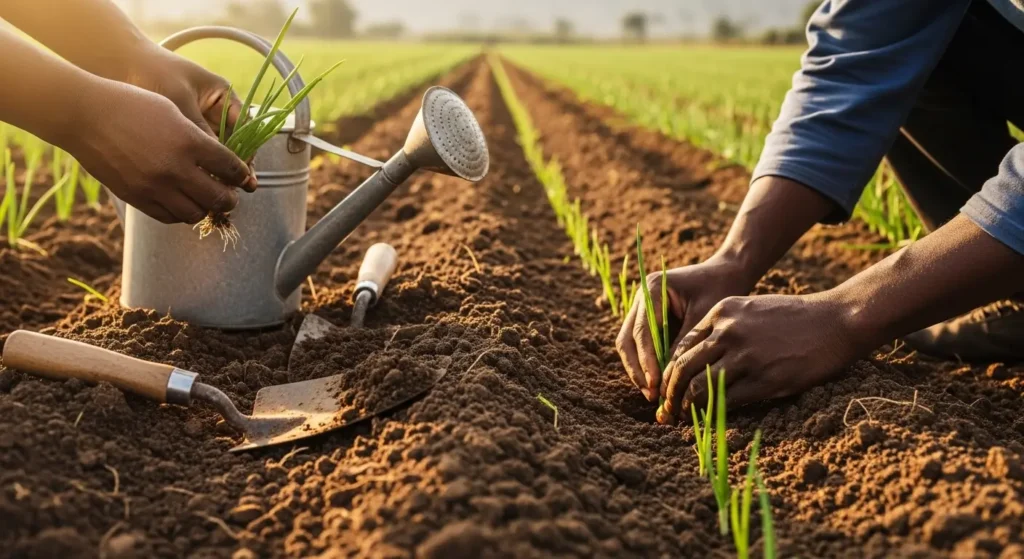
Onion farming in Africa is labour-intensive by nature. From transplanting seedlings to weeding, watering, and harvesting, the crop demands constant human attention. In regions such as Kajiado and Narok in Kenya, the agricultural belts of Kano and Kaduna in Nigeria and irrigated zones in the Rift Valley of Ethiopia, labour is the foundation that keeps production systems functioning.
Most onion production is sustained by smallholder farmers working with family labour or hired seasonal workers. This labour structure is flexible but also fragile. Wages fluctuate with demand and availability of labour often determines the pace and quality of production.
What becomes clear in field observation is that labour is not just a cost in the onion value chain it is a control point. Those who can mobilize labour efficiently are able to manage production cycles more effectively, reduce crop stress and improve yields. Those who cannot are often forced into compromises that affect both quality and output.
Timing and the Hidden Discipline of Production
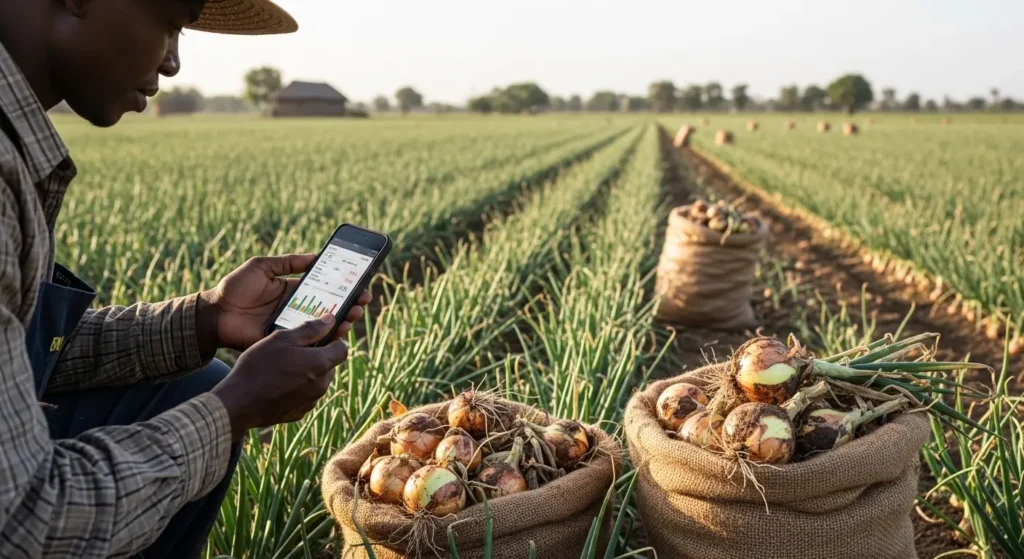
In agriculture, timing is not a background factor it is a determinant of survival. Onion production is particularly sensitive to timing, from planting windows to irrigation schedules and harvesting periods.
Farmers who begin planting at the right moment often align their harvest with favorable market conditions. Those who miss these windows are exposed to market saturation and price drops. In irrigated systems, particularly in parts of Egypt and sections of Kenya’s high-value production zones, timing is more controlled. Farmers can stagger production cycles and reduce exposure to market volatility.
In rain-fed systems, timing is less flexible. Farmers are dependent on rainfall patterns that are increasingly unpredictable due to climate variability. This creates a production environment where external forces dictate agricultural decisions more than planning does.
The result is a quiet but powerful divide within production systems: those who control timing and those who respond to it.
Risk as a Constant Companion in Onion Farming
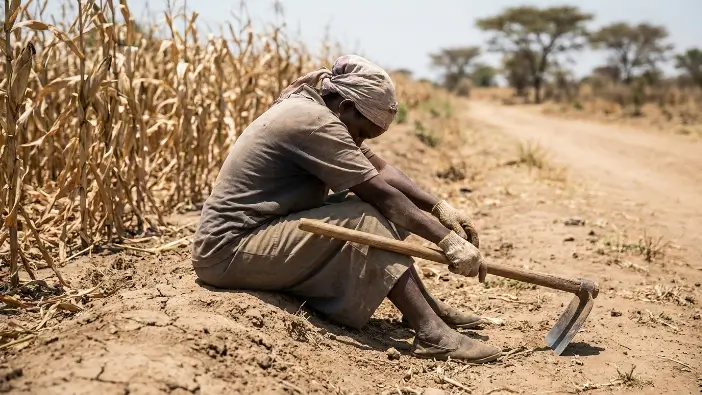
Every stage of onion production carries risk, but at the farm level, risk becomes immediate and personal. Pest attacks, unpredictable rainfall, disease outbreaks and input failures can all affect yields within days.
In my reporting across farming communities, I have consistently observed that farmers do not experience risk as an abstract concept. They experience it as daily uncertainty that shapes every decision. Whether to irrigate, whether to apply fertilizer, whether to harvest early these decisions are made under pressure, often without complete information.
What makes onion production particularly vulnerable is that it requires sustained care over time. Unlike some crops that can withstand irregular attention, onions demand consistent management. Any disruption in care directly affects quality and market value.
Market Pressure Begins on the Farm
Although markets are physically located after production, their influence begins much earlier. Farmers are constantly aware of price fluctuations, trader behavior and regional supply patterns even during the production stage.
In regions such as Nigeria and Kenya, farmers often adjust production decisions based on anticipated market demand. This includes decisions about acreage, input intensity and even harvest timing.
This creates a production system where farming is not isolated from markets but deeply connected to them. Farmers are not simply producing crops they are responding to market signals in real time, often without formal access to reliable data.
The farm, therefore, becomes an early extension of the market system.
Inequality Within Production Systems
One of the most consistent patterns across onion farming systems in Africa is inequality within production itself. Not all farmers operate under the same conditions, even when growing the same crop in the same region.
Access to irrigation, quality inputs, labour availability and mechanization all vary widely. This means that production outcomes are not solely determined by effort or experience, but by structural access to resources.
In irrigated zones of Ethiopia’s Rift Valley or parts of Kenya’s commercial farming areas, farmers often achieve higher yields and more stable production cycles. In contrast, smallholders in rain-fed systems face greater variability and lower predictability.
This inequality within production is often invisible in broader discussions of agriculture, yet it shapes income distribution across the entire value chain.
Productivity vs Profitability: The Central Tension
At the farm level, increased productivity does not always translate into increased profitability. This is one of the most persistent contradictions in the onion value chain.
Farmers may achieve higher yields through improved seeds or better farming practices, but rising input costs and unstable market prices often reduce overall returns. In some cases, increased production leads to market saturation, which drives prices down.
This creates a situation where efficiency gains are absorbed by systemic inefficiencies elsewhere in the value chain. The farmer produces more but does not necessarily earn more.
This disconnect between productivity and profitability is one of the central challenges in Africa’s agricultural systems.
Climate Pressure and the Fragility of Production
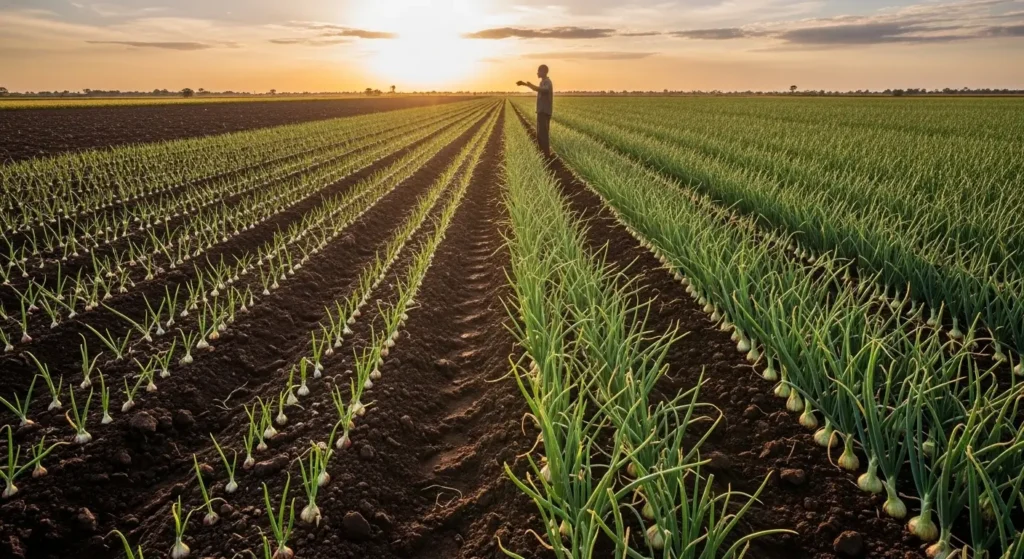
Climate variability continues to reshape onion production across the continent. Irregular rainfall, rising temperatures and prolonged dry spells are increasing the vulnerability of farming systems.
In response, farmers are adapting through irrigation, crop scheduling, and input adjustments. However, adaptation capacity is uneven. Farmers with access to irrigation infrastructure and climate-smart inputs are better positioned to withstand variability, while others remain highly exposed.
This creates a production system where resilience is not evenly distributed. Climate risk becomes another layer of inequality within the value chain.
Production as a Reflection of System Design
When viewed in isolation, farming appears to be about cultivation. But when placed within the broader onion value chain, production reveals itself as a reflection of earlier systems inputs, infrastructure and access structures.
What happens at the farm level is not separate from the rest of the value chain. It is the point where structural decisions become visible in physical outcomes.
Production does not create the system. It reflects it.
The Farm as a Site of Real Power Struggles
The onion value chain in Africa is often described in stages, but the production stage is where its tensions become most visible. It is where labour, timing, risk and inequality converge into a single lived reality.
In my field experience across agricultural systems, I have found that farming is not just the act of growing crops. It is the act of operating within constraints that were defined elsewhere.
Until these structural conditions are addressed, production will remain a site of effort without equal reward.
The farm is not just where onions are grown. It is where the limits of the system are revealed.
About the Author
Jackline Mauta is a Kenyan journalist and narrative strategist specializing in agriculture, food systems, and value chains across Africa. Through her work at Nexus PR Africa, she translates complex agricultural systems into structured narratives that inform policy, investment and food system transformation.