

Africa’s Onion Paradox: A Continental Giant Without Control
Across Africa’s markets from the irrigated fields of Egypt to the drylands of Sudan, from northern Nigeria to the highland production zones of Tanzania the onion is constant. It is present in the rhythm of daily cooking, in roadside food stalls, in wholesale markets that begin trading before sunrise. It is one of the most widely consumed vegetables on the continent, embedded deeply in both culture and commerce.
Africa produces onions at scale millions of tonnes each year yet the deeper story is not one of abundance alone. Across regions, supply gaps still trigger imports, particularly during off-seasons. Farmers contend with recurring post-harvest losses and markets remain fragmented, shaped more by informal systems than coordinated value chains.
This contradiction reveals something fundamental. Production, on its own, does not translate into control.
Africa produces onions but it does not yet control the onion economy.
Understanding the Onion Value Chain in Africa
To follow the path of an onion across Africa is to move through a system that is at once resilient and uneven. The value chain stretches from inputs and production to storage, trade and consumption, but it rarely functions as a seamless whole. Each stage operates, yet the connections between them are often weak.
In my reporting across agricultural regions, I have come to see value chains not as abstract frameworks but as lived systems shaped by farmers making decisions under constraint, traders navigating uncertainty and markets responding in real time to supply and demand. The onion value chain reflects this complexity. It works, but not efficiently and rarely in a way that allows those at the beginning of the chain to capture its full value.
Seeds, Inputs and the Foundations of Production
The story begins with the seed, a small input that carries disproportionate influence. Across Kenya, Ethiopia and Nigeria, farmers weigh difficult choices between imported hybrid varieties and locally saved seeds. Hybrids offer higher yields and more uniform bulbs, but their cost can be prohibitive. Local varieties are more accessible, yet less predictable in performance.
This decision shapes everything that follows. Fertilizer access, irrigation and extension services further determine how a crop develops. In irrigated systems such as those in Egypt, production is more controlled, allowing for multiple growing cycles and relatively stable output. Elsewhere, rainfall dictates outcomes, introducing a level of uncertainty that farmers must absorb season after season.
What becomes clear is that inputs are not simply the starting point of production they are the first gate in determining who can participate effectively in the market.
Farming Onions Across Diverse Landscapes
Onion farming across Africa reflects the diversity of the continent itself. In Tanzania, onions move as a commercial crop through regional markets. In Sudan, production is closely tied to water access and seasonal cycles. In northern Nigeria, large volumes supply both domestic consumption and cross-border trade.
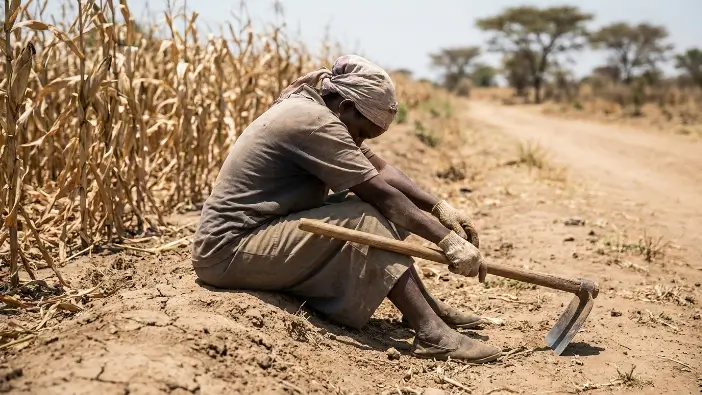
Yet beneath this diversity lies a shared reality. Production is dominated by smallholder farmers working within tight margins. Mechanization is limited, and farming practices often depend on experience rather than formal technical support. Yields, while significant in aggregate, remain below global benchmarks.
In many of the regions I have covered, farmers demonstrate remarkable adaptability adjusting planting times, experimenting with inputs, responding to shifting market signals. But adaptation alone cannot close structural gaps. Without consistent access to resources and infrastructure, efficiency remains uneven.
Post-Harvest Realities: Where Value Is Lost
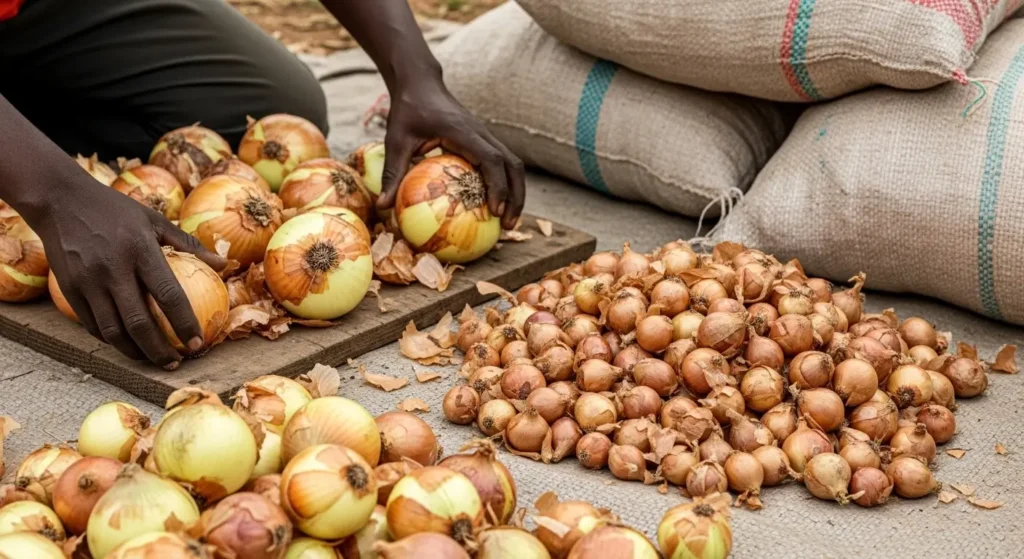
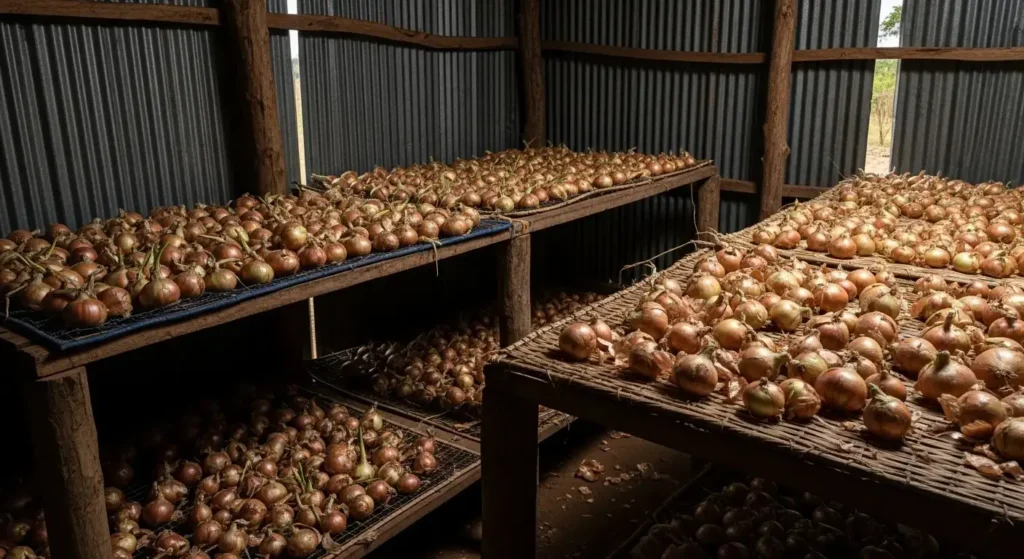
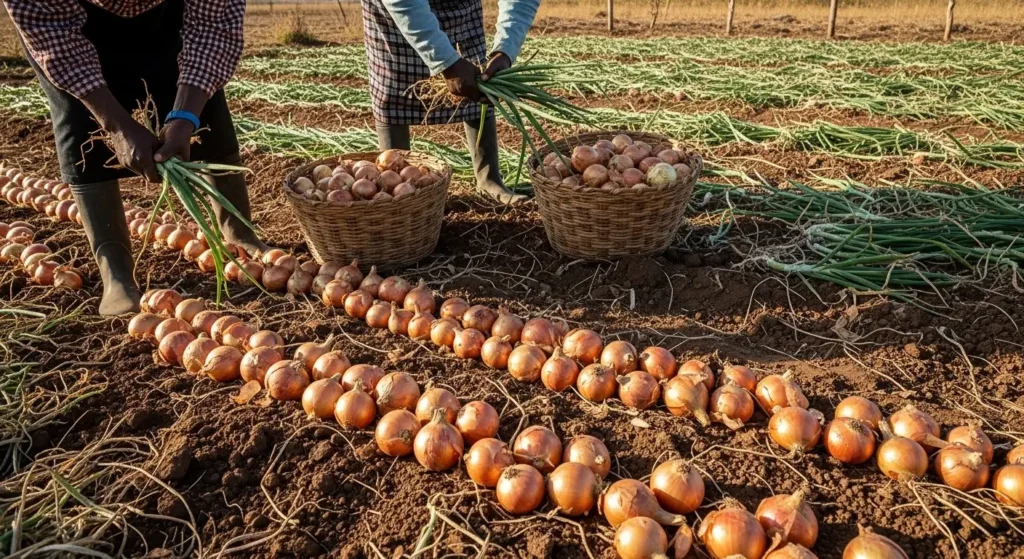
If there is a point in the value chain where the system begins to unravel, it is after harvest. Across much of Africa, onions are still handled in ways that expose them to avoidable losses. Drying often takes place in open fields, vulnerable to weather changes. Storage structures are frequently improvised, offering little protection against moisture or heat.
The result is a steady erosion of value. Losses occur through rot, sprouting and physical damage, reducing both the quantity and quality of what reaches the market. For farmers, this translates into immediate financial pressure. Without reliable storage, many are forced to sell quickly, often at the very moment when supply is highest and prices are lowest.
This pattern repeats across regions from Kenya to Ethiopia and it reshapes the economics of the crop. What is lost after harvest is not only produce, but the opportunity to time the market and capture better value.
Trade Networks and the Movement of Onions
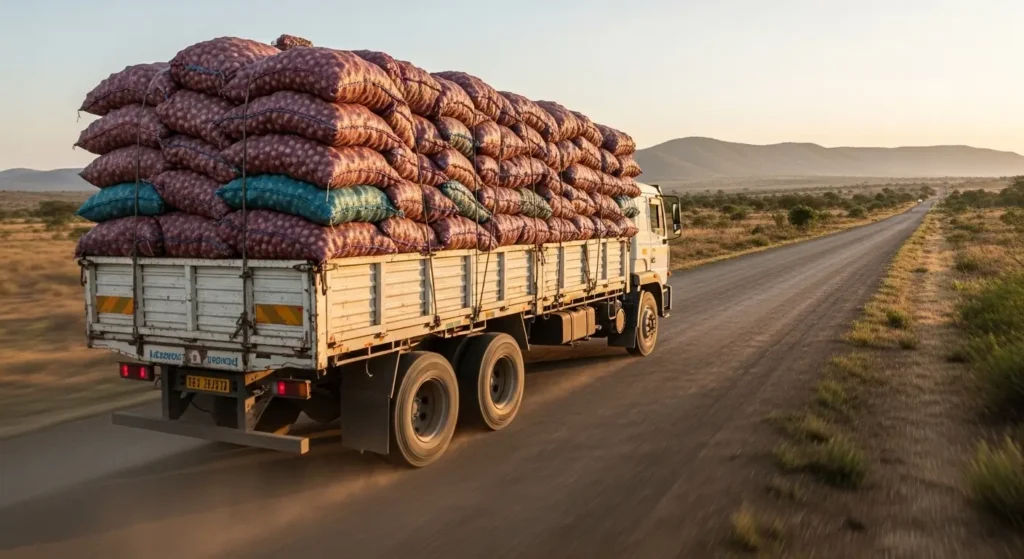
Once onions leave the farm, they enter a network that is both dynamic and uneven. Trade routes link production zones to consumption centers, often crossing borders in response to demand. Onions grown in Tanzania move into markets in Kenya and neighboring countries. In West Africa, production from Niger feeds markets across the region, including Nigeria.
These flows are essential, yet they operate within constraints. Transport infrastructure varies widely, affecting both cost and reliability. Market information is unevenly distributed, shaping how prices are negotiated. Farmers, often removed from end markets, sell with limited visibility, while traders who aggregate and move goods operate with greater control over pricing.
In this movement, value accumulates along the chain, but not always where it is most needed. The onion travels, but the benefits of that movement are not evenly shared.
Processing and the Untapped Layer of Value
Beyond fresh markets lies a layer of the value chain that remains largely underdeveloped across Africa: processing. Globally, onions are transformed into products that extend shelf life and create new market opportunities powders, flakes, pastes. These forms reduce waste and allow for more stable trade.
Across much of Africa, this transformation is still limited. While countries such as Egypt and South Africa have begun investing in processing, many others continue to rely almost entirely on raw sales.
The implications are significant. Without value addition, the shelf life of onions remains short, exposure to post-harvest loss remains high and opportunities for export diversification are constrained. Processing is not simply an extension of the value chain] it is a shift in how value is captured.
Consumption and the Markets That Sustain Demand
At the end of the chain, demand for onions across Africa remains constant. In cities, towns and rural households, onions form the base of everyday meals. They are essential to street food economies and central to domestic cooking, sustaining a level of demand that rarely declines.
Markets are largely informal, characterized by open-air trading and flexible pricing. This structure provides accessibility and responsiveness, but it also introduces variability. Prices fluctuate with supply and quality standards are not always consistent.
Even so, the strength of demand is clear. The challenge is not whether onions will be consumed it is whether supply systems can meet that demand consistently, without the disruptions that lead to shortages, imports and price spikes.
Africa in the Global Onion Economy
Africa’s position in the global onion market reflects both its potential and its limitations. Countries such as Egypt have established themselves as exporters, reaching markets beyond the continent. At the same time, many African countries continue to import onions during supply gaps, balancing domestic production with external sources.
Intra-African trade offers a pathway toward greater stability and integration. As regional frameworks continue to evolve, there is an opportunity to strengthen connections between producers and markets across borders. But for this to happen, systems must become more coordinated, infrastructure more reliable and trade processes more transparent.
Until then, Africa remains present in the global onion economy but not yet fully positioned within it.
What the Onion Reveals About Africa’s Food Systems
Tracing the onion value chain reveals patterns that extend beyond a single crop. It reflects broader dynamics within Africa’s agricultural systems, systems that produce at scale, but often struggle to translate that production into consistent value.
In my work across agriculture and rural economies, I have seen how these patterns repeat. Fragmentation, underinvestment, and uneven access shape outcomes across multiple value chains. At the same time, there is resilience farmers traders, and markets adapting continuously to keep the system moving.
The onion, in its simplicity, makes these dynamics visible.
From Production to Control
Africa’s onion sector is not defined by absence. The crop is widely grown, widely consumed and deeply integrated into daily life. What remains unresolved is not production, but control, control over storage, over processing, over market systems that determine how value is distributed.
The path forward is not abstract. It lies in strengthening the connections within the value chain investing in storage, expanding processing capacity, improving market coordination and aligning trade systems across regions.
Until these shifts take hold, the paradox remains intact:
Africa produces onions but it does not yet control the onion economy.
About the Author
Jackline Mauta is a Kenyan journalist and narrative strategist specializing in agriculture, food systems and value chains across Africa. Through her work at Nexus PR Africa, she focuses on translating complex agricultural systems into clear, compelling narratives that inform policy, investment and market growth.