

The Work That Continues Long After the Field
Women’s mental health in African agriculture is rarely discussed, even though women remain central to food production systems across the continent. In many rural parts of Kenya, Uganda and Tanzania, the agricultural day begins before sunrise. A woman steps outside into cold morning air and begins moving through a sequence of responsibilities that will continue almost without interruption until late evening
Water must be fetched. Tea prepared. Children organized for school. Livestock checked. The farm visited before the heat intensifies. Somewhere in between, there are phone calls about unpaid debts, discussions about fertilizer prices, concerns about rainfall and calculations about whether the harvest will be enough to carry the household through another season.
By the time the fieldwork begins, the day has already demanded emotional energy long before physical labour enters the picture.
Yet when agriculture is discussed across Africa, the conversation is usually framed around production. Yield levels. Climate resilience. Irrigation. Inputs. Exports. Markets. These are important discussions, but they often leave out something fundamental: the emotional burden carried by the people sustaining these systems every day.
The labour of women in agriculture is visible in photographs and statistics. Their mental strain is not.
And perhaps this is why it has remained so absent from agricultural storytelling. Emotional exhaustion does not appear easily in market reports. Anxiety cannot be measured like output per acre. Stress rarely enters conversations about value chains or food security. But it exists quietly beneath many farming systems, shaping decisions, relationships, resilience and survival itself.
Across agricultural communities, women are not simply managing crops. They are managing uncertainty.
Women’s Mental Health in African Farming Communities
There is a tendency to think about agriculture as physical work alone. The image most often presented is one of movement and labour: hands in the soil, baskets carried to market, long rows of crops stretching toward the horizon. What remains less visible is the psychological landscape underneath this labour the constant mental calculations required to survive within unstable systems.
A farmer may spend an entire season working toward a harvest while carrying questions that never fully settle in the mind. Will the rains fail again this year? Will buyers lower prices at harvest? Will there be enough money for school fees? What happens if the crops are lost to pests? What happens if illness enters the household during planting season?
These questions do not arrive once. They repeat themselves continuously.
For many women, farming exists alongside caregiving responsibilities that are equally demanding. Agriculture does not replace domestic labour; it expands around it. The field and the home operate simultaneously, often without clear separation between economic work and emotional responsibility.
The result is a kind of continuous labour that extends beyond the body into the mind itself.
Economic Pressure and Women’s Mental Health in Agriculture
Agriculture across much of Africa is deeply exposed to instability. Weather patterns shift unpredictably. Input prices rise unexpectedly. Markets fluctuate with little warning. Crops that appear healthy one week can collapse under drought, disease or flooding the next.
For women operating within these systems, uncertainty is rarely temporary. It becomes embedded into everyday life.
A failed harvest is not simply an agricultural event. It quickly spreads into every part of household existence. Food availability changes. Debt becomes more difficult to manage. Children may be sent home from school due to unpaid fees. Medical care may be postponed. Family tensions increase under financial pressure.
In this way, economic instability transforms into emotional instability.
And yet many agricultural conversations continue to treat stress as a secondary issue rather than as part of the system itself.
But stress is not external to agriculture. It is produced by it.
The Silence Around Mental Strain
Part of what makes mental health difficult to discuss in farming communities is that exhaustion has become normalized. Women continue working through emotional strain because there are few alternatives available. The systems surrounding them still depend heavily on endurance.
In many rural contexts, resilience is expected almost automatically. Women are expected to adapt to poor seasons, unstable prices, caregiving pressures and labour demands without openly expressing emotional fatigue. Strength becomes cultural expectation rather than personal choice.
Over time, this creates silence around psychological distress.
Not because the burden is absent, but because it has become ordinary.
The woman selling vegetables in the market after a failed harvest may still be expected to return home and prepare meals for her household. The farmer managing debt stress may still wake before sunrise to begin another day in the field. Emotional strain continues moving quietly beneath visible routines.
This is one of the least discussed realities within African food systems: much of the labour sustaining agriculture depends on women absorbing pressure internally while continuing to function outwardly.
Climate Stress and Women’s Mental Health in African Agriculture
Climate change is often discussed through environmental language. Droughts, heatwaves, erratic rainfall, water scarcity, crop failure. These are visible impacts, measurable impacts.
But climate instability also reshapes emotional life.
For women responsible for household food systems, changing weather patterns introduce a constant sense of unpredictability. Planting decisions become riskier. Water collection becomes more physically demanding. Harvest outcomes become harder to anticipate.
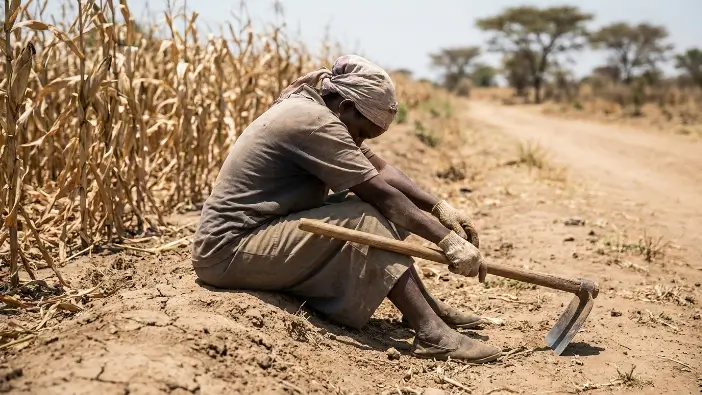
In arid and semi arid regions, prolonged drought periods can intensify both physical exhaustion and psychological strain. A failed rainy season does not simply mean lower yields. It creates worry about food availability, income loss, household stability and survival through the next season.
Climate pressure therefore enters not only the field, but also the nervous system of the people working within it.
This emotional dimension of climate change remains significantly underreported.
Debt, Obligation and Invisible Anxiety
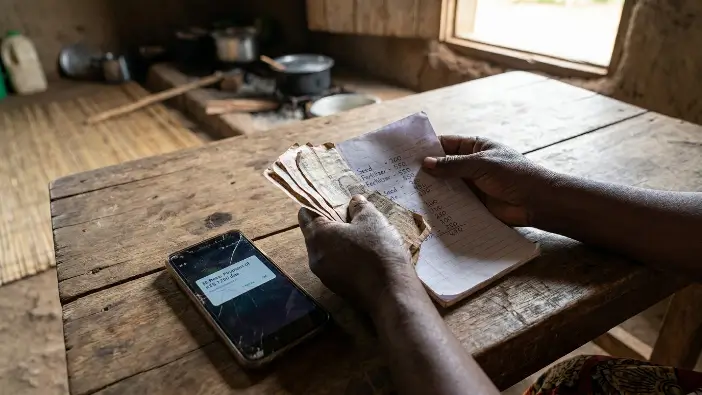
Across many farming communities, survival often depends on informal financial systems. Small loans. Input credit. Savings groups. Borrowing from relatives. Delayed payments from buyers. These systems help sustain production, but they also create emotional pressure when seasons go wrong.
Debt within agriculture is rarely experienced as numbers alone. It becomes tied to social relationships, dignity, responsibility and fear of failure.
A woman who borrows money for seeds or fertilizer carries more than financial obligation. She carries the emotional pressure of repayment in systems where one failed harvest can destabilize an entire household economy.
And because many women operate within informal economic structures, there is often little institutional protection when losses occur.
The emotional cost of agricultural risk therefore becomes deeply personal.
Caregiving Never Stops
One of the most overlooked aspects of women’s agricultural labour is that caregiving responsibilities continue regardless of what happens in the field.
A difficult harvest season does not pause domestic responsibilities. Illness in the household does not reduce farm labour requirements. Economic stress does not remove expectations around cooking, caregiving or household management.
Instead, these pressures accumulate together.
Many women move through agriculture carrying overlapping responsibilities that demand constant emotional attention. They manage crops while monitoring household finances. They work through physical exhaustion while maintaining family stability. They navigate uncertainty while still being expected to provide emotional support to others around them.
This is labour that rarely appears in agricultural policy frameworks, despite shaping daily life across farming communities.
The Limits of Productivity Conversations
Modern agricultural policy often focuses heavily on productivity. Governments and institutions discuss increasing output, improving efficiency, adopting technology and strengthening value chains.
These are important goals.
But productivity conversations can sometimes reduce agriculture to systems and outputs while overlooking the wellbeing of the people operating inside those systems.
A farming system cannot be truly sustainable if it depends continuously on exhaustion.
Mental wellbeing influences decision-making, resilience, long-term productivity and the ability to recover from shocks. Emotional fatigue affects how people engage with risk, innovation, and opportunity.
In this sense, mental health is not separate from agricultural development. It is part of agricultural infrastructure itself.
The Emotional Reality Behind Food Systems
Food systems are often discussed in economic or technical language, but they are also human systems shaped by emotion, pressure, fear, hope and endurance.
The woman carrying produce to market is not only transporting crops. She may also be carrying debt concerns, caregiving responsibilities, grief, uncertainty and exhaustion accumulated over multiple seasons.
Yet these realities remain largely absent from mainstream agricultural storytelling.
Perhaps because emotional strain is harder to photograph than drought. Harder to quantify than yield loss. Harder to place into policy frameworks built around production metrics.
But invisibility does not reduce significance.
Toward a Different Agricultural Conversation
If African agriculture is to be understood fully, the conversation must expand beyond land, inputs and markets. It must include the human cost of sustaining food systems under continuous uncertainty.
This does not mean framing women only through hardship. It means recognizing that resilience itself has weight.
Women across African agriculture continue to adapt, organize, produce, trade and sustain households despite immense structural pressure. Their labour remains foundational to food systems across the continent.
But resilience should not become an excuse for invisibility.
The emotional realities of farming deserve recognition not because they are separate from agriculture, but because they are deeply embedded within it.
Conclusion: The Weight That Remains Unseen
Agriculture feeds populations, drives economies and sustains livelihoods across Africa. But behind many of these systems are women carrying forms of labour that extend far beyond the field itself.
They carry uncertainty through unstable seasons. They carry households through economic pressure. They carry caregiving responsibilities alongside physical work. And often, they carry emotional strain quietly, because survival leaves little space for anything else.
This invisible weight rarely enters agricultural statistics. Yet it shapes daily life across farms, markets and rural communities throughout the continent.
Perhaps one of the most important shifts African agricultural storytelling can make is to recognize that food systems are not only built through land and labour.
They are also built through the emotional endurance of the people sustaining them.
About the Author
Jackline Mauta is a Kenyan journalist and narrative strategist specializing in agriculture, food systems, and rural livelihoods across Africa. Through her work at Nexus PR Africa, she focuses on translating complex agricultural realities into human-centered narratives exploring labour, health, climate, and economic transformation.