

Introduction: Looking Back to Look Forward
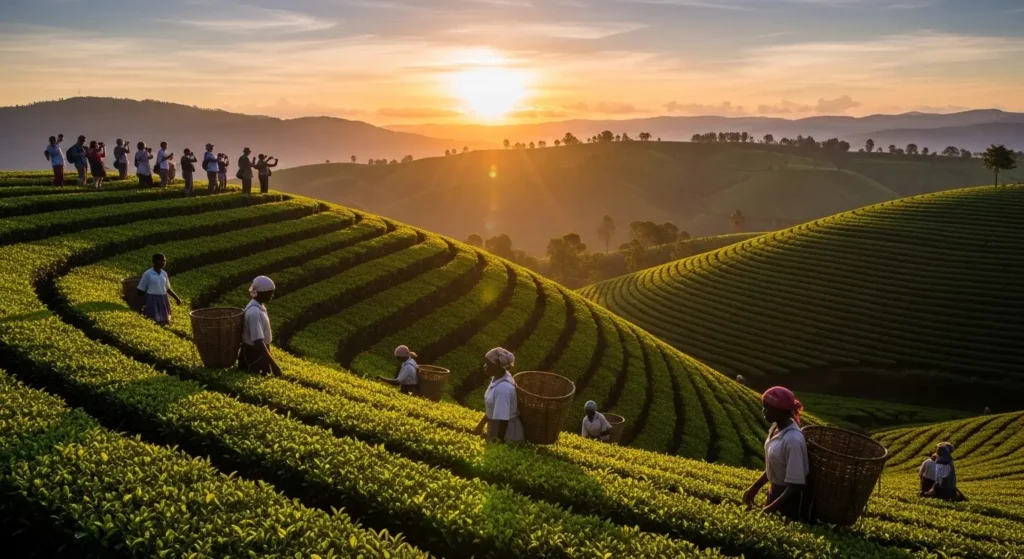
As 2026 unfolds, the fields of Africa carry the memories of 2025 like fingerprints on the soil. In Kenya, tea terraces still ripple with the energy of the past year, where farmers balanced labor with learning, growth with tourism and tradition with innovation.
Across Rwanda, Ghana, Nigeria and beyond, 2025 was a year of experimentation and expansion, of communities opening their farms to strangers and discovering that these visitors could become witnesses to their culture, labor and resilience.
Agritourism in 2025 was uneven dazzling in some regions, tentative in others but it was undeniable. Where it thrived, it taught the world about Africa’s people and their land in ways that no brochure or marketing campaign ever could.
Where it struggled, it illuminated gaps in infrastructure, policy and investment, reminding the continent that growth demands attention and care. And as we step into 2026, the question is not whether agritourism has potential, but whether the continent can translate lessons from the past into sustainable, authentic experiences for the future.
“2025 proved that African farms are more than fields of production they are classrooms, stages and storytellers.”
The Stories of 2025
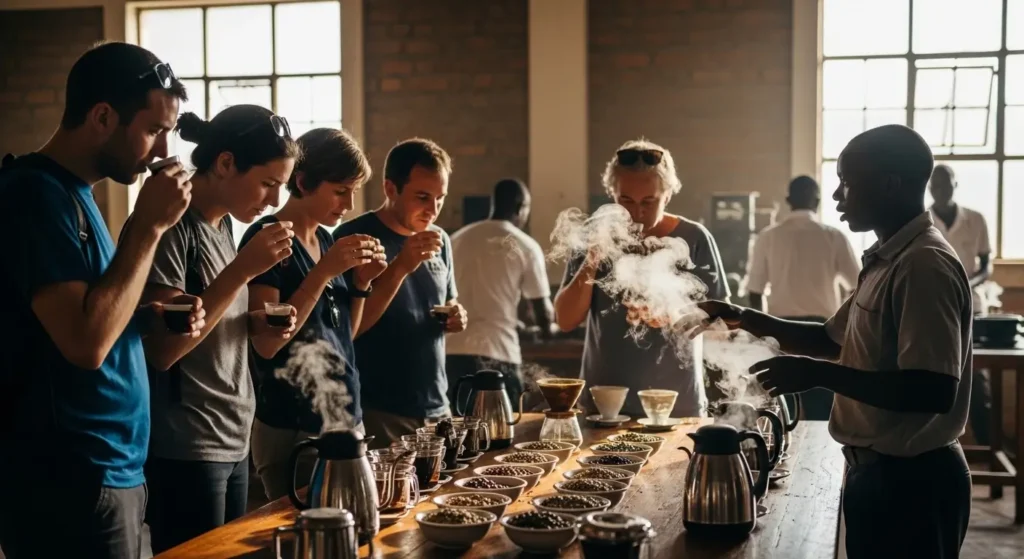
In Rwanda, coffee cooperatives opened their gates and discovered something remarkable: visitors were not just observing production they were learning to see the land through the eyes of those who work it daily. Guests rolled beans between their fingers, smelled the roasting, tasted the final product and left with a profound understanding of labor, climate and tradition. The farm became a storyteller and every cup of coffee carried the narrative of generations.
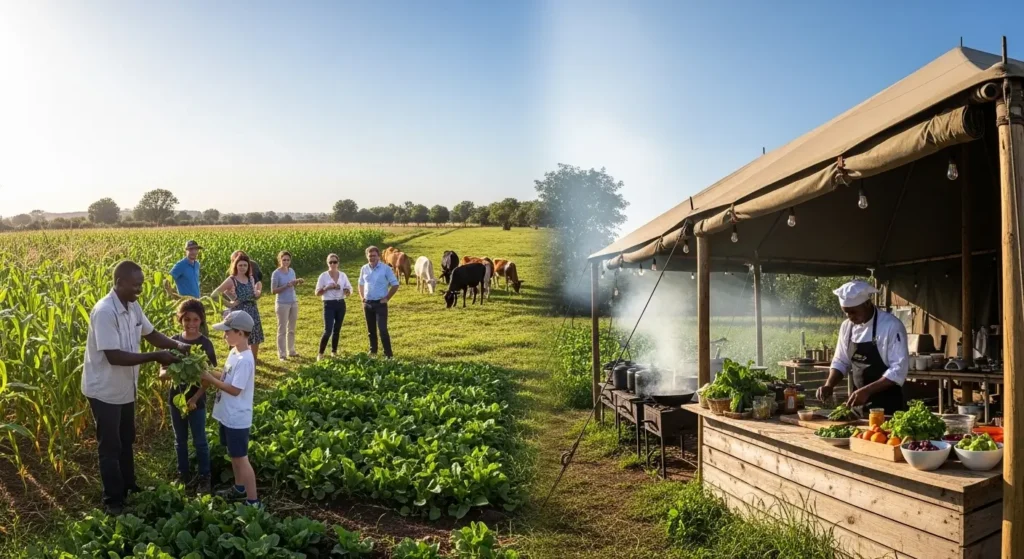
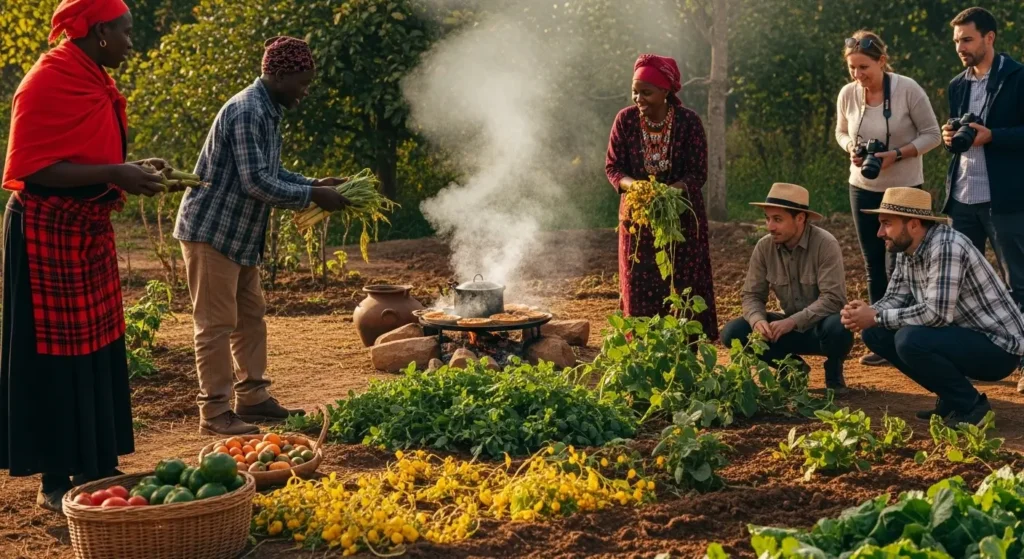
In Kenya, farm-to-table experiences brought education to the forefront. Visitors harvested vegetables, cooked alongside farmers and chefs and witnessed how the simplest ingredients were transformed into meals steeped in culture. Children darted between rows of crops, laughter echoing across the fields, reminding everyone that agritourism is not just commerce it is connection, memory and learning.
Even in regions where agritourism was fledgling, the spirit of experimentation was alive. In parts of West Africa, communities began testing small-scale initiatives, inviting friends, family and visitors to taste, plant and learn. In Southern Africa, conservation-linked farms experimented with integrating wildlife experiences into daily farm life. The year was a laboratory of ideas, and each experiment taught lessons that would shape 2026.
Progress Amid Challenges
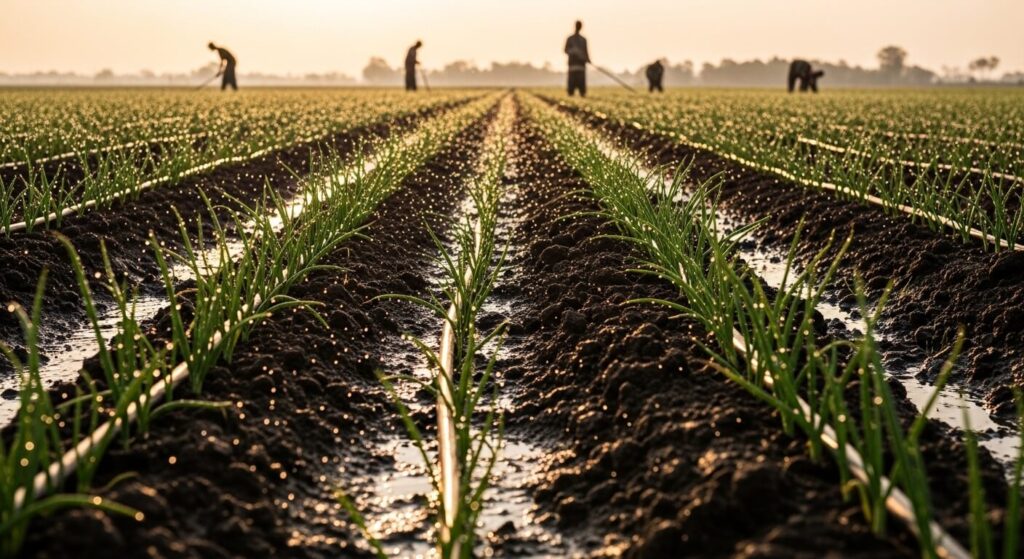
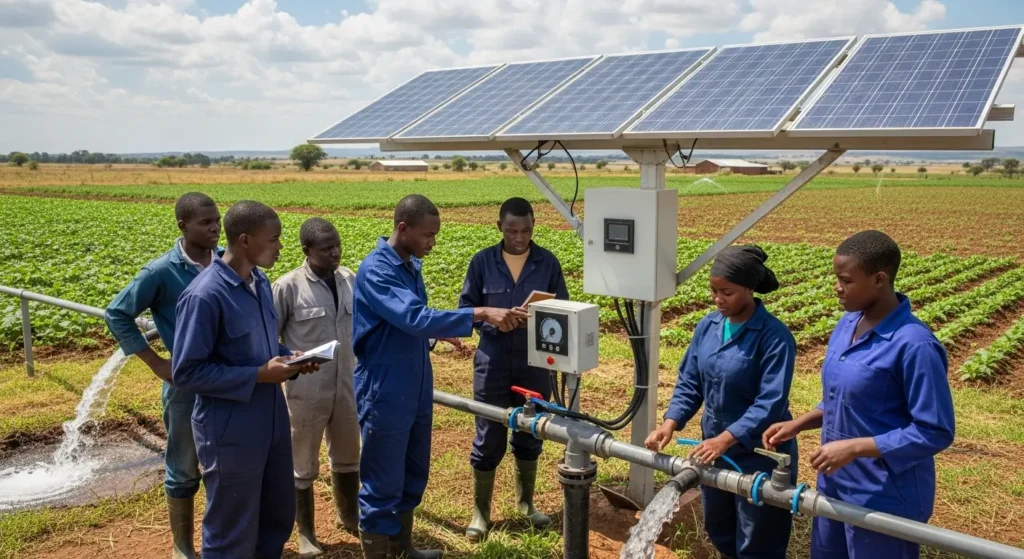
Innovation in 2025 was striking, but uneven. In Tanzania, solar-powered irrigation allowed farmers to host visitors even in dry seasons. In Nigeria, digital platforms connected urban dwellers with rural farms for immersive experiences, breaking barriers of accessibility. Governments began drafting policies that recognized agritourism as a contributor to the economy and cultural preservation.
Yet the year also revealed stark disparities. In some West African regions, poor infrastructure made travel to farms cumbersome. In Northern Africa, bureaucratic ambiguity slowed initiatives. Liability and insurance frameworks for visitors were patchy, leaving farmers uncertain about hosting. And still, even within these challenges, creativity thrived. Farmers improvised pathways, built makeshift visitor spaces and learned to tell their story despite constraints.
“The promise of agritourism is visible, but it moves alongside hurdles that require patience, strategy and support.”
The Continent’s Mosaic
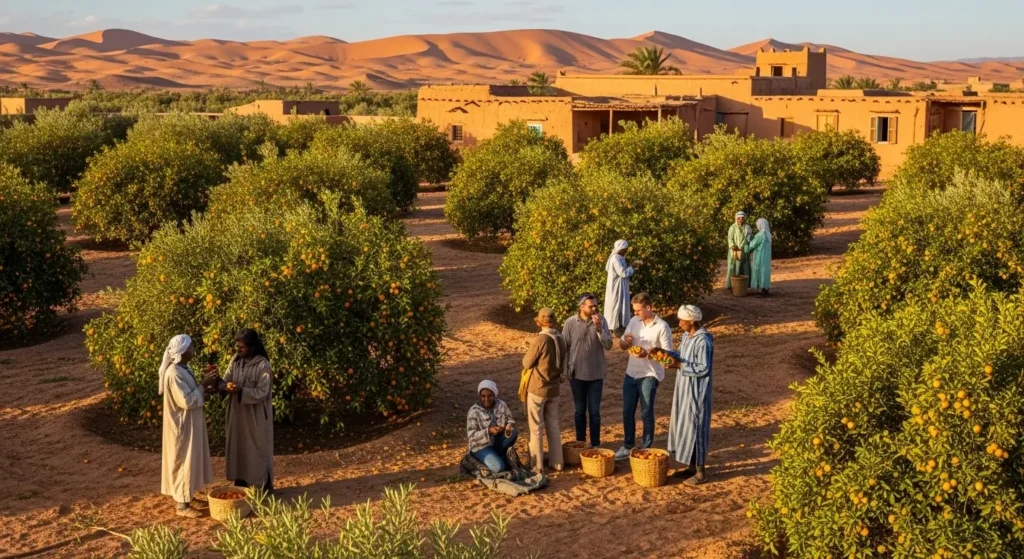
Agritourism is not uniform across Africa, and 2025 made this clear. In East Africa, innovation was tangible — farms integrated education, culture, and hospitality in ways that felt organic and authentic. In Southern Africa, tourism intertwined with conservation, allowing visitors to experience agriculture alongside wildlife stewardship. West Africa offered glimpses of community-led initiatives, while North Africa experimented cautiously, testing models that could scale in future years.
These regional differences tell a bigger story: African agritourism is as diverse as the continent itself. It is shaped by climate, culture, community, and infrastructure. And the lessons of 2025 serve as guideposts for 2026, showing which approaches resonate with visitors and which require refinement.
Visitors and Their Stories
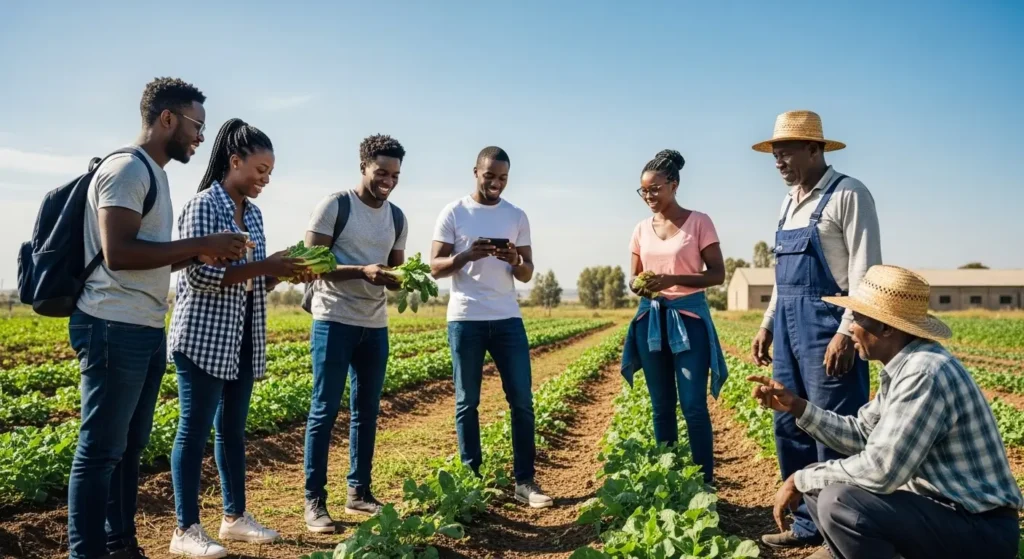
The travellers of 2025 were primarily African, young, urban and curious. They arrived seeking authenticity, knowledge and connection. They wanted more than luxury, they wanted to touch the soil, harvest crops, learn the history of the land and meet the people who make it thrive.
These visitors returned home with stories that ripple outward. A city-dwelling teenager in Lagos might recount her day in a cocoa farm in Ghana, inspiring friends and family to understand the origin of their food. A couple from Nairobi may speak of the tea terraces they walked, the farmers who taught them the subtleties of picking leaves and the meals they shared at sunset. Each visitor became part of Africa’s agritourism story, carrying it into new spaces and communities.
Why Agritourism Matters
Agritourism is more than a revenue stream. It is a force for resilience, education and culture. Every farm that opens its gates becomes a classroom. Every story shared, every child learning how a tomato grows, every cup of coffee roasted under a farmer’s guidance, is a chapter of Africa’s narrative.
In 2025, these stories were not just anecdotes. They were evidence of a continent that refuses to be seen only through the lens of challenge or scarcity. Agritourism allowed Africa to assert its narrative, to show how knowledge, labor, culture and community intertwine with the land. It is both economic strategy and storytelling, intertwined in ways that are tangible, immersive and enduring.
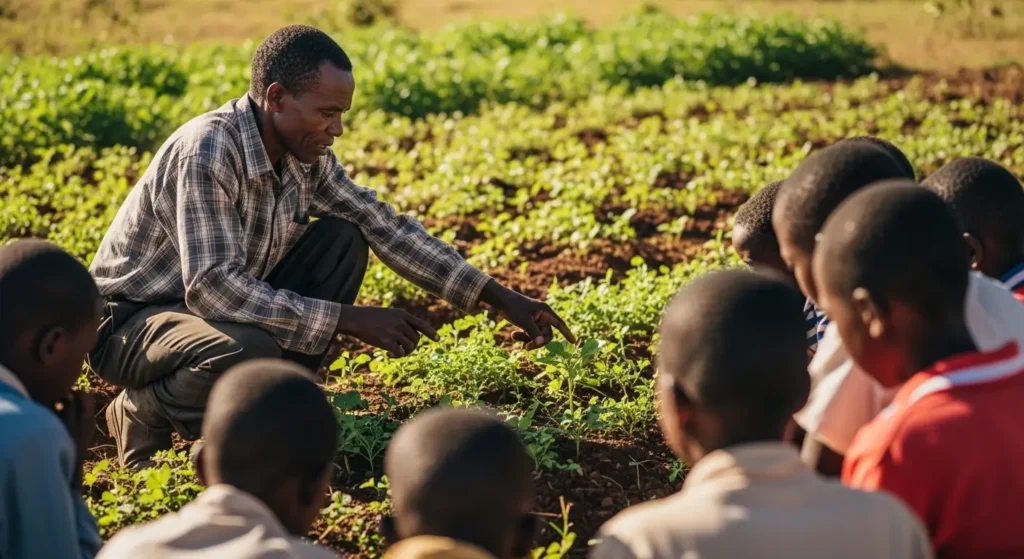
“Every farm that welcomes a visitor is writing a chapter of Africa’s story — one that must be seen, heard, and remembered.”
Looking Ahead: What 2026 Demands
As we navigate 2026, the lessons of 2025 are clear. The continent now has a blueprint of success and areas for growth. Farmers must continue innovating, blending technology with tradition, hospitality with sustainability. Governments and investors must provide clear policy frameworks, infrastructure support and financial safety nets.
But above all, 2026 demands authentic, African-led storytelling. The farms that thrive will be those that preserve their voice, culture and heritage while scaling operations to meet growing curiosity and demand. Visitors will expect experiences that are immersive, genuine and respectful of the communities they enter.
The horizon is filled with possibility. African agritourism is no longer just a concept; it is a movement shaping identity, economy and culture. If 2025 was the year of experimentation and growth, 2026 is the year of consolidation, intentional scaling and global recognition.
Conclusion: Step Into the Fields
Africa’s agritourism story is far from complete, but 2025 proved its power. It demonstrated how farms can educate, entertain and preserve culture. It revealed the potential of young farmers, communities and visitors working together to build a sector rooted in authenticity and sustainability.
For those who want to see, hear and understand Africa beyond headlines, the farms are waiting. The stories are written in soil, seeds and sweat. They are waiting for visitors, investors and storytellers to step in, listen and carry them forward. 2026 promises expansion, refinement and recognition but it is grounded in the human stories that 2025 has already told.
“Agritourism is Africa teaching the world who it is — patient, resilient, and endlessly generous.”