

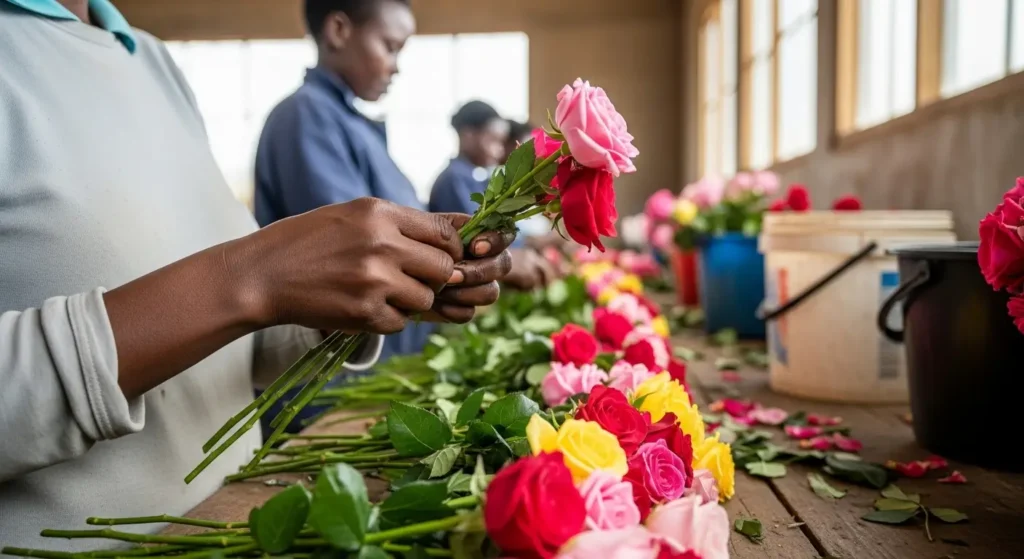
Picture a flower farm on the edge of Lake Naivasha at 4am.
The cold presses close to the ground at that hour. Workers move through long rows of roses in the dark, cutting stems by torchlight. Each stem measured to a precise length. Each bloom sorted by stage not too open, not too tight. The bundles are wrapped, labelled and loaded into refrigerated trucks that will have them at the airport before sunrise.
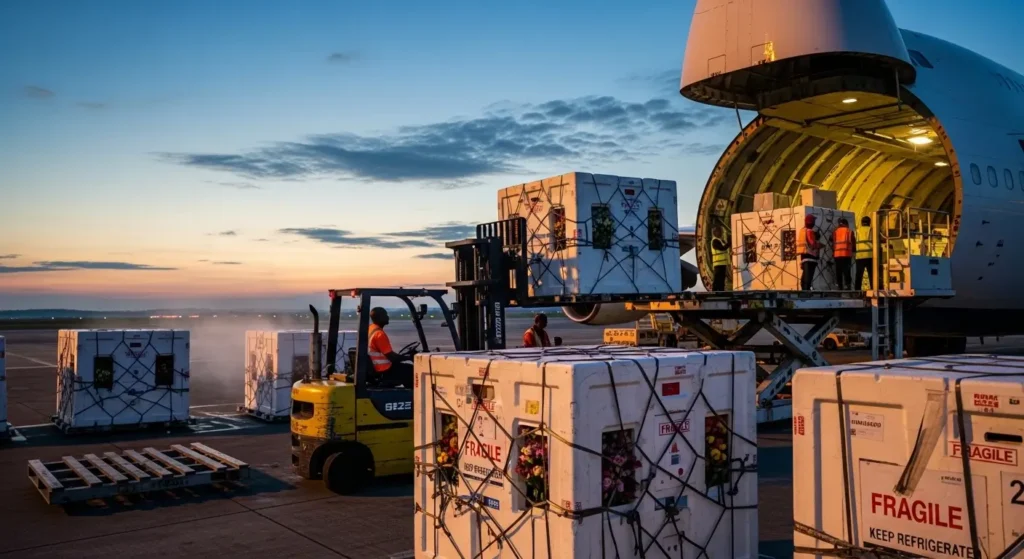
By tomorrow evening, those roses will be in a supermarket in Amsterdam or a flower market in Atlanta.
That entire chain the cold storage, the airfreight, the customs paperwork, the buyers who have purchased from the same Kenyan farms for twenty years runs on one assumption.
That when those flowers land in the United States, the tariff is zero.
That assumption is no longer safe.
AGOA the African Growth and Opportunity Act the trade agreement that built Kenya’s duty-free access to the American market. It expired in September 2025. On February 3, 2026, President Trump signed the Consolidated Appropriations Act, 2026, which reauthorised AGOA retroactively from September 30, 2025 and extended it through December 31, 2026 only.
Nine months.
That is what Kenya’s AGOA Kenya horticulture sector has to work with. And after December 31, nothing is confirmed.
What Is AGOA and Why Does the AGOA Kenya Horticulture Sector Depend on It?
Since the year 2000, AGOA has given eligible countries in sub-Saharan Africa duty-free access to the United States market for more than 1,800 product categories. For Kenya, that means cut flowers, French beans, avocados, macadamia nuts, tea and coffee can all enter America without paying any import tax.
Without AGOA, those same products face standard US tariff rates which for agricultural and food products can be two to three times what Kenya currently pays. Which is nothing.
Think about what that means in practice.
A Kenyan flower farm selling roses to an American buyer competes with farms in Colombia, Ecuador and the Netherlands. Margins are already tight. Now imagine an import tax on the Kenyan roses that the Colombian and Dutch ones do not face. The American buyer will not absorb that cost. The Kenyan exporter will. Which means either the farm makes less money or the buyer finds a different supplier.
That is the cliff Kenya’s horticulture sector is standing near right now.
The Numbers That Should Be Keeping Exporters Up at Night
Kenya exported goods worth $737 million to the United States in 2024 making the US Kenya’s second-largest export destination globally that year. Horticulture sits at the centre of that figure.
Flowers alone generated $835 million in total global export earnings in 2024. Kenya is the second-largest cut flower exporter in the world. Roughly 40 percent of roses sold across the European Union come from Kenyan farms.
On the textile side, Kenya’s garment industry also running on AGOA employs over 60,000 workers directly, with exports to the United States growing from $55 million in 2001 to $600 million in 2024. Add in indirect employment and the figure reaches 250,000 people whose livelihoods connect directly to the AGOA relationship.
The jobs attached to these numbers are not abstract.
The Naivasha flower farms employ tens of thousands of workers the majority of them women. Those wages are school fees. They are rent. They are the money that reaches the small trader selling vegetables at the farm gate every Friday afternoon. Pull one thread and you do not just affect the farm. You affect an entire local economy built around it.
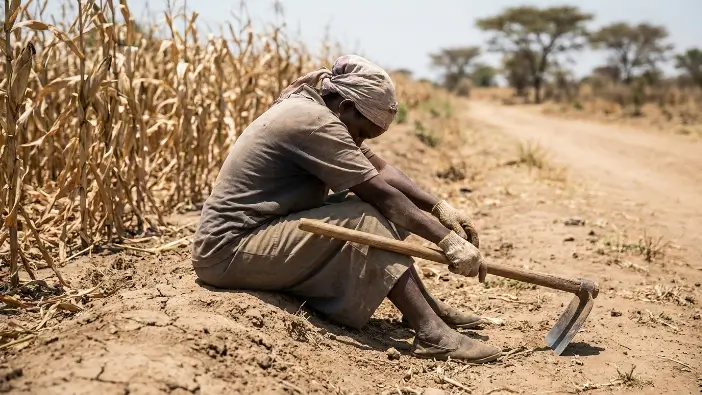
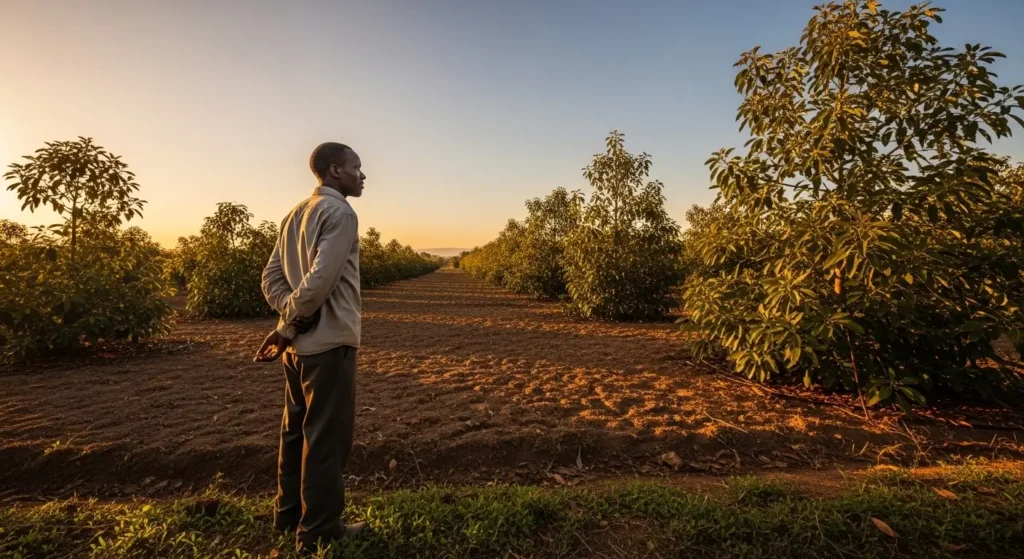
Then there is the avocado farmer in Murang’a. The French bean smallholder in Kirinyaga. The macadamia grower in Embu. Most of them are not exporting directly. They are selling into supply chains that eventually reach an international buyer. They do not know the name AGOA. But they feel its consequences in the price the middleman offers at the farm gate, in whether the export buyer calls this season or goes quiet.
Here Is the Part Nobody Is Saying Loudly Enough
AGOA was reauthorised. That is the headline. But here is what the headline does not tell you.
The House of Representatives voted on January 12, 2026 to approve a three-year extension of AGOA through 2028. The White House pushed for one year. The Senate agreed with the White House. The House concurred. When President Trump signed the bill on February 3, Kenya got twelve months not three years. The short extension was bundled into a $1.2 trillion appropriations package that also reopened the government after a brief shutdown.
Twelve months buys time. It does not buy certainty.
And there is something else sitting on top of the AGOA question that has not received enough attention.
AGOA-eligible goods are not exempt from the Trump administration’s 2025 tariff actions. A 10 percent universal surcharge now applies to most goods entering the United States including goods from AGOA countries. AGOA was designed to eliminate the standard import tariff, which averaged 3.3 percent across most products. The duty-free access was the entire point. Now there is a 10 percent surcharge sitting on top regardless of AGOA status.
So Kenya has duty-free access in theory. In practice, Kenyan goods are more expensive in the American market today than they were in 2024 even with AGOA renewed.
The agreement is alive. Its value has been significantly reduced.
What Washington Is Actually Saying
The language coming out of Washington deserves to be read carefully. It tells you exactly where this is going.
When USTR Ambassador Jamieson Greer announced the AGOA reauthorisation on February 3, his statement was unambiguous. AGOA for the 21st century must demand more from trading partners and yield more market access for US businesses, farmers and ranchers. He added that the administration will work with Congress over the next year to modernise the programme to align with President Trump’s America First Trade Policy.
Read those two sentences slowly.
The era of non-reciprocal trade America giving African countries preferential access without asking for the same in return is ending. Any future AGOA or any arrangement that replaces it, will require Kenya to open its own markets to American goods. Agricultural products. Services. Digital trade. Intellectual property protections.
The US National Pork Producers Council has already raised this directly pushing for Kenya to remove barriers to US pork imports as a condition of continued AGOA benefits. That is not a footnote. That is a signal about how the modernisation conversation will be framed.
Kenya Is at the Table ,But the Table Has Conditions
Here is the most significant development in this story that most Kenyan farmers and exporters do not yet know about.
Kenya has moved faster than any other African nation. CS Lee Kinyanjui met directly with USTR Jamieson Greer in Washington to open negotiations for a reciprocal trade agreement. The first formal round of consultations followed, led on the Kenyan side by Trade Principal Secretary Regina Ombam and on the US side by Acting Assistant USTR for Africa Osvaldo Gómez-Martínez. The first round concluded on February 27, 2026.
Both sides described the talks as constructive. CS Kinyanjui said a reciprocal trade agreement is crucial for securing long-term access to the US market for Kenyan products and providing the stability needed to unlock new investments. Total trade between Kenya and the US reached $3.3 billion in 2024 an 18 percent increase from 2023 giving both sides genuine commercial reasons to reach an agreement.
Kenya is currently the only sub-Saharan African country that has entered formal, publicly announced bilateral trade negotiations with the Trump administration. South Africa, Nigeria and every other major economy on the continent are sitting under the 10 to 15 percent universal surcharge with no active negotiation pathway.
Being at the table is better than not being there.
But being at the table comes with a price. These negotiations are specifically addressing tariffs and non-tariff barriers on American goods entering Kenya not just Kenyan goods entering America. Washington will be pushing for Kenya to open its markets in ways that previous trade frameworks did not require.
These talks have collapsed twice before once under Trump’s first term and once under Biden. The technical capacity gaps, the economic asymmetry between the two countries and the criticism from AfCFTA and the East African Community about Kenya negotiating outside regional frameworks are all real challenges that did not disappear when the first round concluded.
What Kenya concedes in those rooms will matter as much as what it gains.
The Five Months We Already Lived Through
Before February 3, 2026, AGOA had been lapsed for five months from September 30, 2025.
Those five months were a preview.
Factories held orders. Investors stepped back. Exporters faced full tariff duties on American shipments. The uncertainty alone not even the permanent loss of access, just the uncertainty froze expansion plans and hiring decisions across the sector.
Five months of lapse did that.
The good news buried in the February reauthorisation is this: the law is retroactive to September 30, 2025. Exporters who paid duties during the lapse can file for refunds with US Customs and Border Protection provided they have the documentation. If you shipped goods to the United States between October 2025 and February 3, 2026, check with your customs broker about filing for that refund now.
The December 31 deadline is not a distant date. It is a business continuity planning date and the time to start planning is now, not in November.
A New Door Is Opening But It Takes Time to Walk Through
Here is something that has not received enough attention in Kenya’s trade conversation.
Starting May 1, 2026, China’s zero-tariff policy for all African countries with diplomatic ties takes effect, covering 100 percent of tariff lines. Under this new framework, Kenyan exporters can send processed agricultural products to China duty-free, a significant shift from the previous regime where such goods faced Chinese tariffs of up to 25 percent. However, Eswatini is exempted from this policy and will not receive duty-free access, as it does not maintain formal diplomatic relations with Beijing.
China is the world’s largest consumer market. It buys more fresh produce, more processed foods and more premium agricultural products every year. Kenya’s avocados, macadamia nuts, tea and flowers already have a growing Chinese buyer base. The zero-tariff window makes that market dramatically more accessible.
The avocado sector has shown what deliberate market diversification looks like. Kenya’s avocado exports grew 11 percent in 2024, with the Netherlands, the Middle East and new Asian markets all expanding as destinations. That did not happen by accident. It happened because farmers, exporters and government worked deliberately to build relationships across multiple markets.
The flower sector, the French bean sector, the macadamia sector all of them need that same strategy. Not as a response to a crisis. Before the crisis arrives.
Three Things Every Farmer and Exporter Needs to Understand Right Now
This is not a problem that lives only in government offices and negotiating rooms. It will reach the farm gate through prices, through orders, through buyers who quietly start looking elsewhere. Here is what matters most.
The tariff is already higher than it was. Even with AGOA renewed, the 10 percent surcharge means Kenyan goods cost more to land in America than they did in 2024. If you are an exporter, your margins are already tighter. If you are a smallholder supplying into an export chain, the pressure your buyer is feeling will eventually find its way to the price they offer you. Plan for it now.
Compliance standards are rising and will not stop. American and European markets are tightening pesticide residue limits, food safety certification requirements and supply chain documentation standards. A Kenyan exporter not already investing in compliance is not ready for the market of 2027 regardless of what AGOA does. The Kenya Flower Council, FPEAK and the Fresh Produce Consortium need to be running compliance training at scale right now reaching smallholder cooperatives, not just large commercial farms.
Diversification is the only long-term answer. The China zero-tariff window opens May 1. The Middle East is growing. New Asian markets are opening. Exporters who start building those relationships in 2026 will be in a fundamentally different position when December 31 arrives than those who waited to see what Congress would do.
Back to the Farm at 4am
The workers cutting roses in the dark outside Naivasha this morning are not reading trade policy briefings. They are doing the work that puts food on their tables and school fees in the bank.
They are going to feel the consequences of what happens in Washington and Nairobi over the next nine months not as a policy announcement, but as orders that slow down, prices that drop and buyers who quietly start looking elsewhere.
The AGOA Kenya horticulture sector built something remarkable over 25 years. A billion-dollar industry. Hundreds of thousands of jobs. A supply chain precise enough that a rose cut at 4am in Naivasha is in a vase in Atlanta by Thursday.
That is not something to lose because Kenya waited too long to act.
The bilateral negotiations have started. The China window is opening. The diversification roadmap exists.
But none of it works on its own. It works when the exporter books the Chinese buyer meeting instead of waiting. When the smallholder cooperative gets compliance-certified instead of hoping the standards do not tighten. When the policymaker treats December 31 as a deadline that has already arrived not one that is nine months away.
The thread is not broken yet.
But the rose harvest does not wait.
ABOUT AUTHOR
Jackline Mauta is a Food Systems & Agribusiness Communications Specialist, Journalist, Media & PR professional and Corporate MC with a background in broadcast journalism and public relations. She specializes in documenting and communicating Africa’s food systems and agribusiness sector through articles, media briefs, documentaries and digital storytelling. Her work focuses on translating complex agricultural, market and policy issues into clear narratives that highlight the people, innovations and opportunities shaping the food value chain. Jackline also leads strategic communications and marketing initiatives, helping organizations strengthen their visibility, brand positioning and engagement within the agribusiness ecosystem.