


Drone Farming: Game Changer or Just Hype in African Agriculture?
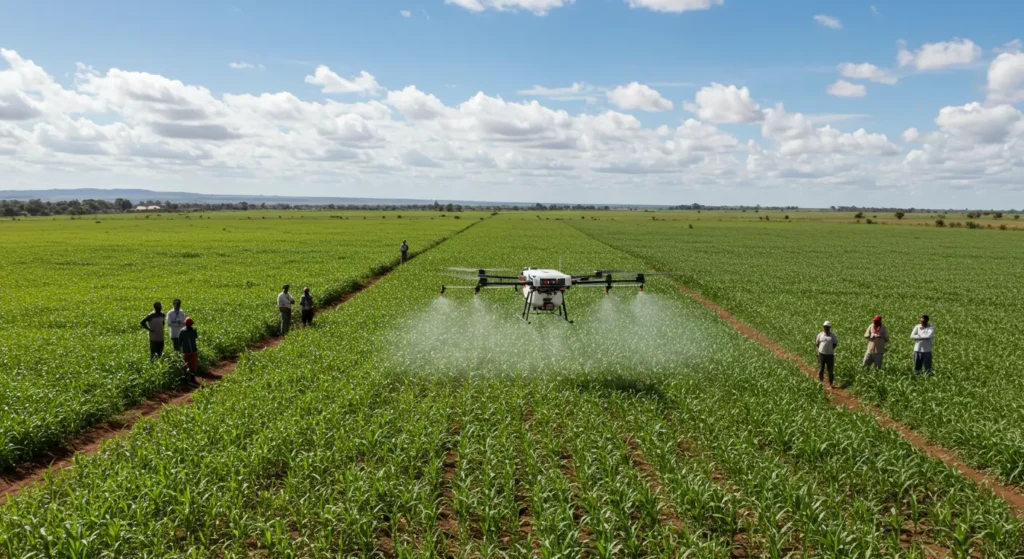
Kenya’s agriculture is changing fast, driven by technology and rising pressure to feed a growing population. Among the most talked-about innovations is the use of drones—flying machines once reserved for military or photography now being pitched as tools to transform farming. Supporters say drones can help farmers boost yields, reduce costs, and fight pests more efficiently. Critics argue they are expensive toys that don’t solve the deeper structural challenges facing smallholder farmers. So, is drone farming truly a game changer, or just hype?
The Promise of Drone Farming
Across the world, agricultural drones are being deployed for tasks like spraying pesticides, mapping fields, and monitoring crop health. Unlike manual spraying, which can take days and expose farmers to dangerous chemicals, drones can cover large areas quickly and with precision. For Kenyan maize or rice farmers dealing with pests like the fall armyworm, this precision can mean the difference between saving or losing an entire harvest.
Proponents also highlight the efficiency gains. A drone can scan a farm using multispectral imaging, detecting water stress, nutrient deficiencies, or disease before the farmer can see them with the naked eye. That allows for early intervention, potentially increasing yields by up to 30%. In theory, drones could help Kenyan farmers move from guesswork to data-driven farming.
Success Stories Emerging in Kenya
Despite skepticism, some Kenyan startups are already proving that drone farming is more than just hype. In Nakuru, an agritech company called Astral Aerial has been piloting drone spraying services for wheat farmers. By using drones instead of manual labor, farmers reported cutting pesticide use by 40% while achieving more uniform application.
In Makueni, mango farmers have used drones for early detection of fruit flies, one of the biggest threats to export quality. By spotting the problem early, exporters reduced post-harvest losses and avoided costly rejections in European markets. Similarly, rice growers in Kirinyaga have begun experimenting with drones for pest control, citing savings on both time and water.
These pockets of success show that drones are not just a foreign concept—they are already solving local problems in Kenya’s agricultural value chains.
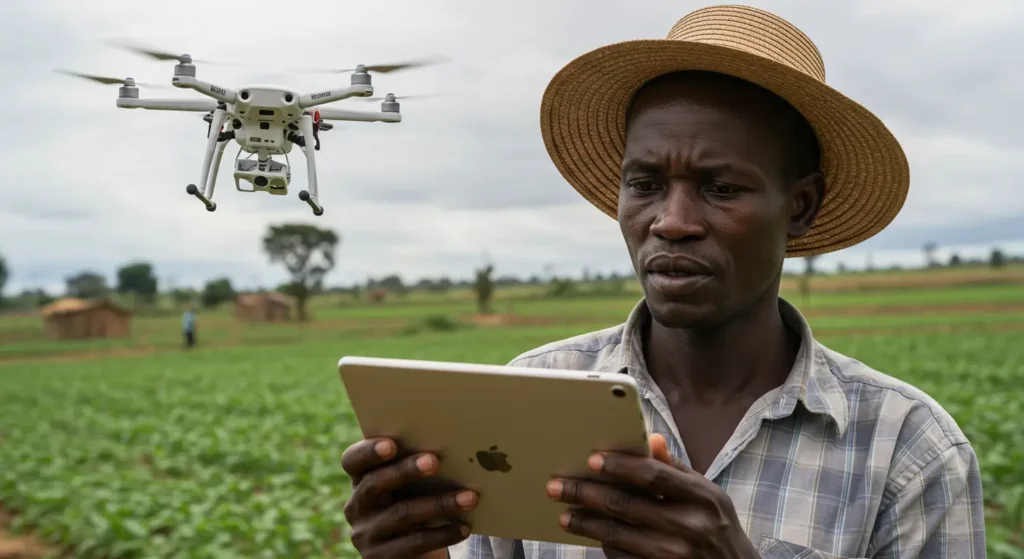
Still, drone farming remains out of reach for most smallholder farmers. The average spraying drone costs between KES 500,000 and KES 800,000, a price far beyond the means of a typical farmer with two acres of maize. Even renting drone services can cost between KES 1,000 and KES 2,500 per acre, which is only viable for farmers with high-value crops like horticulture or coffee.
The Cost Barrier
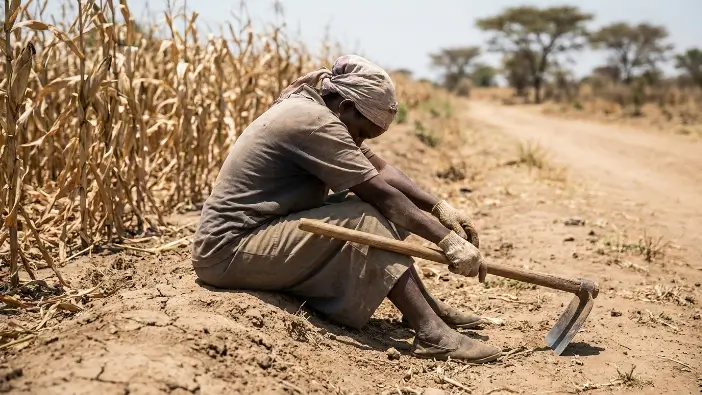
This raises the question: who is drone farming really for? At present, the beneficiaries are medium-to-large-scale farmers and export-focused cooperatives. For the millions of smallholders growing maize, beans, and other staple crops, drones remain aspirational technology rather than practical tools.
The Training Gap
Another challenge is technical knowledge. Flying a drone and interpreting its data requires specialized training. While some startups offer drone-as-a-service models where the farmer doesn’t need to own or operate the drone, there is still a gap in understanding how to act on the data provided.
For example, a drone might detect nutrient deficiencies, but if a farmer lacks access to affordable fertilizer, the insight is useless. Without connecting drone data to actual farm inputs, the promise of precision agriculture can collapse into frustration.
Lessons from Other Countries
Kenya is not alone in this debate. In Ghana, drone spraying services for cocoa farmers have shown dramatic improvements in yield and reduced labor costs. Rwanda has invested heavily in using drones for fertilizer distribution and crop mapping at the national level. These examples suggest that drones work best when backed by policy support, subsidies, and cooperative models, rather than leaving farmers to navigate the costs alone.
For Kenya, the lesson is clear: without government or donor-backed programs to subsidize access, drones risk becoming another elitist technology that benefits a few while leaving smallholders behind.
The Hype vs. Reality
So, are drones the future of African farming? The answer is complicated. On one hand, drones clearly solve real agricultural problems: pest management, precision spraying, and crop monitoring. On the other hand, the barriers—cost, training, and scalability—cannot be ignored.
Some experts argue that drones are being oversold as silver bullets. The reality is that Kenya’s farming challenges—poor irrigation, limited credit, fragmented land—will not be solved by flying machines alone. Instead, drones should be seen as part of a broader toolbox, complementing other technologies like solar irrigation, mobile-based extension services, and improved seed varieties.
The Future of Drone Farming in Kenya
The real opportunity may lie in drone-as-a-service models. Just as boda bodas transformed rural transport by being accessible and shareable, drones could be rented by farmer cooperatives or county governments to provide affordable services at scale. Some counties are already piloting this approach, and if successful, it could democratize access to drone farming.
Additionally, universities and vocational centers are beginning to introduce training programs for agri-drone pilots. If Kenya can build a skilled workforce and link drone data to affordable farm inputs, the hype might finally translate into reality.
Conclusion: A Tool, Not a Miracle
Drone farming is neither pure hype nor a guaranteed revolution—it is a promising tool that needs the right ecosystem to succeed. For Kenya, the future will depend on whether drones are rolled out as elitist gadgets for a few exporters or as shared services that lift millions of smallholder farmers.
If government, private startups, and cooperatives can collaborate, drones could indeed be a game changer. But until then, the technology remains a symbol of both what is possible and what is still out of reach in African agriculture.

One Response
The national government in collaboration with the county governments, especially where large scale farming is practised, like Trans Nzoia, Uasin Gishu and Narok for maize and wheat and and counties that grow Tea and coffee in large scale; efforts needs to be put in place to make drone use a reality and a success to all.
This can’t be realized at individual farmer level at formative stages. The government has to play a pivotal role to bring this to fruition.
Otherwise the benefits of drone technology will just remain a pipe dream and constantly out of reach to farmers.
What am trying to say is national and county governments must work together to bring this highly needed technology to farmers.
Thank you.