

Africa Is Calling Its Food System to Account
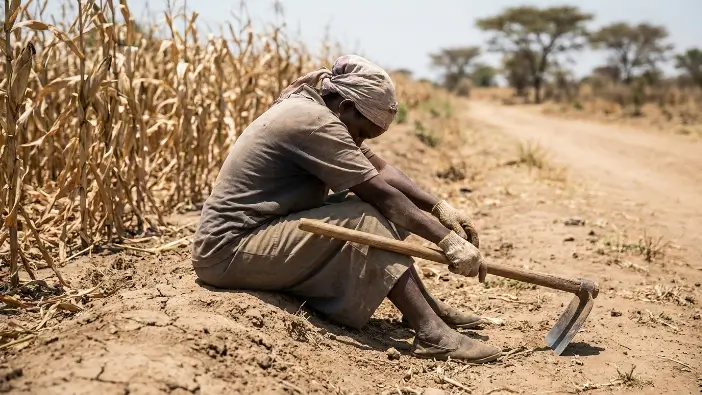
There is a story the world has been telling about African hunger for fifty years. The continent cannot feed itself. It needs outside help. The solutions come from somewhere else.That story is wrong. And this week in Johannesburg, a South African institution is proving exactly why.
The SAHRC food inquiry 2026 opened this morning. The South African Human Rights Commission a body with constitutional powers, including the power to subpoena witnesses and compel evidence began a national investigative hearing into why a country that produces enough food still has millions who cannot eat. The hearing runs until March 20.
This is not a conference. It is not a summit with a communiqué and a group photograph. It is a constitutional accountability process. The kind of process that requires answers, not aspirations.
And the questions it is asking this week in Johannesburg are questions that every government on this continent needs to be asked.
What Is the SAHRC Food Inquiry 2026 And Why Should the Whole Continent Be Watching?
The South African Human Rights Commission is a Chapter 9 institution established directly by the Constitution to strengthen constitutional democracy. It does not advise. It investigates. It makes binding recommendations. It follows up.
The SAHRC food inquiry 2026 was triggered by complaints received and monitoring work that revealed a profound malfunction in the food system described by the commission itself as a grave violation of the constitutional right of everyone to have access to sufficient food.
These Seven topics are under investigation this week.
The corporate capture of food in South Africa. The power of civic mobilisation. Systemic failures of government. The indivisibility of rights. Land reform. Indigenous knowledge relating to agroecology. The structural and economic causes of hunger despite national food sufficiency.
Corporate capture. Systemic government failure. Structural causes of hunger despite sufficiency.
These are not farming questions. They are political economy questions. They are questions about who controls the food system, who benefits from it and who is structurally excluded from its outputs.
The commission’s provincial manager said plainly: this commission does not parachute into crises. It stays. It follows through. It escalates where accountability is lacking. It will continue until there is measurable progress and the constitutional right to food is realised.
That sentence should travel far beyond South Africa’s borders.
Who Is in the Room at the SAHRC Food Inquiry 2026 And What Are They Saying?
The submissions being made to this inquiry this week tell you everything about how seriously South African civil society is treating this moment.
SERI the Socio Economic Rights Institute filed its submission on February 27 with six civil society partners. The partners include organisations representing informal traders, domestic workers and inner-city community residents. Their central argument is direct: food insecurity is not only about production or supply. It is about deep structural inequalities that block people’s economic access to sufficient, nutritious and culturally appropriate food.
The Maternal Support Grant Advocacy Coalition submitted evidence that pregnant women are particularly vulnerable facing a critical period for nutritional needs at exactly the moment when financial pressures are highest and social protection support is lowest.
The Universal Basic Income Coalition is making the mathematical argument: when food prices rise faster than incomes and they have, consistently, across South Africa for five years the number of people who cannot afford to eat grows regardless of how much food is produced. When a domestic workers alliance and an informal traders forum and a community development organisation sit in the same hearing room as government ministers and corporate executives, all of them accountable to the same constitutional standard that is institutional maturity. That is what accountability looks like when a country uses the tools it has built
What the SAHRC Food Inquiry 2026 Is Finding And What It Means for Every African Country
South Africa produces enough food to feed its entire population. That is not a contested fact. It is the starting premise of the inquiry.
And yet. Millions of households cannot afford a nutritious diet. Children are stunted. Pregnant women go without adequate nutrition during the most critical window of early child development. In the most severe cases, people die from preventable hunger.
The gap between production and plate is not explained by drought or conflict or climate. South Africa is a middle-income country with functional agricultural infrastructure, a sophisticated retail sector and a constitution that guarantees the right to food.
The gap is explained by three things the inquiry is documenting in real time this week.
Corporate Concentration in the Food System
A small number of large retailers, processors and agribusinesses control the majority of what South Africans eat and what they pay for it. When that concentration works without accountability, the people at the bottom of the income distribution pay the highest proportion of their income for food and receive the least nutrition in return.
Social Protection That Has Not Kept Pace
South Africa’s Child Support Grant has kept millions of children from worse outcomes. But its value has eroded against food price inflation consistently for years. A grant that was adequate in 2015 does not buy the same food in 2026. The gap between grant value and food cost is the hunger gap for the most vulnerable households.
Land Access That Excludes the People Who Farm It
Land reform in South Africa remains one of the most politically charged and least resolved questions in the country’s democratic history. The inquiry is hearing evidence on exactly how that unresolved question connects to food insecurity because land access and food access are not separate issues. They are the same issue at different points in the chain.
Beyond the SAHRC Food Inquiry 2026 .The Continental Accountability Architecture Being Built Right Now
The Johannesburg hearing is not happening in isolation. Three things are converging in African food systems governance in March 2026 that nobody is connecting into a single narrative. Together they describe something significant: a continent building the institutional machinery to hold itself accountable on food.
One: Parliaments Are Now at the Centre of CAADP
For the first time in the history of the Comprehensive Africa Agriculture Development Programme, parliaments are at the centre of the process. The Kampala Declaration the new continental agriculture strategy for 2026 to 2035 has given legislators a mandate they did not have under Maputo or Malabo.
Parliamentarians are now tasked with aligning national laws to continental targets, scrutinising agricultural budgets, tracking spending efficiency and institutionalising partnerships with civil society. The Pan-African Parliament Vice-Chairperson on Agriculture said it plainly: laws, however solid they may be, do not feed people. What counts is implementation, political will, accountabilityand resources.
In many African countries right now, debt-service costs exceed agricultural budgets. Parliaments serious about the Kampala commitments will have to make choices that previous assemblies have consistently avoided. The Kampala Declaration has given them both the mandate and the public accountability framework to make those choices visible.
Two : Farmers Now Have a Guide to Hold Governments to Account
A farmer-friendly popular version of the CAADP Strategy and Action Plan 2026 to 2035 has been launched in multiple languages. It breaks down the continental commitments in language that smallholder farmers can engage with directly. The chairperson of the Eastern and Southern Africa Small-Scale Farmers Forum described it as an instrument of empowerment farmers can now track agricultural budgets, engage in policy discussions and demand accountability at all levels.
A smallholder farmer in Zambia tracking her government’s agricultural budget against the Kampala Declaration targets. That is a different Africa from the one in the fifty-year-old story.
Three : The World Is Coming to Africa to Learn About Food Accountability
Africa is preparing to host the Third Global Parliamentary Summit Against Hunger and Malnutrition at the Pan-African Parliament headquarters in Midrand, South Africa. The event marks the 20th anniversary of the Right to Food Guidelines. The world’s parliamentarians are coming to Africa to discuss food accountability not Africa going to Geneva or New York or Rome to receive instructions. The world coming to Midrand to learn.
That is the story that deserves to travel.
Three Questions Every African Government Should Answer Before the SAHRC Food Inquiry 2026 Closes
The hearing runs until March 20. Eight days. Here are the three questions every ministry of agriculture, every parliament and every civil society organisation on this continent should be asking itself before that hearing closes.
Does your country have a constitutional right to food and does it have enforcement mechanisms that function at community level? Only around 20 countries globally have enshrined the right to food in their constitutions including South Africa, Congo and Uganda in Africa. A right that exists on paper but not in practice is not a right. The SAHRC food inquiry 2026 is finding out exactly how large that gap is in South Africa. Every country should be running the same audit.
What percentage of your national budget went to agriculture last year, and how much of that reached smallholder farmers? The Kampala Declaration commits to 10 percent. The Malabo Declaration committed to the same target in 2014. Few countries have met it. The question is not whether the commitment exists. It is whether any parliament on this continent is prepared to hold its government accountable for missing it year after year, declaration after declaration.
Who in your food system is accountable for the gap between what is produced and what people can eat? The SAHRC inquiry is asking about corporate capture, social protection failure and structural land exclusion. These questions have names attached to them when the process is done properly. Every country has a version of this gap. Not every country has built the institution to investigate it.
What Africa Is Already Building And Why the SAHRC Food Inquiry 2026 Is Part of Something Larger
The SAHRC inquiry. The Kampala Declaration parliamentary mandate. The farmer-friendly CAADP guide. The Global Parliamentary Summit coming to Midrand.These are not isolated events. They are pieces of the same architecture.
Rwanda built community-managed food systems that reinvested in their own members and expanded because the people running them believed in what they were building. Nigeria is running post-harvest loss reduction pilots in Kano, Kwara and the Federal Capital Territory right now. Senegal’s $191 million Agropole processing zone is operational processing food before it leaves the country instead of exporting raw produce at a fraction of its value. Ethiopia has identified 24 game-changing solutions aligned with the Kampala Declaration’s strategic clusters and is building the monitoring framework to track them. These are not aid stories. They are governance stories. They are what accountability looks like when it reaches past the declaration into the field.
The story the world tells about African hunger says the solutions come from outside. That the continent is the problem and the answer arrives from elsewhere.
This week in Johannesburg, a constitutional body is using subpoenas to compel evidence from the people responsible for the gap between South Africa’s food production and its citizens’ plates. Civil society organisations representing domestic workers, informal traders and inner-city communities are making oral representations to the same commission that holds government accountable under the same constitution.
The SAHRC food inquiry 2026 is not a story about a broken continent. It is a story about a continent that has built institutions strong enough to hold itself accountable and is using them.
The hearing room in Johannesburg is full today.
That is where the story starts.
And it does not end when the hearing does.
ABOUT AUTHOR
Jackline Mauta is a Food Systems & Agribusiness Communications Specialist, Journalist, Media & PR professional and Corporate MC with a background in broadcast journalism and public relations. She specializes in documenting and communicating Africa’s food systems and agribusiness sector through articles, media briefs, documentaries and digital storytelling. Her work focuses on translating complex agricultural, market and policy issues into clear narratives that highlight the people, innovations and opportunities shaping the food value chain. Jackline also leads strategic communications and marketing initiatives, helping organizations strengthen their visibility, brand positioning and engagement within the agribusiness ecosystem.