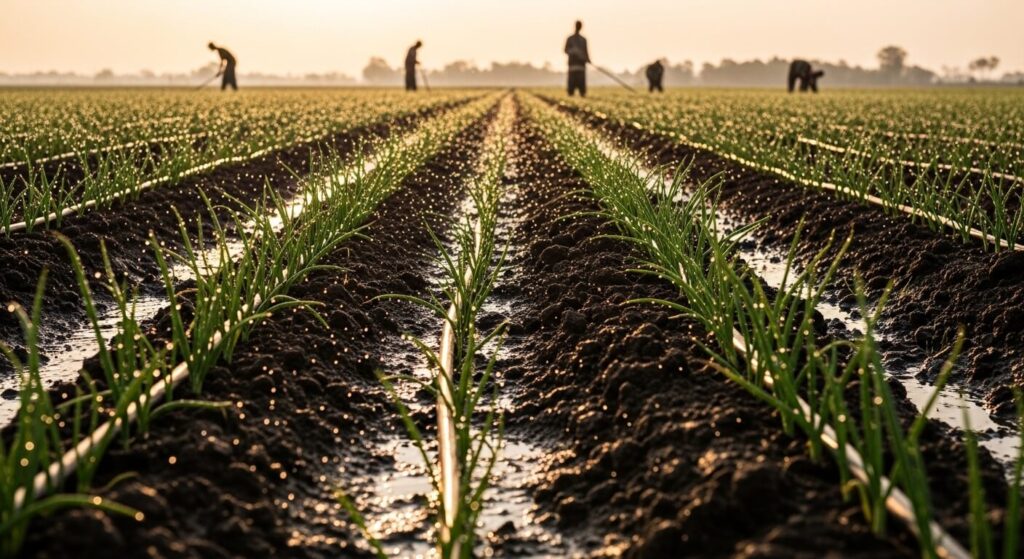


In many African countries, agricultural policies are drafted with grand intentions. Governments, development agencies and donor-funded programs often design strategies aimed at boosting productivity, improving food security or modernizing smallholder farming.
On paper, these policies are well-crafted, backed by research and supported with funding. Yet, despite this effort, there remains a persistent problem. Farmers often do not fully benefit from these policies. The knowledge, tools and support provided rarely translate into measurable improvements in their daily lives. This disconnect between policy and the realities of smallholder farmers has become one of the most pressing challenges in African agriculture.
The problem is not that farmers are unwilling to adopt new practices. It is that policies are often designed without their voices in mind, implemented in ways that are inaccessible or communicated in language that is too technical. Without bridging this gap, governments, donors and agribusinesses continue to invest in programs that do not reach their full potential.
Top-Down Policies That Miss Local Realities
Agricultural policy is usually formulated in offices far removed from the smallholder farms that make up the backbone of Africa’s food system. National and county-level ministries, donor agencies and research institutions collaborate to design programs often with limited consultation with the people who will implement them on the ground.
This top-down approach leads to policies that while ,technically sound ,do not reflect the realities of smallholder farmers. For instance, a government might promote a high-yield seed variety suitable for certain soil types and irrigation levels.
Yet farmers in arid regions, with limited access to water or credit, may find these recommendations impractical. Similarly, programs may focus on mechanization or chemical fertilizers without considering cost, availability or local labor practices.
As a result, farmers often perceive policies as disconnected from their daily challenges. They may follow guidelines partially or inconsistently or they may ignore them altogether. This disconnect not only reduces the effectiveness of policies but also fosters mistrust in government programs.
The Communication Barrier
One of the key reasons policy fails to reach farmers effectively is poor communication. Policies are frequently written in technical jargon, targeting policymakers, researchers and specialists rather than the farmers themselves. Terms like “climate-smart agriculture,” “precision farming,” or “sustainable intensification” can be confusing without practical examples or localized explanation.
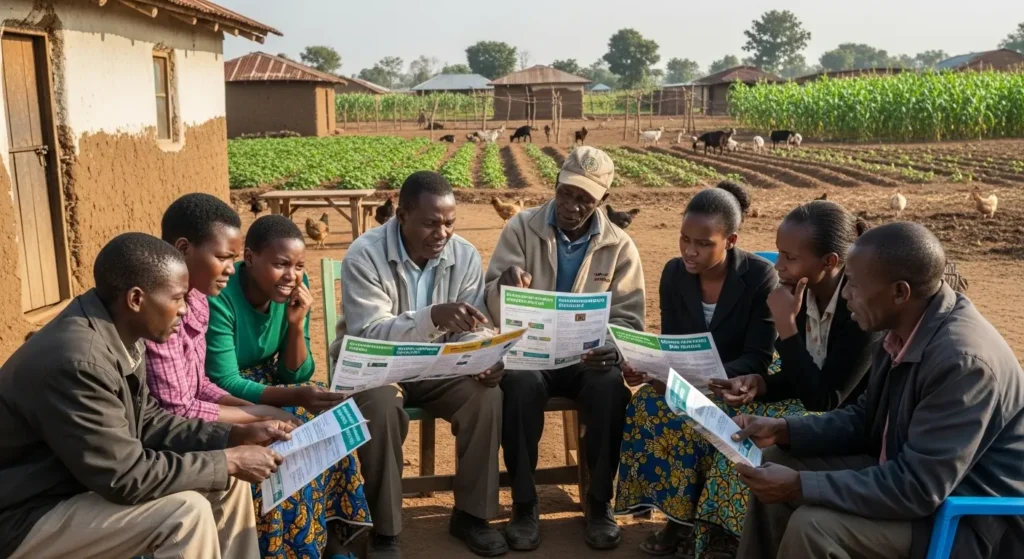
Extension services, which are meant to bridge this gap, are often under-resourced, under-trained or overwhelmed by the number of farmers they must reach. Radio programs and leaflets may carry the message, but without clear, relatable guidance, farmers struggle to understand and implement the policy recommendations.
Language is another challenge. Africa is home to thousands of local languages and dialects. Even when materials are translated, literal translations often fail to capture nuance, leading to misinterpretation. Farmers may attempt to follow advice that seems technically correct but is incompatible with their local context, leading to poor results and frustration.
Short-Term Initiatives vs. Long-Term Needs
Many agricultural policies and programs are designed with short-term objectives in mind, driven by funding cycles or political timelines. A policy may focus on a single planting season, offering subsidies, training or inputs for that period. Once the funding ends or the season passes, the program may disappear.
Farmers, who operate on a year-round cycle, experience these short-term initiatives as inconsistent and unreliable. They may adopt practices temporarily but revert to traditional methods once the support ends. This cyclical pattern creates skepticism about new policies and programs. Farmers learn to wait for the next short-term initiative instead of investing in long-term changes.
Bridging this gap requires long-term engagement, ongoing support and follow-up, ensuring that policies are implemented consistently and adapted over time to meet farmers’ evolving needs.
The Role of Trust and Local Leadership
Trust is central to bridging the policy-farmer gap. Farmers are more likely to adopt practices promoted by individuals and institutions they trust. When policies are introduced without trusted intermediaries such as local extension officers, cooperative leaders,or peer farmers adoption rates decline.
Programs that leverage local leadership often perform better. Farmers are more willing to engage with advice delivered by someone familiar, accountable and experienced within their community. Peer-to-peer learning, where farmers share experiences and success stories, also builds credibility and trust in policies.
Trust, however, cannot be manufactured overnight. It requires consistent, transparent communication and engagement. Policies that appear imposed from outside, without consultation or collaboration, rarely earn this trust.
Economic and Social Constraints
Even when farmers understand a policy and trust its message, structural constraints can prevent adoption. Access to finance, inputs, equipment and markets often limits farmers’ ability to implement recommended practices. For example, a policy promoting high-yield seed may be ignored if farmers cannot afford it, cannot reach suppliers or cannot sell the additional produce at a fair price.
Social factors also play a role. Gender dynamics, land ownership patterns and local customs influence who can implement new practices. Policies that fail to account for these realities risk excluding significant portions of the farming population.
The gap is therefore not purely about knowledge . It is about enabling farmers to act on the knowledge within their social and economic constraints.
Case Study: Fertilizer Subsidies in East Africa
Consider fertilizer subsidy programs implemented in several East African countries. The policies were designed to increase crop yields and reduce food insecurity. While some farmers benefited, others struggled due to distribution challenges, lack of awareness or distrust of government motives.
Farmers reported delays in delivery, low-quality inputs, or favoritism in allocation. Extension services were unable to provide consistent guidance on proper usage. The result was uneven adoption, frustration and erosion of confidence in future programs.
This example demonstrates that policy success depends as much on implementation and engagement as on the policy itself. Without mechanisms to ensure accessibility, transparency and trust, even well-funded initiatives fail to reach their potential.
Bridging the Gap: Participatory Policy Design
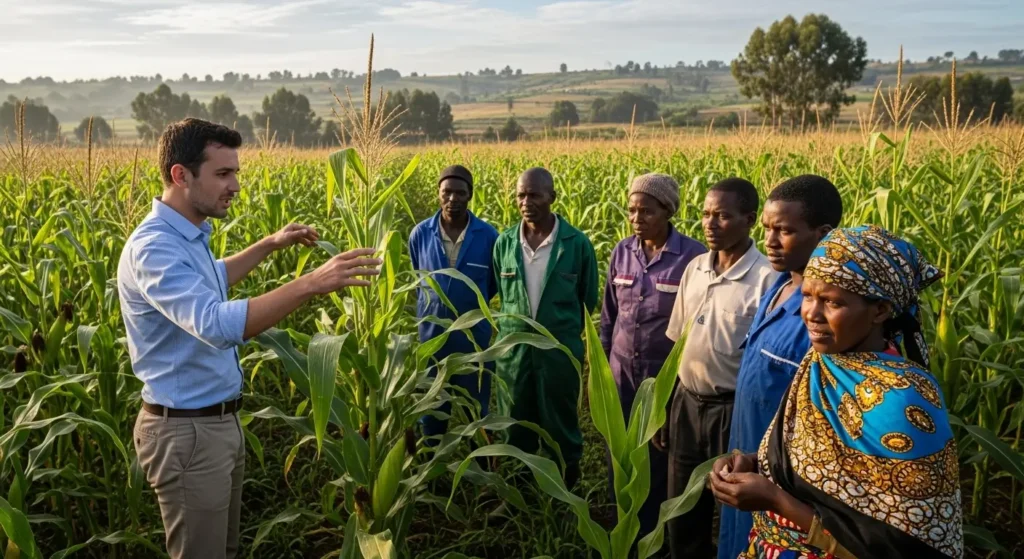
One of the most effective ways to bridge the policy-farmer gap is through participatory policy design. Farmers must be consulted at every stage from problem identification to solution development, implementation and evaluation.
Participatory approaches ensure that policies are relevant to local conditions and needs. Farmers can provide insight on planting calendars, input availability, risk factors and market access. They can also suggest culturally appropriate communication methods and identify trusted messengers.
Programs designed in collaboration with farmers are more likely to be understood, accepted and adopted. Participation also fosters ownership, increasing the likelihood that farmers will sustain the practices even after external support diminishes.
Strategic Communication as a Bridge
Strategic communication plays a critical role in connecting policy to farmers. It involves more than broadcasting messages; it is about crafting messages that are clear, relatable and actionable.
Successful communication considers timing, medium, language and messenger. Local radio programs, community meetings, peer-to-peer learning and demonstration plots all help contextualize policies for farmers. Materials must use simple, practical language, incorporate visual storytelling and reflect local realities.
When farmers can see how policies work in practice, understand the benefits and witness peer success stories, adoption increases. Strategic communication transforms policy from an abstract document into actionable, trusted guidance.
The Role of Technology
Technology can also help bridge the gap. Mobile phones, SMS alerts, WhatsApp groups and agricultural apps provide timely information directly to farmers. These tools can reinforce extension services, provide reminders, and answer questions in real time.
However, technology alone is insufficient if the messages are not tailored, understandable or trustworthy. Digital tools must complement, not replace, human-centered engagement. Farmers still rely on local knowledge, social networks and trust-based relationships to make decisions.
Looking Ahead: Policy That Works for Farmers
Closing the gap between policy and farmers is not just a technical challenge , it is a human one. Policies must respect farmers’ knowledge, address their constraints and engage them as partners rather than passive recipients.
Governments and organizations must prioritize participatory design, long-term engagement, strategic communication and trust-building. Policies should not be measured solely by distribution metrics or attendance figures but by actual adoption, improved productivity and farmer satisfaction.
When policy is co-created, communicated clearly and supported with the necessary resources, farmers are more likely to adopt practices, share knowledge and contribute to broader food security and economic growth.
The gap between policy and farmers is a persistent challenge in African agriculture. Policies often fail to reach their intended impact because they are designed in isolation, communicated poorly or implemented without consideration for local realities. Awareness alone is insufficient. Trust, accessibility and engagement are essential.
Bridging this gap requires participatory policy design, strategic communication, local leadership and support systems that enable farmers to act on recommendations. By centering farmers in policy design and implementation, Africa can move closer to realizing the full potential of its agricultural sector ensuring that policies translate into real-world impact, improved livelihoods and sustainable growth.
About the author
Jackline Mauta is Lead Creative Director at Nexus PR Africa, helping African organizations in agriculture, agribusiness, agrotourism and tourism build strategic communication and brand strategies that drive growth, trust and impact.