

Urban Farming in Slums: Turning Small Plots into Sustainable Food Sources
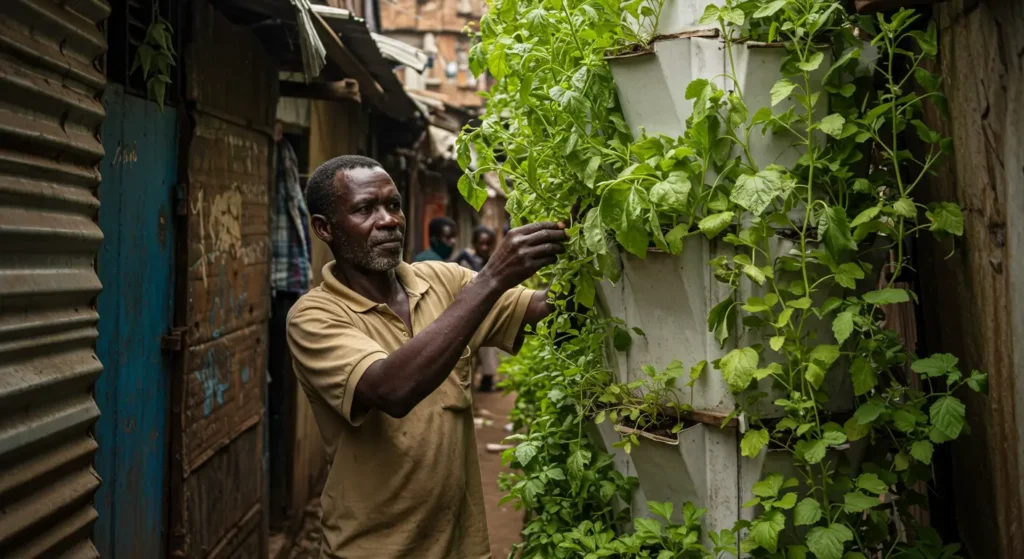
In Nairobi and other East African cities, limited space and high food costs have inspired residents to turn small plots into thriving urban farms. Across informal settlements like Kibera, Dandora, and Mathare, families are growing vegetables, herbs, and even fruits in sacks, containers, and rooftops. These efforts are helping households access fresh, nutritious food while creating new sources of income.
Urban farmers are finding innovative ways to maximize space. Vertical gardens, recycled containers, and small raised beds allow people to grow food even in cramped areas. Families often cultivate kale, spinach, amaranth, and tomatoes, providing daily meals and surplus to sell within their communities. What started as a survival strategy has evolved into a movement that strengthens resilience and encourages self-sufficiency.
Women and youth are at the forefront of these initiatives. Many women now manage small gardens that provide nutritious meals for their families, while youth-led groups are introducing hydroponics and creative farming techniques. These efforts not only address food insecurity but also foster skills, leadership, and entrepreneurship in communities that face economic challenges.
Community collaboration has been key to success. Residents share knowledge, tools, and seeds, transforming previously unused plots into productive gardens. Local NGOs and advocacy groups support these initiatives by offering training, materials, and guidance, making urban farming a sustainable practice even in the most constrained neighborhoods.
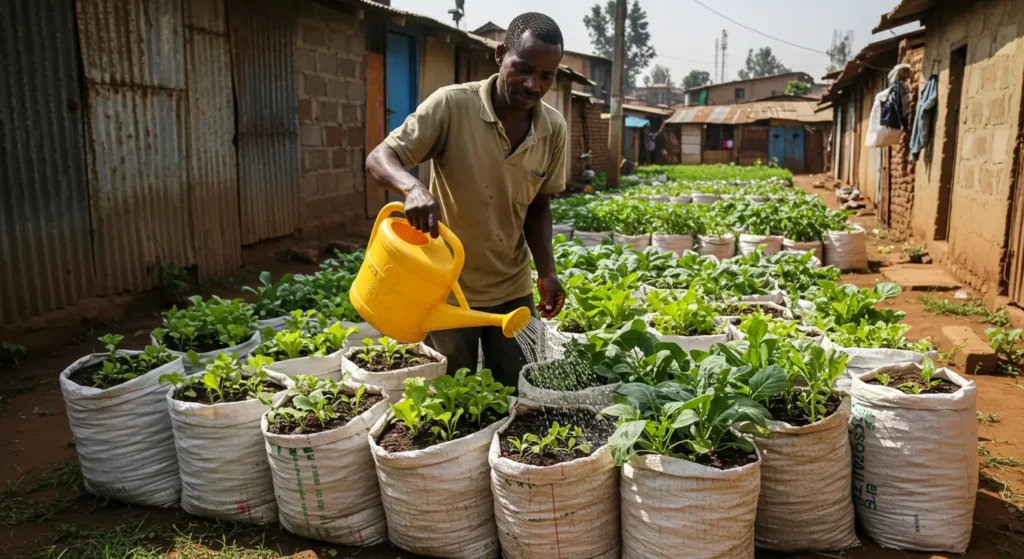
The impact extends beyond immediate nutrition. Urban gardens contribute to environmental awareness, reduce reliance on expensive market produce, and strengthen social bonds within communities. They offer a practical solution for cities facing rapid population growth and limited food access, showing that even small efforts can yield meaningful change.
As urban farming spreads across East Africa, it demonstrates the power of creativity, determination, and community. Small plots in slums are no longer just empty spaces—they are hubs of innovation, nutrition, and hope, proving that sustainable food sources can thrive even in the most challenging environments.