

Africa does not have an agriculture problem. It has a communication problem.
Across the continent, agriculture sits at the Centre of economic development, food security, employment and climate resilience. Governments invest heavily in agricultural policy. Donors fund large-scale programs. Development partners design interventions meant to improve productivity, adoption and livelihoods. Yet despite these efforts, the sector continues to struggle with low adoption of innovations, mistrust from farmers, weak youth engagement and inconsistent impact.
Too often, the failure is attributed to farmers, funding gaps or policy limitations. Rarely is it acknowledged as a communication failure. And yet, communication shapes how agriculture is understood, trusted and ultimately practiced.
Agriculture is not just a technical system. It is a human one. And human systems do not change through information alone.
Agriculture Is Communicated as a Technical Sector, Not a Human One
Most agricultural communication in Africa is designed as if farming decisions are purely rational and technical. Messages focus on yields, inputs, technologies and efficiency, assuming that if farmers are given the right information, they will automatically change behaviour.
This assumption ignores reality.
Farming decisions are influenced by culture, tradition, risk perception, trust, financial pressure, family dynamics and lived experience. Communication that ignores these factors fails to resonate, no matter how accurate the information may be.
By treating agriculture as a technical discipline rather than a human system, communication becomes detached from the people it is meant to serve. Farmers are reduced to recipients of messages rather than participants in a shared narrative about progress, resilience and opportunity.
Communication Designed for Systems, Not Farmers
A core issue in African agriculture communication is that it is often designed to satisfy systems rather than people.
Messages are shaped to meet donor reporting requirements, policy frameworks, or institutional timelines. Success is measured through outputs such as reach, impressions, or number of sensitisation activities conducted. Whether farmers actually understand, trust or act on the information becomes secondary.
This creates a dangerous disconnect.
When communication prioritises visibility over understanding, it becomes performative. Campaigns look successful on paper but fail to create meaningful change on the ground. Farmers may hear the message, but they do not internalise it, because it does not speak to their realities.
In this environment, communication becomes something that is done to farmers, not done with them.

The Language Problem: Translation Without Meaning
Language remains one of the most underestimated barriers in agricultural communication.
While many programs make efforts to translate materials into local languages, translation alone does not equal understanding. Technical concepts are often translated literally, without cultural or contextual interpretation. As a result, messages lose meaning rather than gain clarity.
Terms like “climate-smart agriculture,” “sustainability,” or “resilience” are frequently communicated in abstract ways that do not connect to farmers’ daily experiences. When communication feels foreign, theoretical or imposed, it creates distance.
Effective agricultural communication requires more than linguistic translation. It requires cultural fluency, local storytelling and an understanding of how people interpret risk opportunity and change within their own context.
Campaign Thinking Instead of Long-Term Strategy
Another major challenge is the dominance of campaign-based communication.
Agriculture communication across Africa is often episodic. Messages are launched around planting seasons, policy announcements or project milestones, then disappear once funding cycles end. There is little continuity, narrative development or long-term engagement.
This stop-start approach undermines trust.
Strategic communication is cumulative. It builds familiarity, credibility and belief over time. When messaging is inconsistent or short-lived, audiences struggle to form lasting associations or confidence in the source.
In agriculture, where adoption decisions can take years and involve significant risk, short-term campaigns are insufficient. What is needed is sustained communication strategy that evolves alongside farmers’ realities.
The Trust Deficit in Agricultural Communication
Trust is the most critical and most neglected element of agricultural communication in Africa.
Many farmers have lived through decades of shifting policies, changing recommendations and unfulfilled promises. Inputs that were once promoted are later discouraged. Programs appear and disappear. Messaging changes without explanation.
This history has created skepticism, not toward agriculture itself, but toward those communicating about it.
When communication focuses on persuasion instead of dialogue, it deepens this mistrust. Farmers are not resistant to change they are cautious. And caution is rational when livelihoods are at stake.
Building trust requires consistency, transparency and respect. Without these, communication becomes noise, regardless of how well-funded or creatively executed it may be.
Information Is Not Communication
A persistent mistake in agriculture is equating information dissemination with communication.
Sharing guidelines, data or instructions does not automatically lead to understanding or adoption. Information answers the question what. Communication addresses why, how and why it matters to me.
Strategic communication in agriculture goes beyond informing. It builds relevance, emotional connection and belief. It acknowledges fear, risk and uncertainty, rather than dismissing them.
In a sector where decisions affect income, food security and family stability, communication must be empathetic and patient. Without this, even the most scientifically sound innovations struggle to gain acceptance.
Youth, Perception and the Narrative Problem
Communication failures in agriculture also affect how the sector is perceived by young people.
Across Africa, agriculture is often framed as a sector of last resort associated with hardship, subsistence and low status. While policymakers speak about agribusiness and innovation, the dominant narratives young people encounter do not reflect opportunity or aspiration.
This is not just a labour issue. It is a communication issue.
Without deliberate narrative strategy, agriculture continues to repel the very generation it needs to sustain it. Changing this requires rethinking how agriculture is talked about, portrayed and positioned not just in campaigns but in long-term storytelling.
A Strategic Communication Failure, Not a Sector Failure
When agricultural initiatives fail to scale or sustain impact, the default explanation often focuses on farmers, resources or implementation challenges. Communication is rarely examined as a root cause.
Yet communication influences how policies are understood, how technologies are perceived and how trust is built. Without strategy, communication becomes reactive responding to resistance rather than anticipating it.
Strategic communication should not be an afterthought or a deliverable. It should be embedded at the design stage of agricultural initiatives, shaping how interventions are framed introduced and sustained.
The Nexus Perspective
In our work across agriculture and agribusiness at Nexus PR Africa, we have consistently observed that initiatives which invest in long-term communication strategy achieve stronger engagement and more durable outcomes.
Where communication is aligned with program goals, grounded in local context and sustained over time, adoption improves and resistance decreases. Where communication is treated as a checkbox or campaign activity, impact remains fragile.
The difference is not budget. It is strategic intent.
What Needs to Change
For African agriculture to achieve lasting transformation, communication must evolve in fundamental ways:
- From awareness to trust: Success should be measured by belief and adoption not reach alone.
- From campaigns to systems: Communication must be continuous, adaptive and long-term.
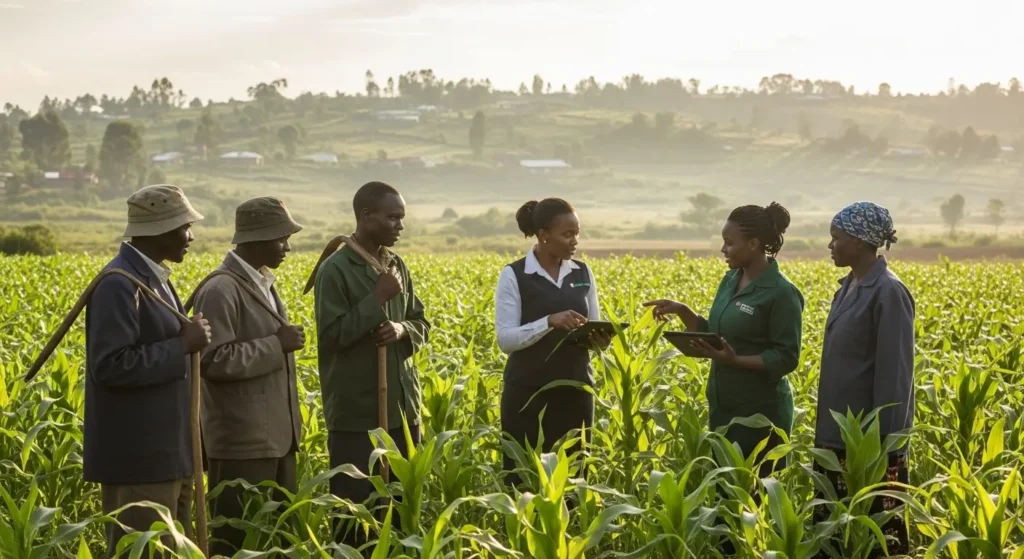
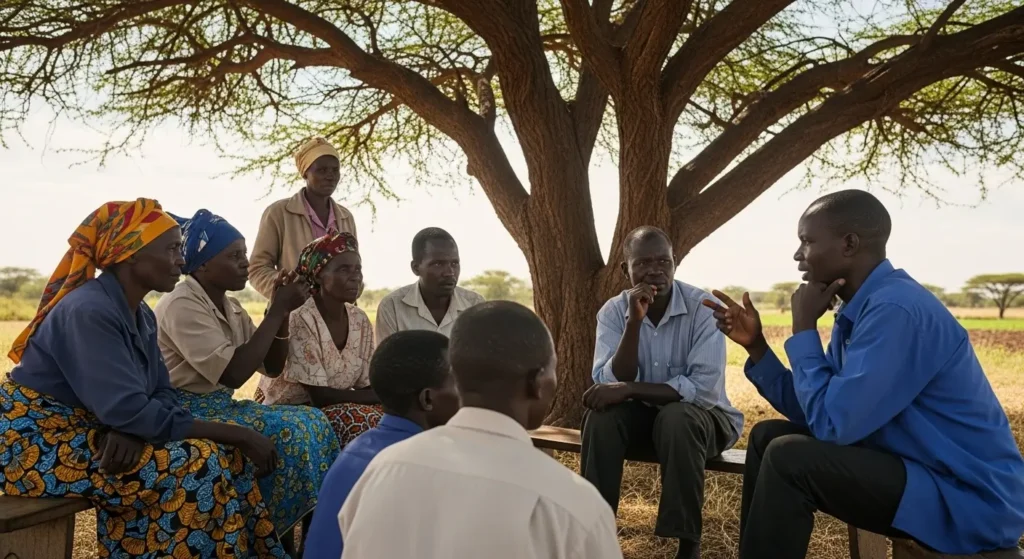
- From messaging to dialogue: Farmers must be engaged as participants not passive audiences.
- From visibility metrics to behaviour impact: True success lies in sustained action not impressions.
This shift requires leadership that understands communication as a strategic asset not a support function.
Looking Ahead
As Africa’s agriculture sector confronts climate volatility, market shifts and generational change, communication will become increasingly central to success. Those who recognise this early will shape not only narratives but outcomes.
Agriculture does not need louder messages.
It needs clearer, more human and more strategic communication.
About the author
Jackline Mauta is Lead Creative Director at Nexus PR Africa, helping African organizations in agriculture, agribusiness, agrotourism and tourism build strategic communication and brand strategies that drive growth, trust and impact.