

Farming on the edge of uncertainty
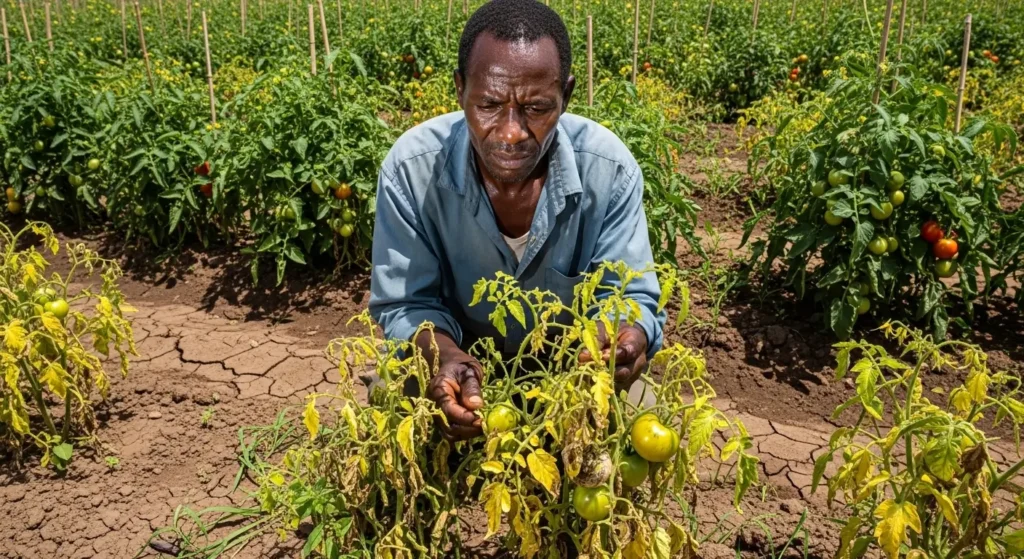
At dawn in Kirinyaga County, central Kenya, the fields are already alive with movement. Farmers bend over rows of tomato plants, inspecting leaves for signs of disease, checking soil moisture and calculating almost instinctively what this season might bring.
For many, tomato farming is more than a livelihood. It is a gamble.
Every planting season begins with hope, but also with risk. The cost of seeds has gone up. Fertilizers are expensive. Pests are unpredictable. Rainfall is no longer reliable. And even when the harvest is good, the market offers no guarantees.
“I invest everything at the start,” says a local farmer. “But I don’t know what I will get at the end.”
Across Africa, this uncertainty defines the reality of tomato farmers. Despite strong demand for tomatoes in both rural and urban markets, many producers remain trapped in cycles of low returns and high vulnerability. The problem is not a lack of effort. It is a system that continues to work against them.
The rising cost of getting started
Before a single tomato is harvested, farmers must navigate the first and often most difficult stage of the value chain: inputs.
Seeds, fertilizers, pesticides, irrigation these are the building blocks of production. But for many smallholder farmers, they are increasingly out of reach.
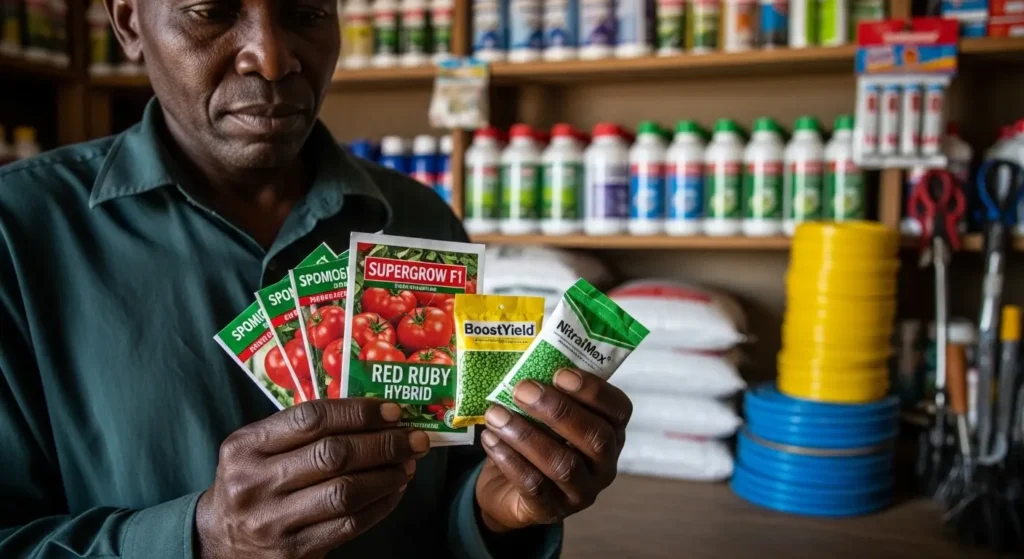
Hybrid seeds, which offer higher yields and disease resistance, come at a premium. While they promise better output, their cost forces farmers to make difficult choices. Some opt for cheaper, lower-quality seeds, sacrificing productivity from the start. Others take loans, exposing themselves to financial risk if the season fails.
Fertilizer prices have also surged in recent years, driven by global supply disruptions and rising fuel costs. For tomato farmers, who rely heavily on soil nutrients for high yields, this creates a direct trade-off between input investment and profitability.
Without adequate inputs, productivity declines. But with high input costs, profits shrink. Either way, farmers lose.
When climate becomes the biggest risk
If inputs are the first hurdle, climate is the most unpredictable.
Tomatoes are sensitive crops. They require consistent water, moderate temperatures, and protection from pests and diseases. In a stable environment, they can be highly productive. But across Africa, that stability is increasingly rare.
Rainfall patterns have shifted. Droughts are more frequent. Floods come without warning. Heat stress affects both plant growth and fruit quality.
For farmers relying on rain-fed agriculture, this unpredictability is devastating. A delayed rainy season can ruin planting schedules. Too much rain can spread fungal diseases. Too little can reduce yields drastically.
Even irrigation, often seen as a solution, is not always accessible. The cost of installing and maintaining irrigation systems remains high, especially for small-scale farmers.
As climate pressures intensify, tomato farming becomes less of a planned activity and more of a survival strategy.
The hidden burden of pests and disease
Beyond climate, farmers face another constant threat: pests and diseases.
Tomato crops are highly susceptible to a range of issues, including blight, wilt and invasive pests. Controlling these requires regular application of pesticides, proper knowledge and timely intervention.
But access to reliable information is limited. Many farmers depend on agro-dealers for advice, which is not always accurate or unbiased. In some cases, counterfeit or substandard agrochemicals flood the market, reducing effectiveness and increasing costs.
The result is a cycle of trial and error, where farmers spend more without guaranteed results.
“I spray, but sometimes it doesn’t work,” one farmer explains. “You just keep trying because you can’t afford to lose everything.”
High yields, low returns
Ironically, even when farmers overcome these challenges and achieve a good harvest, the struggle does not end.
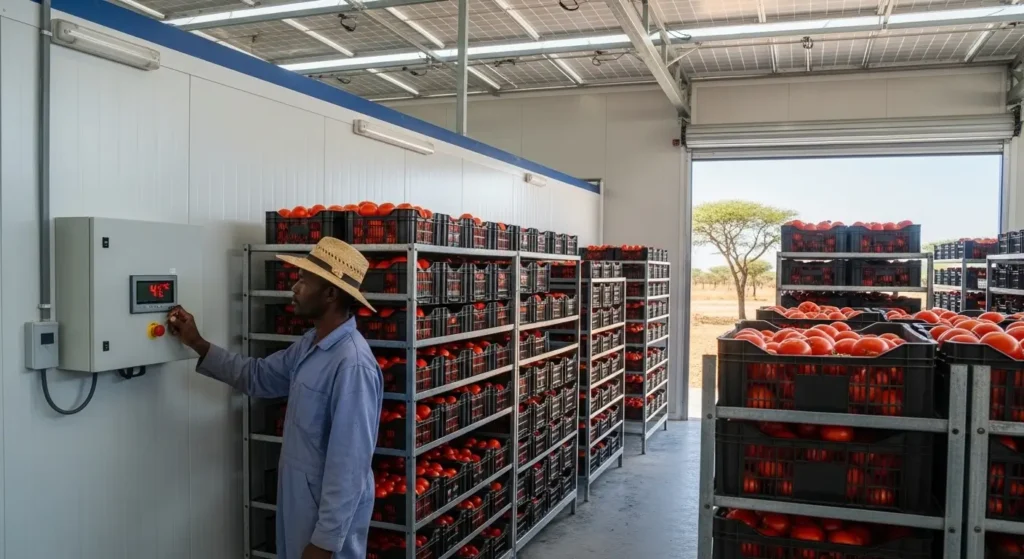
During peak seasons, when many farmers harvest at the same time, the market becomes flooded. Prices drop sharply, often below the cost of production. Without storage or processing options, farmers are forced to sell immediately or risk losing their produce altogether.
In these moments, abundance becomes a curse.
The lack of coordinated market systems means farmers have little control over pricing. Middlemen often dictate terms, taking advantage of farmers’ urgency to sell perishable goods.
What emerges is a harsh reality: producing more does not necessarily mean earning more.
The financing gap
At the center of these challenges lies a critical issue access to finance.
Agriculture in Africa is largely driven by smallholder farmers, yet access to affordable credit remains limited. Banks often view farming as high-risk, making it difficult for farmers to secure loans without collateral.
Where financing is available, interest rates can be high, further increasing the cost of production.
Without financial support, farmers are unable to invest in better inputs, irrigation, or technology. This limits productivity and keeps them trapped in low-income cycles.
Technology: Promise and limitation
In recent years, technology has been presented as a solution to many of these challenges.
Greenhouse farming, for example, offers controlled environments that protect crops from extreme weather and pests. Yields can be significantly higher compared to open-field farming. Precision agriculture tools can help optimize water and input use.
Yet adoption remains low.
The reason is simple: cost.
Greenhouses require substantial upfront investment. Many farmers cannot afford them without external support. Similarly, digital tools and agri-tech platforms, while promising, are not always accessible to farmers in remote areas.
Technology, in this sense, is both an opportunity and a reminder of inequality within the system.
Women and youth on the frontlines
Within the tomato value chain women and youth play a significant role, particularly in production and local markets.
Women often manage farms, handle harvesting and participate in trading. Yet they face barriers to land ownership, financing and decision-making power.
Youth, on the other hand, are increasingly interested in agribusiness but are deterred by the risks and unpredictability associated with farming.
Unlocking the potential of these groups requires more than participation it requires empowerment, access and inclusion in decision-making processes.
Policy gaps and missed opportunities
While farmers continue to navigate these challenges, policy support remains uneven.
Subsidies for inputs are limited or inconsistently applied. Investment in rural infrastructure roads, storage, irrigation lags behind need. Extension services, which could provide critical training and support, are often under resourced.
At the same time, policies do not always align with market realities. Importation of processed tomato products continues, even as local farmers struggle to sell fresh produce.
This disconnect highlights a broader issue: the absence of a coordinated strategy to strengthen the entire value chain.
Toward a more resilient future
Despite these challenges, the potential of Africa’s tomato sector remains undeniable.
Demand is strong. Growing conditions are favorable in many regions. And a new generation of farmers, entrepreneurs and innovators is beginning to rethink how the system works.
Solutions exist.
Improved access to affordable inputs can boost productivity. Investment in irrigation can reduce climate risk. Strengthening farmer cooperatives can improve bargaining power. Expanding agro-processing can stabilize markets and reduce waste.
But these solutions require coordination, investment and long-term commitment.
More than just a crop
Tomatoes are often seen as a simple crop common, everyday, and widely available. But for millions of farmers across Africa, they represent something far more complex.
They are a source of income, a measure of resilience and a reflection of a system that is still evolving.
Fixing the challenges facing tomato farmers is not just about improving agriculture. It is about addressing deeper issues of equity, access and sustainability within Africa’s food systems.
Because at its core, the struggle of tomato farmers is not about tomatoes.
It is about survival.