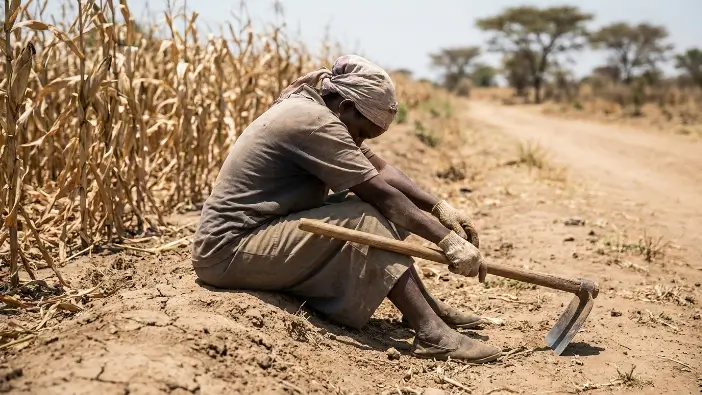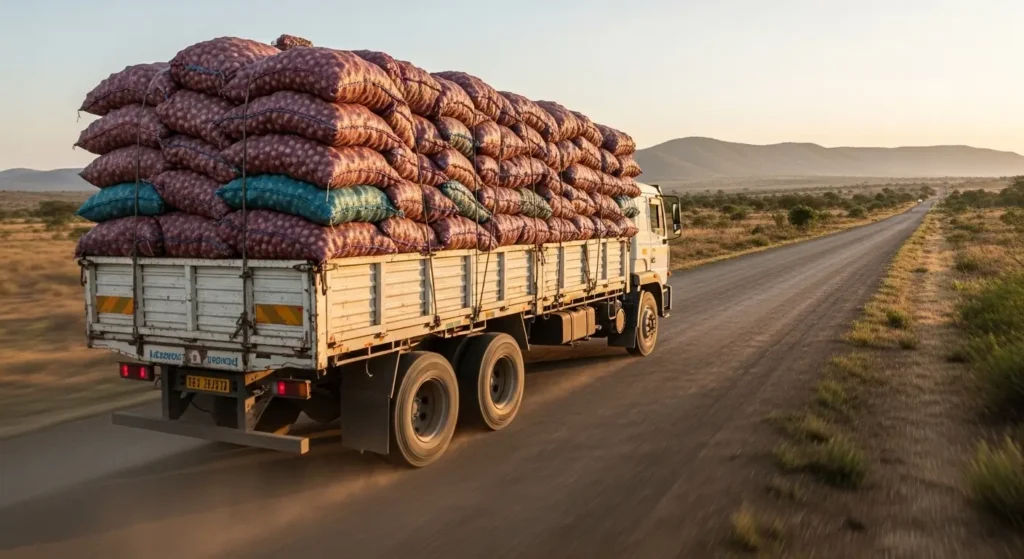


In many parts of Africa, the climate crisis is no longer a distant threat. It is immediate, visible and deeply personal. In Kenya’s arid and semi-arid lands, planting seasons have become uncertain. In West Africa, flooding has begun to displace entire farming communities. Across Southern Africa, prolonged droughts continue to strain already fragile food systems. For millions of smallholder farmers, climate change is not a policy conversation , it is a daily negotiation with survival.
Over the past decade, global attention has increasingly turned toward this reality. Climate finance once a distant promise is now flowing into Africa at an unprecedented scale. Multilateral institutions, development banks and climate funds have committed billions of dollars to support adaptation, resilience and sustainable agricultural transformation. Organizations such as the Green Climate Fund and the World Bank have positioned Africa as central to the global climate response, recognizing both its vulnerability and its potential.
Yet beneath this momentum lies a quieter, more complex shift one that is reshaping who actually benefits from climate finance on the ground.
While the stated goal of climate funding is to support farmers and protect food systems, much of the capital is increasingly flowing toward structured, scalable entities: agri-tech companies, agribusiness firms and climate-focused enterprises. These actors are not replacing farmers, but they are becoming the primary gateways through which climate finance is deployed. In doing so, they are emerging as the real beneficiaries of a system designed as much for accountability and scale as it is for impact.
A System Designed for Scale and Accountability
To understand this shift, it is necessary to examine how climate finance operates. Unlike traditional development aid, climate finance is structured around strict requirements. Funders must demonstrate measurable impact, ensure transparency and manage risk. This means tracking how funds are used, quantifying outcomes such as emissions reductions or yield improvements and reporting results to stakeholders across multiple jurisdictions.
For individual smallholder farmers, meeting these requirements is nearly impossible. Many operate outside formal financial systems, lack documentatio and rely on informal networks for production and trade. Their farms are often small, dispersed and difficult to monitor at scale. While they are the intended beneficiaries of climate finance, they are not easily integrated into the systems that govern its distribution.
In contrast, agri-tech startups and agribusiness firms are structurally aligned with these requirements. They are registered entities with governance frameworks, financial records and operational systems. They can absorb large amounts of capital, deploy it efficiently and report on outcomes in ways that satisfy international standards. In the language of finance, they are “bankable.”
This distinction is critical. Climate finance does not simply follow need it follows structure. And increasingly, that structure exists within companies rather than communities.

Agri-Tech Platforms and the Power of Data
One of the most significant developments in recent years has been the rise of agri-tech platforms across Africa. These companies offer a range of services, from weather forecasting and soil analysis to market access and digital credit. At first glance, their value lies in improving productivity and efficiency for farmers. But from the perspective of climate finance, their importance extends far beyond service delivery.
Agri-tech platforms generate data and in climate finance, data is currency.
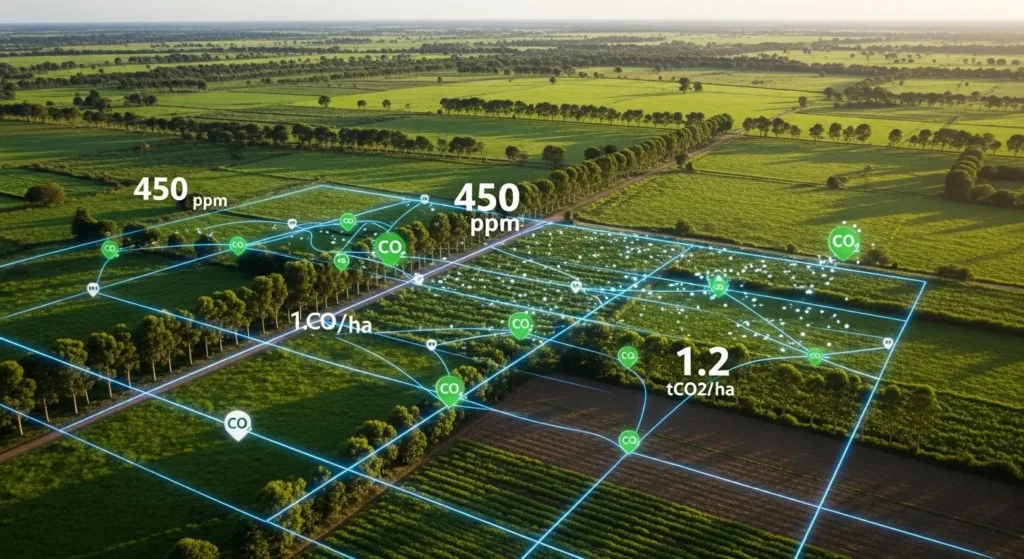
Through mobile applications, satellite imagery and digital records, these platforms are able to track farmer behavior, monitor crop performance and measure outcomes over time. This transforms agriculture from a largely opaque sector into one that can be quantified and analyzed. For funders, this reduces uncertainty and makes investment more attractive.
The implications are profound. Instead of funding thousands of individual farmers, a climate financier can fund a single platform that reaches those farmers indirectly. The platform becomes the intermediary, translating capital into services and data into impact reports.
In this model, the farmer remains central to the system but not to the flow of funds.
Carbon Markets and the Monetization of Climate Action
Parallel to the rise of agri-tech is the rapid expansion of carbon-focused enterprises. These companies operate at the intersection of agriculture and global carbon markets, creating new pathways for climate finance to enter rural economies.
Their model is built on aggregation. Farmers are organized into groups and encouraged to adopt practices such as agroforestry, conservation tillage or regenerative agriculture. These practices are then measured in terms of their impact on carbon sequestration or emissions reduction. The resulting data is used to generate carbon credits, which can be sold to companies or governments seeking to offset their emissions.
For investors, this model offers a compelling proposition. It combines environmental impact with financial returns, creating a market-based approach to climate action. For carbon project developers, it opens access to international funding streams that were previously unavailable.
For farmers, however, the benefits are less straightforward. Participation often requires long-term commitments, and payments may be delayed or uncertain. The complexity of carbon markets can also create information asymmetries, where farmers have limited understanding of how value is generated and distributed.
What emerges is a system in which climate value is created at the local level but captured within global markets mediated by enterprises that have the capacity to navigate both.
Agribusiness and the Advantage of Infrastructure
Large agribusiness firms are also playing an increasingly prominent role in the climate finance landscape. Companies involved in irrigation, storage, logistics and processing are well positioned to attract funding, particularly through blended finance mechanisms that combine public and private capital.
Their advantage lies in infrastructure and scale. By investing in a single agribusiness, funders can indirectly support entire value chains, reaching thousands of farmers through existing networks. This approach aligns with the priorities of efficiency and impact measurement, making it attractive to both public and private financiers.
However, it also shifts the nature of support. Instead of receiving direct funding, farmers become participants in systems designed and controlled by larger entities. While these systems can improve access to markets and resources, they can also reinforce existing power dynamics within the agricultural sector.
The Expanding Role of Input Companies
Input companies including seed producers, fertilizer manufacturers, and agro-dealers are also aligning themselves with climate finance opportunities. By developing and marketing products as climate-smart or resilience-enhancing, they are able to access funding and partnerships that support their expansion.
This trend reflects a broader shift in how climate finance is being deployed. Rather than focusing solely on adaptation, funding is increasingly linked to market-based solutions that combine environmental and commercial objectives. As a result, climate finance is not only supporting farmers it is also shaping the structure and direction of agricultural markets.
Who Is Being Left Behind
Despite the influx of funding and the growth of new models, a significant proportion of Africa’s farmers remain outside the reach of climate finance. This is particularly true for women, youth and those operating in remote or informal contexts.
Barriers to access are both structural and systemic. Many farmers lack the documentation required to participate in formal programs. Digital tools, while expanding, are not universally accessible. Financial literacy remains uneven and trust in external institutions can be limited.
Institutions such as the Food and Agriculture Organization have consistently highlighted the importance of inclusive approaches, emphasizing the need to ensure that climate finance reaches those most vulnerable to climate change. Yet inclusion is difficult to achieve within systems that prioritize scalability and accountability.
The result is a paradox. Climate finance is expanding, but its reach remains uneven. Those most in need of support are often the hardest to integrate into the systems designed to provide it.
The Communication Gap in Climate Finance
Beyond the structural dynamics of funding, there is another dimension to this challenge one that is less frequently discussed but equally important.
Climate finance is complex. Its language is technical, its processes are layered and its pathways are often opaque. For many farmers, it remains an abstract concept, disconnected from their daily realities.
This creates a communication gap between institutions and communities. Policies are developed at global and national levels, but their implications are not always clearly understood at the local level. Programs are implemented, but their benefits may not be fully communicated or accessible.
Bridging this gap requires more than financial mechanisms. It requires narrative the ability to translate complex systems into accessible, relevant and actionable information. It requires storytelling that connects policy to practice, and funding to lived experience.
In the absence of this translation, climate finance risks remaining a system that operates around farmers rather than with them.
A Defining Moment for African Agriculture
The current trajectory of climate finance in Africa reflects both progress and tension. On one hand, there is unprecedented investment in agricultural resilience, technological innovation and sustainable practices. On the other, there is a growing concentration of resources within entities that are best equipped to navigate complex funding systems.
This is not inherently negative. Agri-tech platforms, agribusiness firms, and climate enterprises have the potential to drive transformation at scale. They can introduce efficiencies, expand access to services and create new opportunities within the agricultural sector.
But their rise also raises important questions about inclusion, equity and long-term impact.
If climate finance continues to flow primarily through structured entities, how can it ensure that benefits reach those at the margins? If farmers become participants in systems rather than direct recipients of support, how does this affect their agency and resilience? And as agriculture becomes increasingly data driven and market oriented, what happens to those who remain outside these systems?
Conclusion: Rethinking Access in a Changing System
Climate finance in Africa is not failing. It is evolving.
It is becoming more structured, more data-driven and more aligned with global financial systems. In doing so, it is creating new opportunities for innovation and growth within agriculture.
But it is also redefining access.
The shift toward agri-tech and agribusiness reflects a broader transformation in how agriculture is funded and managed. It highlights the importance of structure, visibility, and scalability in determining who benefits from climate finance.
For policymakers, investors, and practitioners, the challenge is not only to increase funding, but to rethink how it is delivered. This means designing systems that balance efficiency with inclusion and ensuring that the voices and needs of farmers remain central to the process.
Because ultimately, the success of climate finance will not be measured by the amount of money committed, but by the extent to which it reaches those who need it most.
Call to Action
Climate finance is not just about funding it is about visibility, trust and access.
At Nexus PR Africa, we work with organizations, governments, and agribusinesses to translate complex climate initiatives into narratives that connect with farmers, communities, and stakeholders across the continent.
If you are building or funding Africa’s agricultural future, the question is no longer what you are doing but who understands it.