


Why Prices Are Rising and What It Means for Food Security and Investment
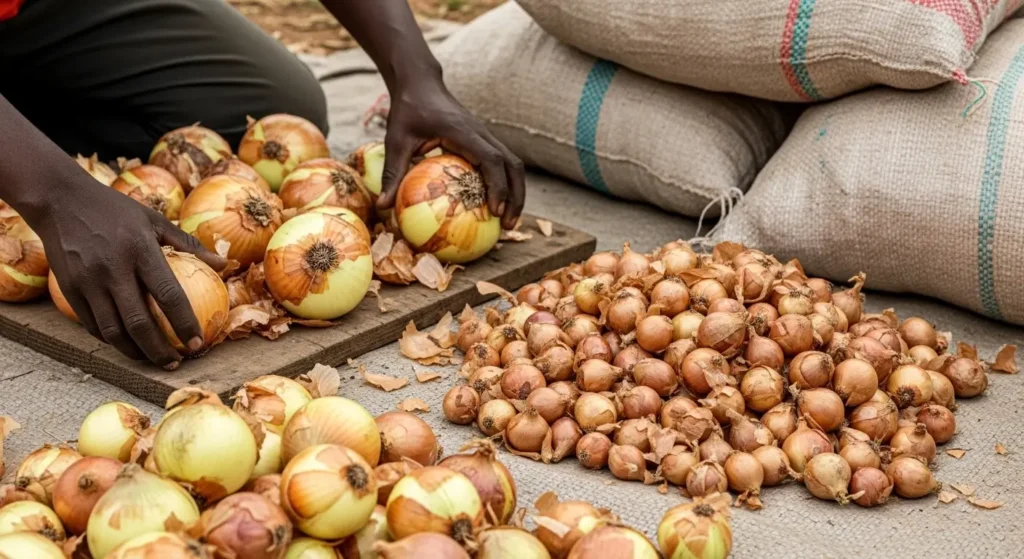
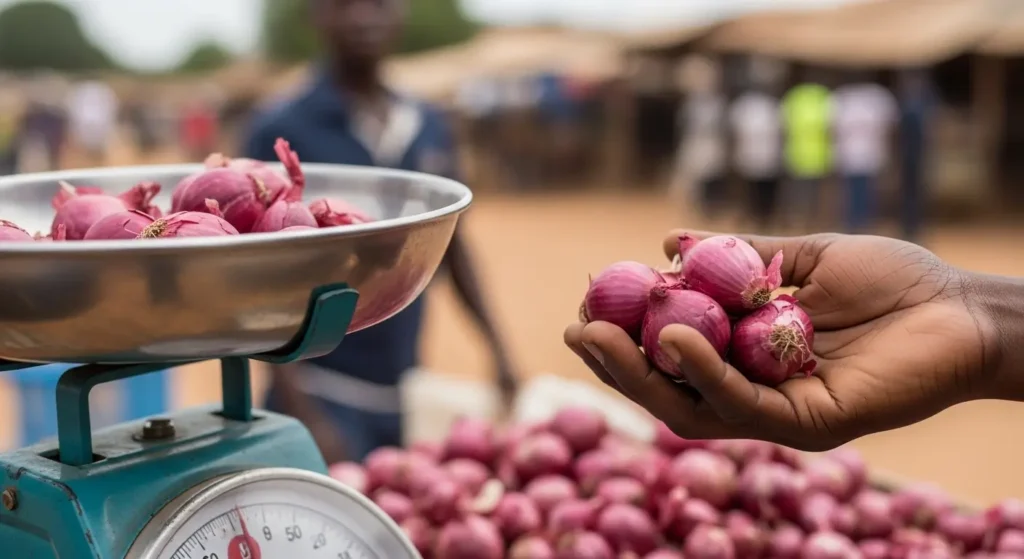
At Wakulima Market in Nairobi, the shift is not announced. It is felt. A trader lifts a sack of onions, pauses and lowers it again with a quiet calculation that does not need to be spoken aloud. Two months ago, the same sack would have moved quickly. Today, customers stop, ask the price, hesitate and then adjust what they buy. Fewer onions. Smaller portions. A small compromise in the kitchen that signals something much larger beneath the surface.
This is how the Africa onion crisis of 2026 is unfolding not as a sudden shock, but as a slow tightening. It is visible in markets, in households, and in the quiet decisions farmers are making across the continent. And while it may appear to be just another cycle of rising prices, it is, in reality, exposing a deeper fragility in Africa’s food system.
The moment prices begin to speak
To understand why onion prices are rising now, you have to move beyond the market stall and look at the rhythm of production itself. Across East Africa, the early months of the year often mark a transition period. Stored onions from previous harvests begin to thin out, while new harvests are not yet fully in circulation. In a well-balanced system, this would create only minor fluctuations. But Africa’s onion value chain is not yet balanced. It is stretched.
Demand is growing steadily, almost predictably, driven by urban expansion and changing consumption patterns. Onions are not a luxury. They are a daily necessity, embedded in nearly every meal, across income levels and geographies. As cities expand, so does the demand for onions, quietly but consistently. Yet production has not kept pace with this growth. The gap between what is needed and what is produced is no longer theoretical. It is now shaping prices in real time.
The farmer’s dilemma beneath the opportunity
For many farmers, the decision to grow onions has become more complex than it appears from the outside. The crop matures relatively quickly, often within three to four months, which should make it attractive. But the economics tell a more complicated story. Input costs have risen. Quality seeds are not always accessible. Irrigation remains unreliable in many regions. And perhaps most critically, the absence of proper storage forces farmers into a pattern they cannot control: selling when prices are lowest, immediately after harvest, when supply floods the market.
What is lost in this moment is not just income, but leverage. Without storage, there is no ability to wait, to time the market, to respond strategically. And so the cycle repeats itself. Prices collapse at harvest, rise sharply months later and the farmer remains on the losing end of both phases.
A market shaped beyond borders
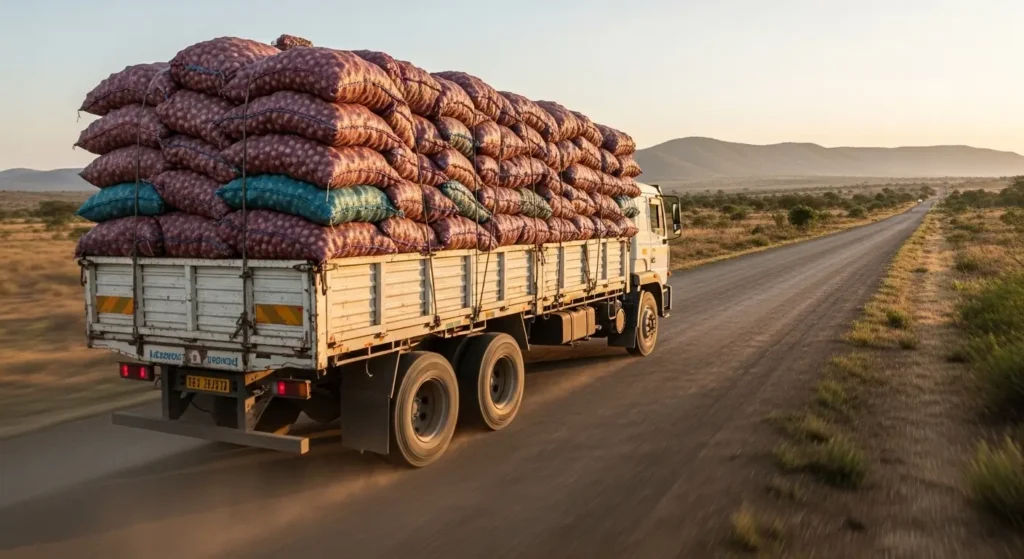
There is also a geography to this story that cannot be ignored. In East Africa, the flow of onions across borders particularly from Tanzania into Kenya has become a defining feature of the market. When supply moves freely, prices stabilize. When it is disrupted, even briefly, the effects are immediate and visible. This has created a system where national food stability is influenced as much by regional dynamics as by domestic production.
It raises a question that sits quietly beneath the surface of the crisis: what does food security mean when it depends on another country’s harvest?
When climate becomes part of the price
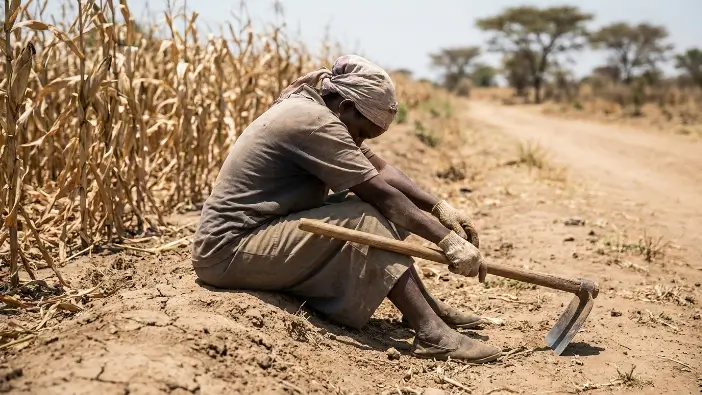
Climate adds another layer of uncertainty. Rainfall patterns are no longer as predictable as they once were. Too much rain affects bulb formation. Too little reduces yield. The timing of seasons shifts just enough to disrupt planting cycles. These are not dramatic events in isolation, but together they introduce a level of unpredictability that makes planning increasingly difficult for farmers.
Climate is no longer a background condition. It is now part of the price.
The opportunity hidden inside instability
And yet, within this crisis, there is also a signal one that investors are beginning to notice, even if quietly. A market that shows consistent demand but unstable supply is not just a problem. It is an opportunity waiting to be structured.
The onion value chain in Africa remains underdeveloped in critical areas: seed systems, irrigation infrastructure, storage, and market linkages. Each of these gaps represents not just a weakness, but an entry point.
Storage, in particular, stands out. It is perhaps the simplest intervention with the most immediate impact. The ability to reduce post-harvest losses and delay market entry even by a few weeks can fundamentally shift pricing dynamics. It can stabilize incomes for farmers and smooth supply for consumers. And yet, in many parts of the continent, this infrastructure is either absent or insufficient.
What this means for policy, not just prices
For policymakers, the implications of the onion crisis extend far beyond this single crop. Onions sit at the intersection of daily consumption, smallholder livelihoods, and urban food systems. When their prices become volatile, it reflects a broader instability that is likely present in other parts of the food chain as well.
Addressing this requires more than short-term interventions. It calls for a rethinking of how essential crops are positioned within national food strategies. Strengthening local production is part of the answer, but it is not enough on its own. Without parallel investment in storage, irrigation and market systems, increased production may simply deepen the cycle of volatility.
Trade policies must also be approached with nuance, maintaining the benefits of regional integration while reducing excessive dependence. And underlying all of this is the need for better data—timely, accessible, and actionable so that farmers and markets can respond with greater precision.
The months ahead will follow a familiar pattern
As the months ahead unfold, the direction of onion prices will likely follow a familiar pattern. Supply will tighten as existing stocks diminish. Prices will edge upward, possibly sharply if disruptions occur. The cycle will repeat itself, as it has before.
But cycles are not inevitable. They persist because the structures that produce them remain unchanged.
Why this story is bigger than onions
The onion crisis of 2026 is, in many ways, a quiet story. It does not carry the urgency of drought declarations or the visibility of major policy announcements. But it is no less important. It is a signal—one that reveals how Africa feeds itself, how its farmers navigate uncertainty, and how its markets respond under pressure.
To pay attention to onions is not to focus on something small. It is to recognize that within the ordinary, there are patterns that shape everything else.