


New Programmes Reframing Animals as Nutrition and Climate Resilience
FAO livestock Kenya programmes are reshaping how the country’s most vulnerable communities survive drought, feed their children and build economic futures. For decades, livestock in Kenya’s arid and semi-arid lands was measured almost entirely in production terms how many animals, how much meat, how much milk. That framing is changing. A new generation of FAO-backed initiatives is treating Kenya’s livestock sector as nutrition infrastructure, climate defence and youth employment engine and the programmes to prove it are already running in the field across fifteen ASAL counties.
Ask a pastoralist family in Mandera what their cattle mean to them and the answer will not be transactional. It will not be about price per kilogram at the market or offtake rates in the Gulf. It will be about milk for the children in the morning, about social standing in the community, about a living savings account that can be converted to school fees or medical care when no other option exists. Livestock, in Kenya’s arid and semi-arid lands, is not an agricultural activity. It is a way of life and increasingly, it is a lifeline under siege.
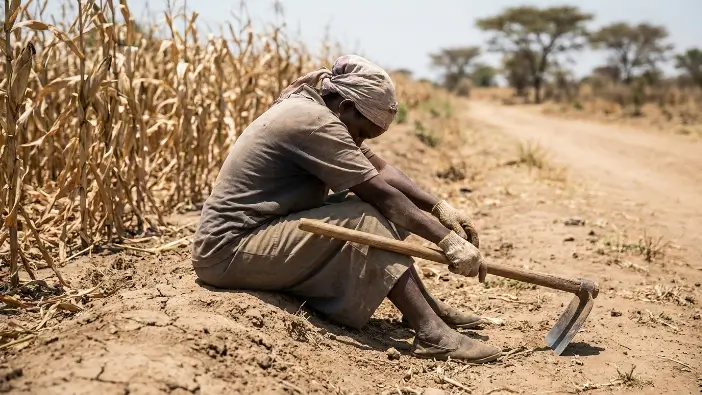
Between 2021 and 2023, Kenya endured what scientists and relief agencies called the worst drought in forty years. An estimated 13.2 million animals died across the ASAL counties. Pasture collapsed. Water sources dried up. Families who had built their entire wealth in livestock watched it disappear in a single season. Then, just as communities began to recover, the October to December 2025 short rains failed again pushing counties including Mandera, Wajir, Marsabit and Turkana back into crisis conditions. As of January 2026, the National Drought Management Authority classified Mandera and Wajir in the Alarm phase, with thirteen additional counties in Alert.
Against this backdrop, the international development community is moving not with the slow machinery of long-term policy cycles, but with programmes that are live, funded and designed to do something that earlier livestock interventions rarely attempted: treat livestock not as a commodity to be counted and traded, but as a system that produces nutrition, absorbs climate shocks, employs young people and keeps communities from collapsing entirely.
FAO Livestock Kenya and the Nutrition Security Shift
The most immediate shift in how FAO and its partners are approaching Kenya’s livestock sector is the nutrition lens. For decades, livestock development programmes measured success in production terms how many more litres of milk, how many more kilograms of beef, how many more animals survived the season. Nutrition outcomes sat in a separate column, managed by a separate ministry and funded through a separate budget line.
That separation is ending.
FAO’s Country Programming Framework for Kenya, which runs through 2026, builds its entire architecture around what it calls nutrition-sensitive agrifood systems. The principle is that the animal and the child eating its milk are part of the same system and that improving one without deliberately tracking the other is not enough. Where a cow is healthy, the children in that household drink more milk. Where that milk supply collapses in a drought, child malnutrition follows within weeks.
FAO research carried out in Marsabit County between 2018 and 2022 under its Livestock for Health programme demonstrated exactly this connection. The project, implemented with UNICEF and Washington State University, tracked what happened when integrated animal health, feed support and nutrition counselling were delivered together to pastoral households.
The results were striking milk production increased substantially, children’s milk intake rose, incidence of diarrhoea and respiratory illness fell and severe malnutrition risk dropped dramatically. The lesson was straightforward: when you treat the animal, you feed the child. When you feed the child through the animal, you build a resilience that no food aid delivery can replicate, because it is local, renewable and owned by the family.
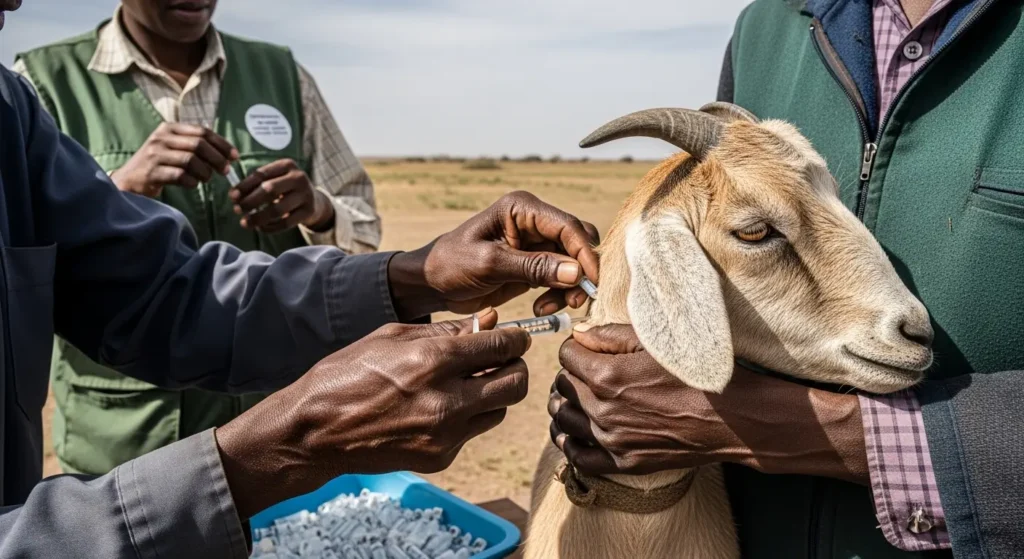
The PLACE Programme: How FAO Livestock Kenya Survived the 2025 Failed Rains
When the October 2025 short rains failed and Mandera slid toward emergency, the response that arrived was not a food parcel. It was range cubes and vaccines.
Under the Pastoralism and Livestock Adaptation to Climate Change in Eastern Africa programme known as PLACE and funded by the European Union at 47 million Euros across the region FAO moved quickly to procure supplemental livestock feed and disease prevention doses for Mandera’s most vulnerable pastoral households.
The intervention was designed around a single insight that pastoralist communities understand instinctively but that development agencies have historically been slow to act on: if the livestock dies, the family has nothing. Keeping the animal alive through a drought season is therefore the most cost-effective nutrition and livelihood intervention available.
Over 8,000 bags of highly nutritious range cubes were dispatched to sustain animals through the feed gap created by the failed rains. Alongside the feed, hundreds of thousands of doses of vaccines for Peste des Petits Ruminants and Contagious Caprine Pleuropneumonia two of the most damaging diseases that spread rapidly through stressed, drought-weakened herds were administered across the county.
The logic connecting these two interventions is important. A malnourished animal is an immunologically compromised animal. A compromised animal in a drought environment, surrounded by other compromised animals moving in search of water, is an animal that will spread and contract disease at catastrophic speed. Supplemental feeding and vaccination are not parallel programmes they are one programme, because removing one without the other breaks the chain.
PLACE is not limited to emergency response. Its longer-term mandate, running across several Eastern African countries, is to build the infrastructure early warning systems, fodder reserves, community-level veterinary access, rangeland management protocols that reduces the severity of future drought responses before they become emergencies. It is the difference between catching a family before they fall and helping them build a floor that holds.
CASHA: FAO Livestock Kenya’s Generational Investment in ASAL Youth
If PLACE is about protecting what exists, the Creating Shared Value in the Livestock Sector with Young People programme CASHA is about building what comes next.
Launched in 2025 and running through 2030, CASHA is a five-year, Mastercard Foundation-funded initiative implemented by FAO alongside a consortium of partners including SNV, ILRI and BOMA. It operates across fifteen ASAL counties Garissa, Mandera, Wajir, Tana River, Turkana, Marsabit, Isiolo, Samburu, Baringo, West Pokot, Laikipia, Kajiado, Kitui, Makueni and Kwale targeting 300,000 young people, with a goal of creating dignified, sustainable livelihoods for 200,000 of them.
The counties CASHA operates in cover nearly 80 percent of Kenya’s landmass and are home to 40 percent of the national population. They also host 70 percent of the country’s livestock herd. Yet despite that productive base, poverty in these counties averages 56 percent significantly above the national average of 40 percent. Youth unemployment in the ASAL regions stands at roughly 40 percent of the national youth unemployment figure. A generation of young people has grown up surrounded by livestock the sector that defines their communities and has been systematically locked out of the economic value that sector generates.
CASHA’s design begins with that paradox and works backwards from it. Rather than asking why young people in ASAL counties are not employed, it asks what structural barriers prevent them from capturing value in the livestock economy they already inhabit and then funds the removal of those barriers. The barriers turn out to be predictable: lack of technical skills for value addition, absence of access to finance, weak market linkages between producers and buyers and social norms that specifically exclude young women from leadership roles in livestock enterprises.
The programme builds entry points into value chains across red meat, dairy, poultry, beekeeping and fodder production. In Makueni County alone, over 2,000 young people are expected to benefit directly through fodder production enterprises and livestock feed agribusiness ventures. CASHA’s national coordinator Michael Ngutu has put the income projection plainly beneficiaries engaged in these value chains are projected to earn up to KSh 17,500 per month, a figure that, for a young woman in Garissa or Tana River, represents a fundamental change in household economic standing.
The programme’s climate framing is equally deliberate. CASHA is not structured as a drought response it is structured as a climate adaptation strategy. The value chains it promotes are chosen partly because they are climate-smart: poultry requires less water and land than cattle, beekeeping thrives in rangeland environments, fodder production directly reduces the pasture vulnerability that makes drought so devastating.
The programme’s theory of change holds that a young person running a poultry enterprise in Isiolo or a fodder production business in Samburu is not just earning income they are building a livelihood that is inherently more resilient to the climate variability that will only intensify in the coming decades.
Why FAO Livestock Kenya Now Frames Animals as Climate Resilience Infrastructure
Kenya’s livestock sector contributes roughly 12 percent of national GDP when its full value chain milk, meat, hides, traction, manure and cultural functions is properly accounted for. It is the primary livelihood source for over ten million Kenyans living in ASAL regions. Kenya also holds one of Africa’s most significant livestock populations including 13 million indigenous cattle, 28 million goats and 19.3 million sheep, according to the 2019 National Census.
That asset base is enormous. It is also profoundly exposed.
The drought cycle between 2021 and 2023 resulted in the loss of 13.2 million animals a destruction of wealth that no ASAL county government could replace through budget allocation, no insurance scheme fully compensated, and no food aid programme could meaningfully offset. When an animal dies in a pastoral household, the loss is not just the animal’s market value.
It is the milk that sustained the children, the security that backed the micro-loan, the dowry that anchored the social relationship, the emergency fund that would have paid for the hospital visit. The loss is systemic and it ripples forward through every aspect of household life for years.
This is why the framing shift from livestock as meat production to livestock as nutrition, health and climate resilience infrastructure is not rhetorical. It is operational. A government and its development partners that treat livestock primarily as an export commodity will design different programmes, with different success metrics, than one that treats it as the living safety net of 10 million people. The programmes currently running in Kenya’s ASAL counties have been designed by the latter perspective.
What the Sector Still Needs
The programmes are real, the funding is committed and the design is more sophisticated than anything Kenya’s livestock sector has seen before. But several challenges remain that no single programme can resolve alone.
Veterinary access in Kenya’s most remote pastoral areas is still deeply inadequate. A pastoralist in northern Turkana may be three hours from the nearest veterinary service point and in a drought emergency, that distance is the difference between a treatable outbreak and a catastrophic herd loss. The vaccines procured under PLACE cannot work if the last mile of delivery is missing. Community animal health workers, trained and consistently supervised, remain one of the most underfunded elements in the sector.
Fodder infrastructure storage, processing, distribution is similarly underdeveloped. The Horn of Africa Feed and Feeding Strategy, discussed at a regional workshop in Naivasha in November 2025, identified chronic feed shortage as the region’s most persistent livestock challenge, one that predates and outlasts every drought. A coherent national fodder reserve and rangeland management system would change the drought response equation fundamentally. Currently it does not exist at the scale the sector requires.
And the market side of the equation needs attention that goes beyond youth employment programmes. Kenya’s goat meat exports to the Gulf reached KSh 5.47 billion in the first half of 2025 alone a 5.8 percent increase over the same period the year before.
That market is growing. But it rewards consistency, traceability and certification standards that Kenya’s informal pastoral supply chains still struggle to meet reliably. Connecting the ASAL producer to the UAE buyer at premium prices requires infrastructure, cold chain logistics and quality systems that are still being built.
The direction of travel is clear. The investment is genuine. The communities waiting for results have waited long enough.
ABOUT AUTHOR
Jackline Mauta is a Food Systems & Agribusiness Communications Specialist, Journalist, Media & PR professional and Corporate MC with a background in broadcast journalism and public relations. She specializes in documenting and communicating Africa’s food systems and agribusiness sector through articles, media briefs, documentaries and digital storytelling. Her work focuses on translating complex agricultural, market and policy issues into clear narratives that highlight the people, innovations and opportunities shaping the food value chain. Jackline also leads strategic communications and marketing initiatives, helping organizations strengthen their visibility, brand positioning and engagement within the agribusiness ecosystem.