


Why Sunflower and Soybean Could Cut the KSh 160 Billion Import Bill
The government, KALRO and agribusiness investors are pushing hard for sunflower and soybean farming as the most immediate answer to Kenya’s costly edible oil dependence. The crop window is short, the seed is ready and the numbers work. Here is what every farmer in Kenya needs to understand.
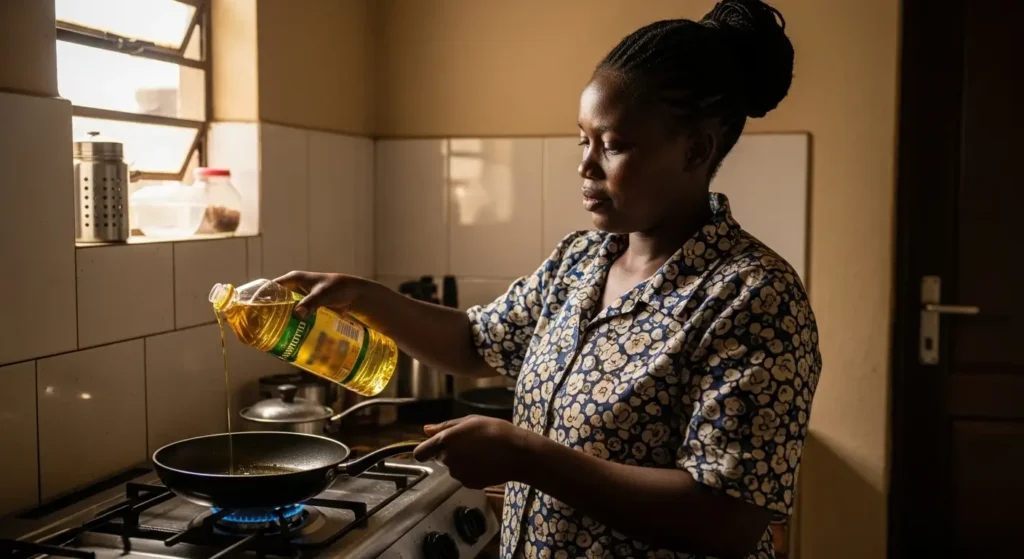
Walk into any household in Kenya, pick up the cooking oil on the kitchen shelf and read the label. Chances are it was pressed from palm fruit grown in Malaysia or Indonesia, refined, packaged and shipped thousands of kilometres before it reached that shelf. Kenya consumes it in enormous quantities roughly 900,000 metric tonnes of edible oil every single year yet produces less than nine percent of what it needs at home.
The Agriculture and Food Authority puts the national production figure at just 80,000 metric tonnes of domestically sourced edible oil crops annually. The remaining 820,000 metric tonnes comes through imports and the cost of closing that gap has become one of the heaviest line items in the country’s import budget.
Agriculture Cabinet Secretary Mutahi Kagwe, speaking at the Kilimo Biashara Expo 2026 in Thika, made the point in plain terms. Kenya spends at least KSh 160 billion every year importing edible oils a figure that, across the broader food import basket, forms part of the KSh 500 billion annual drain on the economy that the government is now determined to reverse.
“The idea behind import substitution is first to create security for ourselves,” Kagwe told the expo. “In a rapidly changing global environment, if a war breaks out in a region from which we import wheat, we could suddenly find ourselves without supply. That is why we must grow these crops ourselves.”
A Gap Wide Enough to Build an Industry In
The numbers frame the opportunity more clearly than any policy document can. In 2023 alone, Kenya imported 720,000 metric tonnes of crude and ready to use vegetable oil at a cost of KSh 98.9 billion making edible oil the country’s most significant food import after petroleum, according to data cited by the Ministry of Agriculture. By the quarter ending June 2025, AFA reported that the value of edible oil shipments into the country had climbed to KSh 25.6 billion for that quarter alone, driven by higher global prices and growing domestic demand.
Palm oil, sourced mainly from Malaysia and Indonesia, makes up the bulk of those imports. But the more instructive story is in the sunflower and soybean figures. Sunflower oil imports more than doubled between 2024 and mid-2025 not because demand fell, but because local production still cannot keep up. AFA noted at the time that those imports were expected to ease in coming years as domestic sunflower cultivation expanded. That qualifier expected to is the gap between intention and execution.
Every tonne of sunflower or soybean that a Kenyan farmer does not plant this season is a tonne that a processor will import instead.
What KALRO Has Done to Advance Oilseed Farming in Kenya
Kenya’s agricultural research system has not been waiting for this moment it has been building toward it.
KALRO Director General Dr. Eliud Kireger, speaking at an agricultural expo in Kandara, Murang’a County, confirmed that the organisation has introduced seven soybean varieties specifically selected for their adaptability across Kenya’s varied growing conditions. The institution has produced approximately 40 metric tonnes of certified soybean seed, with a target to scale that to over 400,000 metric tonnes depending on farmer uptake.
“Last year, the government imported KSh 117 billion worth of cooking oil,” Kireger said at the expo. “That is why we have pulled our efforts toward soybean and sunflower farming, since they are among the main ingredients in the manufacture of cooking oil.”
Among the most promising of KALRO’s releases is the SB19 soybean variety a drought-tolerant cultivar developed for farmers in areas where rainfall is unreliable. KALRO researcher Mbugua Kimani explains that SB19 requires adequate moisture at just two critical stages planting and flowering and can survive on its own through the rest of the growing cycle. On a single acre, a farmer can harvest between 850 and 1,000 kilograms of soybean using this variety. At a planting cost of around KSh 250 per kilogram of seed from KALRO, with approximately 20 kilograms needed per acre, the entry cost is well within reach of a smallholder farmer.
For soybean specifically, KALRO has also released the BlackHawk and KenSoy varieties both officially registered and cleared for commercial use and selected for their tolerance to soybean rust, a disease that can wipe out up to 80 percent of a crop if left unmanaged.
The Crop Cycle That Makes Oilseed Farming Worth It
One of the most compelling aspects of both sunflower and soybean is the production timeline. Soybean is a short-season crop that matures in approximately three months. That means a farmer who plants at the onset of the long rains in March can harvest, sell and bank proceeds before the season ends twice in a calendar year if conditions allow.
Sunflower follows a similar short-cycle rhythm and, with good management, can earn a farmer between KSh 40,000 and KSh 100,000 per acre from grain sales alone. Where value addition meaning small-scale oil pressing enters the picture, those returns climb further. Kenyan processors are currently paying between KSh 35 and KSh 60 per kilogram for sunflower grain, depending on location and season.
The combined picture is a fast-turnaround cash crop backed by guaranteed buyer demand, because the processors urgently need local raw material and are currently filling the gap by importing from Tanzania and Uganda. That is a market that already exists, waiting to be supplied by a Kenyan farmer.
The Programme Backing Kenya’s Oilseed Farming Push
The government’s commitment to this transition is not aspirational it is budgeted and structured.
The Edible Oil Crops Promotion Project, launched in 2023 and valued at KSh 981 million, is co-funded by the National Treasury at KSh 400 million and AFA’s Nuts and Oil Crops Directorate at KSh 581 million. The project runs for five years and targets a scale-up of oilseed farming across 34 counties, with the goal of raising Kenya’s domestic edible oil production from less than nine percent of national demand to 50 percent.
Food Security Adviser in the Office of the President Dr. Dominic Menjo has been direct about the scale of the planting effort required. “If we are to rely on sunflower alone, the country will need about five million acres,” he said, adding that the government has already procured approximately 500 tonnes of sunflower seed from Zambia to supplement Kenya Seed Company’s supply enough to cover significantly more ground than the initial 70 tonnes distributed to seed multiplication farmers in Uasin Gishu and Trans Nzoia counties.
At the same time, KALRO Chairman Dr. Thuo Mathenge has announced a parallel youth engagement programme targeting 200,000 young Kenyans across 24 counties, who will be recruited and allocated idle government land specifically for oilseed farming. The framing is deliberate this is not charity agriculture. It is enterprise, structured around crops with a market, a research base and a government procurement system behind them.
Both Crops, One Value Chain
What makes sunflower and soybean particularly strategic is that they serve the same downstream industries simultaneously.
Sunflower seed is pressed to produce the cooking oil that Kenya’s households consume daily. The by-product of that pressing is a protein-rich meal used in livestock and poultry feed. Soybean does the same thing in reverse ,it yields more protein meal and slightly less oil, making it the backbone of Kenya’s animal feed manufacturing industry, which is itself grappling with high import costs for protein inputs.
Every additional acre planted in either crop therefore reduces two import bills at once edible oils and animal feed ingredients while generating income for the farmer, employment at the processing facility and revenue for the county where the crop is grown.
Kireger made the connection explicit at the Kandara expo: “Currently, the cost of animal feed is high because they are made from protein sources, which are expensive. Soybean addresses that directly.”
What the Processing Industry Is Saying
Kenya’s edible oil processors are not passive observers in this conversation. They have been the ones pushing for expanded local supply because importing raw material is operationally expensive and unpredictable.
AFA’s own data shows that soybean oil imports dropped by 32 percent in the quarter ending June 2025 a figure the regulator attributed partly to increased local production and substitution by other oils. It is a modest shift, but it is the direction of travel that matters. The infrastructure for pressing, refining and packaging edible oil already exists inside Kenya. What has been missing is consistent, reliable raw material coming from Kenyan farms rather than from foreign ports.
The processors have the equipment. KALRO has the seed. The government has the programme funding. The county governments have the land. The variable that still needs to move is the farmer who decides to plant.
The Larger Argument
Kagwe’s KSh 500 billion food import bill is a number that touches every Kenyan household. It shows up in the price of a litre of cooking oil, in the cost of a kilo of chicken raised on imported soy-based feed, in the pressure on the shilling every time a dollar leaves the country to pay for a commodity that Kenyan soil is capable of producing.
Oilseed farming is not the complete answer to that bill but it is the most actionable starting point, because the crop cycle is short, the research is mature, the seed is in the shops and the market is waiting.
What the country now needs is a farmer in Nakuru who plants sunflower this long rains season instead of leaving the land idle. A youth group in Murang’a that signs up for KALRO’s soybean multiplication programme instead of waiting for a salary job. A county government in Trans Nzoia that facilitates aggregation instead of watching grain move across the border to Uganda.
The argument for oilseed farming in Kenya is not complicated. The country is spending KSh 160 billion a year on something it could grow at home in three months.
The field is ready. The seed is available. The only question left is who plants first.
Jackline Mauta is a writer and communications specialist at Nexus PR Africa, covering agribusiness and agritourism across Africa.