

A harvest that never reaches the table
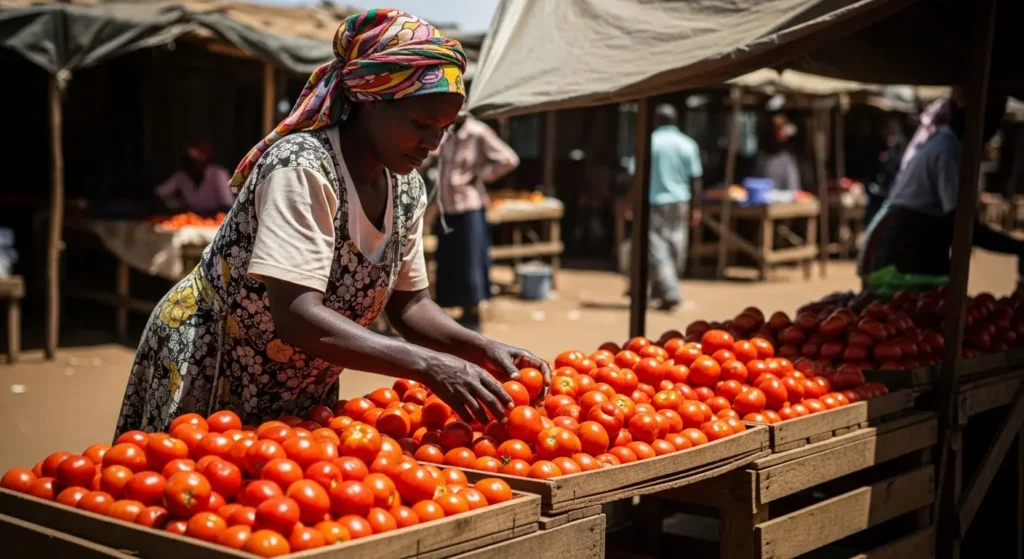
By mid morning in Kavaini, Kitui County, the sun is already unforgiving. Along a dusty roadside, traders arrange heaps of ripe tomatoes on wooden crates, their bright red skins glistening under the heat. A few hours later, the same tomatoes begin to soften, then bruise, then split. By evening, many will be unsold. By the next day, they will be waste.
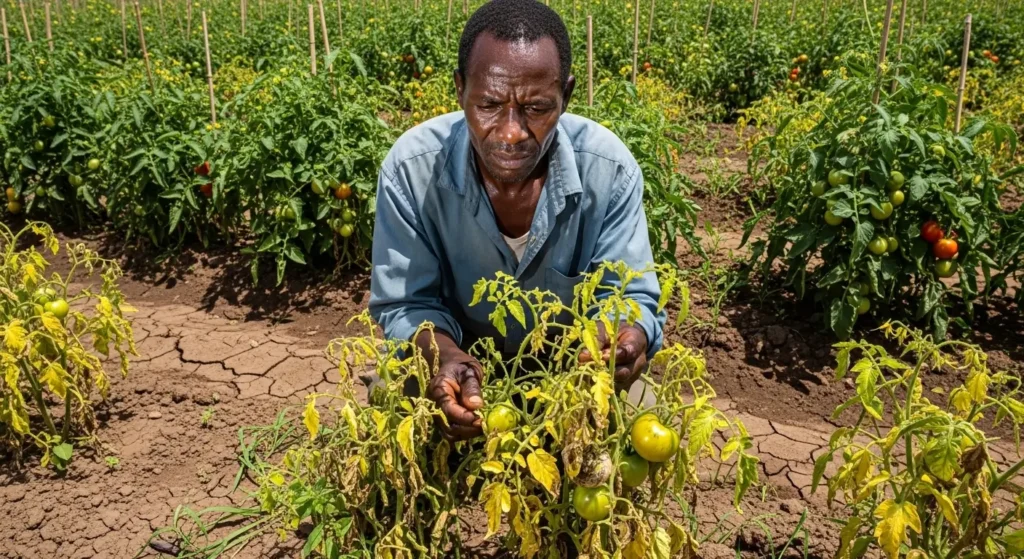
For the farmers who grew them, this loss is painfully routine. Weeks of labor ploughing, planting, watering, spraying reduced to nothing more than compost on the roadside. Yet across Africa, this quiet crisis plays out every day, largely unseen and underreported.
Tomatoes are among the most consumed food items on the continent, a staple in households from Nairobi to Lagos. Demand is constant. Markets are active. And yet, paradoxically, scarcity and waste coexist in the same system. It is estimated that up to 40 percent of tomatoes produced in Africa never reach the consumer. They are lost somewhere between harvest and plate, swallowed by inefficiencies that continue to define the continent’s agricultural value chains.
But within this crisis lies an opportunity one that could reshape Africa’s food systems, unlock new industries and redefine how value is created in agriculture.
The anatomy of a broken value chain
To understand the scale of the problem, one must first understand the tomato value chain itself. It begins with input suppliers providing seeds, fertilizers and irrigation systems. It moves to farmers who cultivate and harvest the crop, then to traders and transporters who move it to market and finally to retailers and consumers.
On paper, the system appears complete. In practice, it is deeply fragmented.
The most critical breakdown occurs after harvest. Tomatoes are highly perishable, with a shelf life of just a few days under normal conditions. In the absence of cold storage, proper packaging and efficient transport systems, deterioration begins almost immediately. What starts as a small bruise during harvesting quickly becomes spoilage by the time the produce reaches the market.
In rural Kenya, for instance, farmers often rely on motorcycles or overloaded trucks to transport their harvest over long distances on poor roads. The journey alone can destroy a significant portion of the crop. By the time traders receive the tomatoes, quality has already declined, forcing prices down or leading to outright rejection.
This inefficiency is not unique to Kenya. Across Africa, similar patterns emerge. Weak infrastructure, limited investment in post-harvest handling and a lack of coordinated systems continue to undermine the value chain. The result is a paradox where farmers earn less, consumers pay more and food is lost in between.
The economics of loss
The financial implications of tomato waste are staggering. For smallholder farmers, who make up the majority of producers, losses directly translate into reduced income and increased vulnerability. A bumper harvest, which should signal prosperity, often leads to market oversupply and price crashes. Without storage or processing options, farmers are forced to sell at whatever price they can getor not sell at all.
At the same time, urban consumers face fluctuating prices, particularly during off-peak seasons when supply drops. This disconnect between production and consumption highlights a fundamental inefficiency in the system.
Beyond individual losses, the broader economic impact is significant. Africa continues to import large quantities of processed tomato products, particularly paste, despite having favorable conditions for production. This reliance on imports reflects a missed opportunity to build local industries that could absorb surplus production and stabilize the market.
In essence, the continent is exporting raw potential and importing finished value.
Where waste becomes opportunity
Amid these challenges, a new narrative is beginning to take shape one that reframes waste not as a failure, but as a resource.
Across Africa, entrepreneurs, cooperatives and agribusiness innovators are exploring ways to convert surplus and unsold tomatoes into value-added products. This process, often referred to as upcycling, is gaining traction as a practical solution to post-harvest losses.
Instead of discarding overripe tomatoes, they are being processed into paste, puree, sauces and powders. Solar drying technologies are enabling the production of sun-dried tomatoes, extending shelf life and opening up new markets. Even waste that is no longer suitable for human consumption is being repurposed into animal feed or organic fertilizer.
These innovations are not merely technical solutions; they represent a shift in mindset. They challenge the assumption that value ends at the point of harvest and instead extend it across the entire lifecycle of the product.
For many, this shift is transformative. Farmers who previously lost a portion of their harvest can now sell to processors. Traders can diversify their income streams. Communities can build small scale industries that create jobs and retain value locally.
Technology at the center of transformation
The emergence of a circular tomato economy is being driven in large part by technology. Advances in small scale processing equipment have made it possible for even modest enterprises to enter the value addition space. Solar-powered dryers, for instance, offer an affordable and sustainable way to preserve tomatoes without relying on expensive infrastructure.
Digital platforms are also playing a role, connecting farmers directly to buyers and reducing reliance on middlemen. By providing real-time market information, these platforms help farmers make informed decisions about when and where to sell.
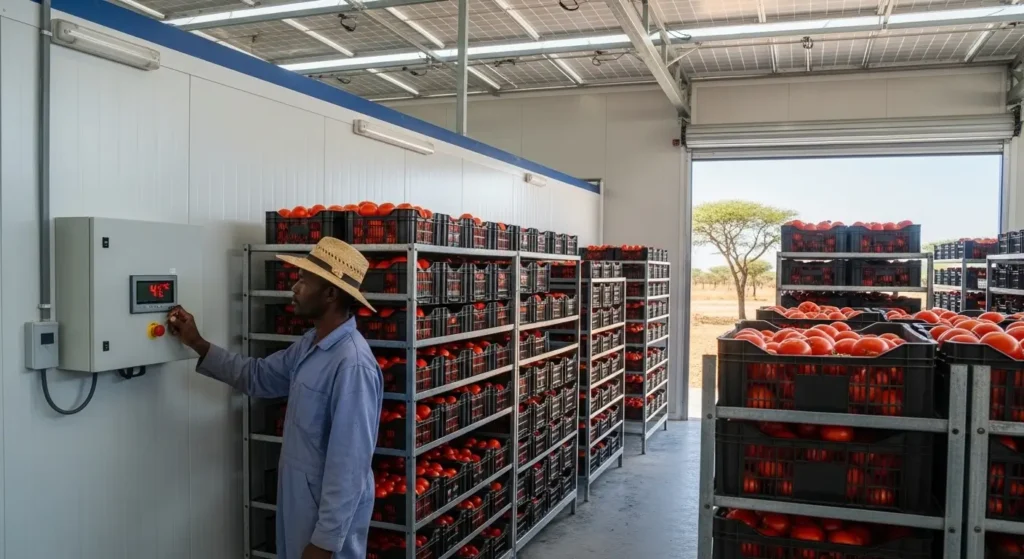
At the same time, innovations in packaging and storage are improving the handling of fresh produce, reducing damage during transport and extending shelf life. While these solutions are still emerging, they point to a future where technology bridges the gaps that have long plagued the value chain.
Investment gaps and untapped potential
Despite the promise of these innovations, significant gaps remain. One of the most pressing is the lack of investment in agro-processing. While interest in agriculture is growing, much of the focus remains on production rather than value addition.
This imbalance limits the ability of the sector to absorb surplus production and creates bottlenecks that lead to waste. Without sufficient processing capacity, the system remains vulnerable to the same cycles of oversupply and loss.
Yet the potential for investment is substantial. The demand for processed tomato products is high and growing, driven by urbanization and changing consumption patterns. Local production could reduce dependence on imports, create jobs and strengthen food security.
For investors, the opportunity lies not only in large-scale processing plants but also in decentralized models that bring processing closer to production areas. Such models can reduce transport costs, minimize losses and empower local communities.
Human stories behind the statistics
Behind every statistic is a human story. In Kirinyaga County, a farmer reflects on the changes brought by access to a small processing unit. What was once waste is now a source of income. Tomatoes that would have been discarded are now transformed into products that can be stored and sold later.
For traders in urban markets, the ability to source processed products provides stability in supply and pricing. For women and youth, who dominate informal trade, value addition opens new pathways for entrepreneurship.
These stories illustrate the broader impact of rethinking the value chain. They show how systemic change can translate into tangible benefits for individuals and communities.
A question of policy and priorities
While innovation and entrepreneurship are critical, they cannot operate in isolation. Policy plays a central role in shaping the environment in which the value chain operates.
Governments have an opportunity to support the transition toward a more efficient and sustainable system through targeted investments and supportive policies. This includes funding for infrastructure, incentives for agro-processing and programs that strengthen farmer cooperatives.
Equally important is the need for coordination. A fragmented approach will only perpetuate existing challenges. A holistic strategy that addresses each stage of the value chain is essential for lasting impact.
Reimagining Africa’s food systems
The issue of tomato waste is not an isolated problem; it is a reflection of broader challenges within Africa’s food systems. It speaks to inefficiencies that extend beyond a single crop and highlights the need for systemic change.
Reducing waste is not only about improving efficiency; it is also about sustainability. Food that is lost represents wasted water, energy and labor. By capturing value from what would otherwise be discarded, the continent can move toward a more sustainable and resilient agricultural system.
At the same time, addressing these challenges contributes to food security, ensuring that more of what is produced actually reaches consumers.
A future where value is preserved
The story of tomatoes in Africa is often told as one of loss. Fields of abundance contrasted with markets of scarcity, farmers struggling despite strong demand and systems that fail to deliver value where it is most needed.
But this narrative is beginning to change.
Across the continent, a new vision is emerging one where every stage of the value chain is optimized, where waste is minimized and where value is preserved and extended. It is a vision that recognizes the potential within what has long been overlooked.
The transformation will not happen overnight. It will require investment, innovation and collaboration. But the foundations are already being laid.
And as the sun sets over the markets of Kitui, where tomatoes once rotted in silence, there is a growing sense that the story does not have to end in waste.
Because in Africa’s tomato value chain, the real opportunity is not in what is produced but in what is preserved.