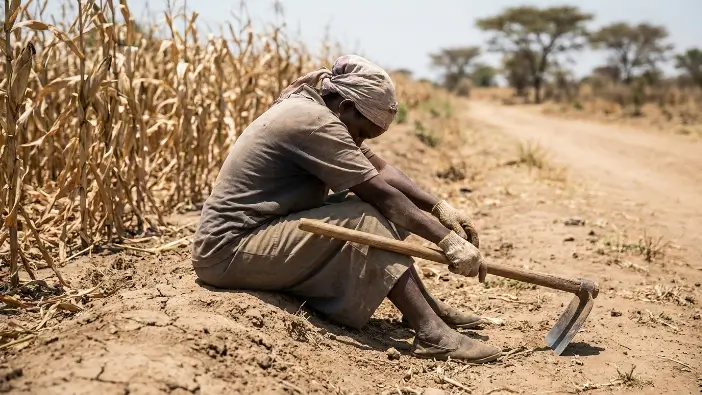



Women farmers ,Africa food security researchers and economists agree on one thing the continent cannot feed itself while ignoring the majority of the people growing its food. Across sub-Saharan Africa, women produce most of the food that reaches family tables, manage the majority of smallholder farms and carry the heaviest burden when harvests fail.
Yet they own almost none of the land they farm, receive a fraction of available agricultural credit and remain largely invisible in the policies designed to fix the continent’s hunger crisis. That contradiction is not a footnote in Africa’s food security story. It is the story.
The United Nations has declared 2026 the International Year of Female Farmers. It is a designation that carries both recognition and indictment recognition of what women contribute to feeding the continent and indictment of everything the continent has failed to do in return.
Women Farmers Africa: The Scale of What They Carry
The numbers that define women’s role in African agriculture are not marginal. They are foundational.
Across sub-Saharan Africa, 76 percent of all employed women work within agrifood systems farming, processing, packaging, distributing and selling food. They make up 49 percent of the total agrifood workforce and in food processing and services specifically, that share rises to 73 percent. In Kenya, 54 percent of all agricultural producers are women. They grow the maize, tend the kitchen gardens, manage the dairy animals and run the small processing operations that keep rural households fed and rural economies moving.
When you ask where Africa’s food comes from, the honest answer is: from women. From their labour their knowledge of local conditions, their capacity to manage multiple crops simultaneously, their understanding of what a family needs to eat well through different seasons. African women have been the backbone of the continent’s food system for generations not by choice, but by circumstance and often without any of the tools or rights that would allow them to do the job properly.
That last part is where the system breaks down.
Invisible in Policy, Indispensable in Practice
For all the labour women pour into African agriculture, their presence in the policy frameworks that govern the sector remains strikingly thin. Agricultural extension services are historically designed for male farmers delivered at times and through channels that assume the farmer has no domestic responsibilities, no children to pick up, no firewood to collect. Credit systems are built around land as collateral, which immediately excludes the majority of women farmers who have no title deed and cannot get one.
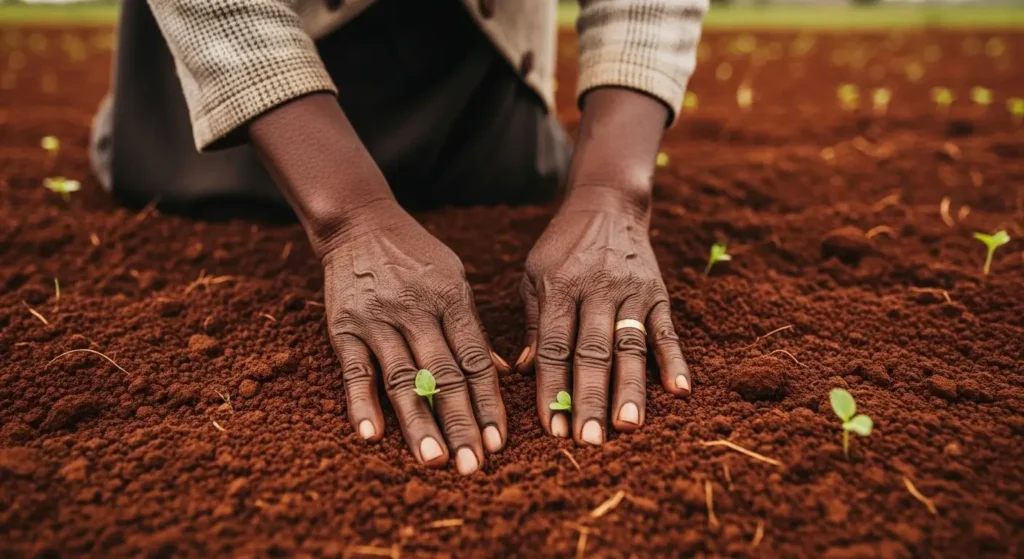
In Kenya, over 65 percent of land is governed by customary laws that do not recognise women’s right to own inherit or sell land independently. Only seven percent of Kenyan women hold land in their name alone. Thirty-one percent hold it jointly meaning their access is contingent on a husband, father or son who could and sometimes does, change his mind. The remaining majority of women farmers work land they have no legal claim to, which means they cannot use it as collateral for a loan, cannot make long-term investment decisions about it, and cannot protect their access to it if their circumstances change.
The consequences of that land exclusion cascade through every other dimension of agricultural participation. Without land ownership, a woman cannot access a bank loan. Without a bank loan, she cannot buy certified seed, quality fertiliser or irrigation equipment. Without those inputs, her yields remain low. With low yields, she cannot generate the surplus that would allow her to move from subsistence farming into commercial agriculture. The barriers are not separate problems they are one interlocking system and land is the lock at the centre of it.
In Kenya, women farmers receive approximately ten percent of the agricultural credit available in the country despite producing the majority of the nation’s food. That figure was highlighted just this month at a press forum in Nairobi where researchers and economists gathered to examine the specific barriers that have kept women farmers underfinanced and underproductive for generations.
University of Nairobi Associate Professor Mary Mbithi was direct: closing the gender gap in access to land, credit and technology could increase Kenya’s agricultural yields by between 20 and 30 percent. That is not a social statistic. That is an economic projection about what the country is leaving on the table every single season.
Women Farmers Africa Food Security and the Climate Threat
Africa’s food security numbers are alarming and worsening. In 2024, 64 percent of sub-Saharan Africa’s population experienced moderate or severe food insecurity a figure that has been climbing steadily for a decade. Across the region, 11.2 million more women than men faced food insecurity in that same year, according to a major report published jointly by FAO, the Natural Resources Institute at the University of Greenwich and the African Women in Agricultural Research and Development organisation in September 2025.
That gap between men and women in food insecurity is not coincidental. It tracks directly with the gap in land ownership, credit access, technology adoption and policy inclusion. Women are more food insecure than men in Africa not because they work less they work more but because the system has been structured to deny them the assets and the agency that would allow their work to translate into security.
The climate dimension makes this more urgent, not less. When temperatures rise, the first households to feel it are those with the fewest productive assets and the least access to adaptive technology. A woman farmer who has no title deed cannot get a loan to invest in drought-resistant seed varieties.
A woman farmer who spends 12.9 hours a day on combined farm work and domestic responsibilities compared to 8.2 hours for men in equivalent positions has no time to attend an extension training session that happens to be scheduled on a weekday morning when her children need to be fed. A woman farmer who does not own her land cannot make the long-term soil improvement investments that would allow her farm to withstand erratic rainfall.
Climate change is arriving fastest and hitting hardest in the communities where women carry the most responsibility and hold the fewest rights. That is not a coincidence either. It is a structural vulnerability that policy has been slow to name and slower to address.
The $49 Billion Financing Gap Holding Women Farmers Back
The African Development Bank estimates that African women entrepreneurs including women in agriculture face a collective financing gap of 49 billion dollars. That figure does not represent a lack of viable borrowers. Research consistently shows that women farmers repay loans at higher rates than men, invest more of their earnings back into household nutrition and education and make more sustainable land management decisions when given the resources to do so.
The gap exists because the financial system was not designed with women in mind. Commercial banks demand collateral that most women cannot provide. Loan amounts are calibrated to the scale of formal commercial agriculture, which most smallholder women farmers do not practise. Application processes require documentation title deeds, business registration certificates, formal income records that the informal economy in which over 90 percent of African women agricultural workers operate simply does not generate.
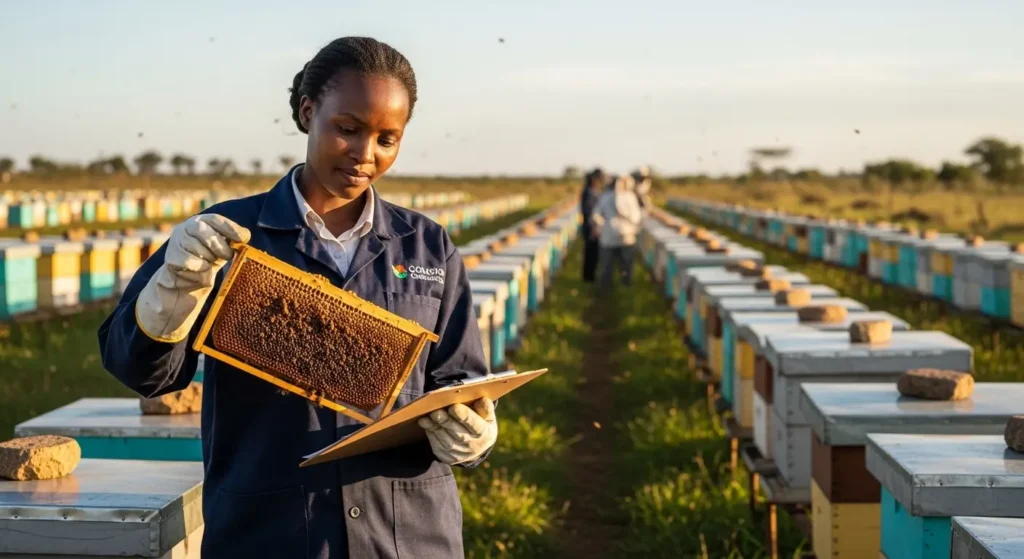
The AfDB’s Affirmative Finance Action for Women in Africa programme is working to close part of that gap by partnering with financial institutions to reduce the risk profile of lending to women and build the internal capacity of banks to serve them properly. In Kenya, women agripreneurs like Pauline Otila of Apiculture Ventures have accessed loans through AFAWA partner institutions after being turned away by commercial banks and tripled their business turnover as a result, scaling their beekeeping network from 1,200 to over 10,500 farmers in the process.
That kind of result a woman, a loan, a business that multiplies is not unusual. It is predictable. The problem is that it remains the exception rather than the standard practice of Kenya’s agricultural finance system.
What Women Farmers Africa Food Security Demands in 2026
The International Year of Female Farmers is an opportunity but only if it produces something more durable than visibility. African women farmers do not need more recognition. They need land rights that hold in court, credit products that fit how they actually operate, extension services delivered at times and in formats that account for their full lives and policy spaces where their voices shape the decisions rather than merely appearing in the consultation minutes.
At the Nairobi press forum in March 2026, researchers and development economists agreed on the specific interventions that would move the dial fastest. Land and inheritance law reform sits at the top of that list because until women can own the land they farm, every other intervention is working against the current.
Access to affordable credit at the scale of smallholder farming is the second pillar not micro-credit for subsistence, but real agricultural financing for women who are ready to run enterprises. Investment in labour saving technologies better water access, mechanised processing, childcare infrastructure would free the time that women currently spend on unpaid domestic work and direct it toward productive farming and income generation.
Lucy Wakiaga, an associate research scientist at the African Population and Health Research Centre, added the educational dimension to that agenda. Closing gender gaps in access to science, technology and agricultural training is not a long-term aspiration , it is a prerequisite for women’s full participation in modern agriculture. Digital tools, precision farming techniques and market intelligence platforms are increasingly defining who succeeds in African agriculture. If those tools are accessible only to men, the gender gap in food production will compound rather than close.
The Global Hunger Index and the WFP’s 2026 outlook both report a 20 percent increase in the number of people facing acute food insecurity globally since 2020. Africa sits at the epicentre of that trend. The continent cannot eat its way out of that crisis through better policies alone, through more investment in research alone, through smarter seed systems or stronger extension services alone not while the majority of the people doing the farming are being systematically denied the tools, rights and recognition they need to do it properly.
Africa’s food security conversation has spent too long asking the wrong question. The question is not how to get more food out of African soil. The question is how to get more investment, more rights, more resources and more power into the hands of the women who have been growing that food all along and watching the system claim the benefit.
The answer to Africa’s food security problem has always been in the field. Her name just has not been on the title deed.